


Tiger Rose
"A Canadian trapper fights for the woman he loves."
Keys: Space play/pause · ←/→ 10s · F fullscreen · M mute · </> speed
About this film
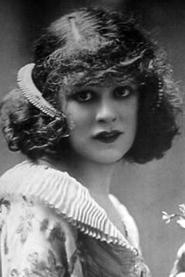
Originally a Broadway play by Willard Macks, Lenore Ulric played the lead on Broadway and reprises her role for. At the Wutchi Wum trading post In the peaceful Loon River Valley, deep in the Canadian Northwest comes a story of love, vengeance and sacrifice. Having lived at the trading post following the death of her father, Rose will soon fall in love. But when her new love is in trouble, Rose will discover that she is capable of much more than she thought in order to keep him safe.
Cast & crew
More films like this
More Drama films
View all →







More from Sidney Franklin
View all →

More about this film
About the production
Release dateOctober 21, 1923
Box officeUnknown
ProductionFamous Players-Lasky Corporation, Paramount Pictures
Filmed inYosemite National Park, California, Paramount Studios, Hollywood, California
The film was adapted from Willard Mack's successful Broadway play of the same name. Lenore Ulric, who had starred in the stage production, was specifically brought in by Paramount to reprise her role, which was unusual for the time as stage stars didn't always transition successfully to film. The production utilized authentic Northwest Territory scenery, with location shooting in Yosemite to stand in for the Canadian wilderness. The film was part of Paramount's push to produce more literary adaptations and stage-to-screen transfers.
Themes
Love and sacrificeTransformation and personal growthCivilization versus wildernessJustice and revengeFemale empowerment
Themes & topics
Canadian NorthwestTrading postMountieSmugglingFrontier justiceWilderness survivalStar-crossed loversRevengeTransformationAdventure
Historical background
Tiger Rose (1923) survives in catalogs and archives as a record of late silent cinema.
Why this film matters
Scholars and collectors reference Tiger Rose when discussing how late silent cinema filmmakers addressed popular themes.
Making of
The production faced significant challenges during location shooting in Yosemite, where the cast and crew had to deal with unexpected weather conditions and difficult terrain. Lenore Ulric, accustomed to stage acting, initially struggled with the technical demands of film performance, requiring multiple takes for scenes that would have been simple on stage. Director Sidney Franklin worked closely with her to adapt her acting style for the camera. The film's wilderness sequences were particularly challenging to film, as the production team had to transport heavy camera equipment into remote locations. The trading post scenes were filmed on an elaborate set at Paramount Studios, which was praised for its authenticity and attention to detail. The film's success helped establish the practice of casting stage stars in film adaptations of their hit plays.
What critics said
Where contemporary reviews survive, Tiger Rose is read against the tastes of 1923; revival screenings keep it in circulation.
Did you know?
- Lenore Ulric was one of the highest-paid actresses of her time, earning $2,500 per week for this film
- The original Broadway play ran for 136 performances in 1917-1918
- This was one of the earliest films to feature a strong, independent female protagonist who takes action rather than being rescued
- Director Sidney Franklin would later go on to direct 'The Good Earth' (1937) and win two Academy Awards
- The film's title 'Tiger Rose' referred to the protagonist's fierce, protective nature rather than any actual tigers
- Paramount spent a then-substantial $50,000 on advertising and promotion for the film
- The trading post set was so detailed that it included over 200 authentic props imported from Canada
- This was one of the first films to be shot partially on location in Yosemite National Park
- The film's success led to Lenore Ulric becoming one of Paramount's biggest stars of the 1920s
- A 1929 sound remake was planned but never produced due to the transition to talkies
Awards & recognition
- No major awards were given for this film in 1923
Visual style
The cinematography by Charles Rosher was praised for its innovative use of natural light in the location sequences and its effective capture of the vast wilderness landscapes. The film employed groundbreaking techniques for its time, including extensive location shooting that brought authenticity to the Canadian Northwest setting. Rosher utilized the dramatic scenery of Yosemite National Park to create sweeping vistas that emphasized the isolation and danger of the frontier environment. The trading post interiors were carefully lit to create atmosphere and tension, using the limited light sources available in the period setting. The film's visual style influenced later wilderness adventure films and helped establish visual conventions for the genre.
Innovations
The film was notable for its extensive use of location shooting at a time when most films were primarily studio-bound. The production employed portable camera equipment that allowed for filming in remote wilderness locations, which was technically challenging for 1923. The film's editing techniques, particularly in the action sequences, were considered advanced for their time, creating tension through cross-cutting between different storylines. The trading post set featured innovative construction techniques that allowed for both interior and exterior shots without revealing the studio setting. The film also employed early matte painting techniques to enhance the wilderness backgrounds.
Music
As a silent film, 'Tiger Rose' was accompanied by live musical performances during its theatrical run. The original score was composed by J.S. Zamecnik, who was especially prolific composers of silent film music. The score featured themes that represented Rose's character, the wilderness setting, and the dramatic tension of key scenes. The music incorporated elements that suggested the Canadian setting, including folk-inspired melodies. The score was published for theater orchestras and included cues for different emotional moments throughout the film. Modern screenings typically use either reconstructed versions of the original score or contemporary silent film accompaniment.
Famous quotes
In this wilderness, a woman must be as fierce as a tiger to protect what she loves
The law may be slow in reaching the frontier, but justice finds its way
Love in the wild is different from love in the city - it's stronger, purer
When the mountain calls, even the gentlest rose can grow claws
Memorable scenes
- The dramatic confrontation scene where Rose confronts the smugglers to save Bruce, transforming from a gentle woman into a fierce protector
- The romantic canoe scene on Loon River where Rose and Bruce declare their love against the backdrop of the wilderness
- The trading post shootout sequence that showcases Rose's quick thinking and courage under fire
- The final chase scene through the wilderness that combines action with the natural beauty of the Canadian landscape
What audiences thought
The film was a commercial success upon its release, particularly popular with audiences who had enjoyed the original Broadway play. Lenore Ulric's performance drew large crowds, and the film played in major cities for extended runs. Audience feedback from the period praised the film's dramatic tension and the authenticity of its wilderness setting. The film's success helped establish Ulric as a major film star, and she received numerous fan letters praising her portrayal of Rose. The film's romantic elements and adventure sequences were particularly well-received by moviegoers of the era, contributing to its box office performance.
Film connections
Influenced by
- Broadway stage productions
- Frontier literature
- Canadian wilderness stories
- Victorian melodrama
- Early adventure serials
This film influenced
- The Call of the Wild (1923)
- The Trail of '98 (1928)
- Northwest Passage (1940)
- Red River (1948)
Film restoration
The film is considered partially lost. Only incomplete prints and fragments survive in various film archives, including the Library of Congress and the UCLA Film and Television Archive. Some reels are missing or severely deteriorated, making a complete restoration difficult. The surviving footage has been preserved on safety film, but gaps remain in the narrative. The film's status highlights the challenges of film preservation for silent era works.
Where to watch
- The film is not currently available on major streaming platforms
- Surviving fragments can be viewed at selected film archives and special screenings
- Some portions may be available through academic film libraries
- Occasionally screened at classic film festivals and silent cinema events