


Tillie's Punctured Romance
"A country heiress meets a city swindler"
Keys: Space play/pause · ←/→ 10s · F fullscreen · M mute · </> speed
About this film
A womanizing city man meets Tillie in the country. When he sees that her father has a very large bankroll for his workers, he persuades her to elope with him.
Cast & crew
More films like this


More Comedy films
View all →







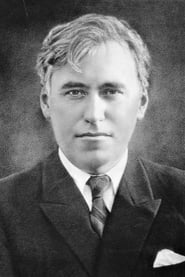
More from Mack Sennett
View all →

More about this film
About the production
Release dateNovember 14, 1914
BudgetApproximately $25,000
Box officeOver $1 million (extraordinary for 1914)
ProductionKeystone Studios, Mack Sennett Comedies
Filmed inLos Angeles, California, Keystone Studios lot, Various Los Angeles street locations
This was the first feature-length comedy film ever made, consisting of six reels when most films were one or two reels. The production was an adaptation of the popular Broadway stage play 'Tillie's Nightmare' starring Marie Dressler. Filming took place over several weeks in the summer of 1914, with extensive location shooting around Los Angeles, which was unusual for the time. The film required elaborate sets and costumes, particularly for the high-society party scene, making it among the costliest Keystone productions up to that point.
Themes
Betrayal and deceptionCountry vs. city valuesThe corrupting influence of wealthFemale empowermentSocial class mobility
Themes & topics
con artistinheritancedrunkennesselopementhigh societychasebetrayalrevengepolicerestaurantpartycountry girlcity slicker
Historical background
Tillie's Punctured Romance appeared in 1914, when the silent era before Hollywood consolidated into a studio system shaped how movies were financed, distributed, and discussed. Audiences of the day encountered the work amid shifting tastes in acting, pacing, and spectacle. Its focus on a womanizing city man meets tillie in the country mirrors themes circulating in popular culture of that moment.
Why this film matters
Tillie's Punctured Romance (1914) belongs to the wider archive of world cinema, documenting a womanizing city man meets tillie in the. Archivists and historians value such titles for what they reveal about craft, genre, and audience expectations. Restorations and festival screenings keep the work visible to viewers far beyond its first run.
Making of
The production of 'Tillie's Punctured Romance' was marked by significant tension between the stars. Charlie Chaplin, already becoming a major star, clashed with Marie Dressler over screen time and billing. Chaplin felt he should be the primary focus, while Dressler, the established stage star, believed she deserved top billing. Director Mack Sennett had to mediate these conflicts, eventually giving Dressler top billing as agreed in her contract. The filming of the drunken restaurant scene was particularly memorable, as Dressler drew on years of stage experience to create a comic tour de force that required multiple takes. The production was also notable for its extensive location shooting around Los Angeles, which was risky and expensive for the time but paid off in the film's visual variety. The elaborate party sequence required the construction of one of the largest sets ever built at Keystone, and the chaos of the scene required precise coordination of dozens of extras.
What critics said
Press coverage from 1914 is fragmentary for many titles of this vintage; surviving notices for Tillie's Punctured Romance tend to stress novelty, star power, or topical appeal. Later writing places the picture within its national and generic context, weighing both period conventions and moments that still land for modern viewers. Streaming and disc releases have revived discussion among classic-film audiences.
Did you know?
- This was the first feature-length comedy film in cinema history, establishing the format that would dominate comedy for decades.
- Charlie Chaplin was still developing his famous Tramp character and appears here as a more conventional villain rather than the sympathetic figure he would become.
- Marie Dressler was 46 years old when she played Tillie, despite portraying a young naive woman, and she was one of the highest-paid actresses of the era.
- The film was based on Dressler's successful 1910 Broadway play 'Tillie's Nightmare,' which she had been performing for years.
- Mack Sennett originally hesitated to make a feature-length comedy, believing audiences wouldn't sit through a long comedy, but was convinced by Dressler's stage success.
- The famous restaurant scene where Tillie gets drunk was largely improvised by Dressler, drawing on her stage experience.
- The film's success saved Keystone Studios from financial difficulties and established them as the leading comedy production company.
- Chaplin and Mabel Normand were romantically involved during filming, which added tension to the production.
- The film features one of the earliest examples of a pie fight in cinema, though it's much smaller than the one in 'The Battle of the Century' (1927).
- A young Gloria Swanson appears as an extra in the party scene, one of her first film roles.
- The film was so popular that it spawned a sequel 'Tillie's Punctured Romance' (1915) with different actors.
Visual style
The cinematography, handled by Frank D. Williams and Hans Koenekamp, was innovative for its time, utilizing multiple camera setups and dynamic movement that was unusual in 1914. The film employed location shooting to create visual variety, contrasting the pastoral country scenes with the bustling city environments. The party sequence featured elaborate lighting effects and camera angles that enhanced the chaotic atmosphere. Williams used close-ups more frequently than was typical for the period, particularly to capture Marie Dressler's expressive reactions during her drunken scene. The chase sequence at the film's conclusion utilized moving camera shots that created a sense of speed and excitement, techniques that would become standard in action comedy.
Innovations
The film pioneered several technical innovations that would become standard in comedy filmmaking. It was one of the first films to successfully sustain comedic momentum over feature length, requiring new editing techniques to maintain pacing. The production used multiple cameras for some scenes, allowing for more dynamic editing choices. The elaborate party sequence featured complex choreography and timing that required precise coordination between actors, extras, and camera movements. The film also demonstrated advanced techniques in continuity editing, maintaining clear spatial and temporal relationships across its six reels. The chase sequence at the end utilized innovative camera placement and movement to create excitement, including shots from moving vehicles.
Music
As a silent film, 'Tillie's Punctured Romance' originally featured live musical accompaniment that varied by theater. Large theaters typically employed full orchestras, while smaller venues used pianists or organists. The score was compiled from popular classical pieces and original compositions, with specific musical cues for different scenes - pastoral music for country scenes, jaunty tunes for comedic moments, and dramatic music for the chase sequences. The film's intertitles were accompanied by appropriate musical motifs. Modern releases have featured newly composed scores by silent film specialists, including a 1996 version with music by the Mont Alto Motion Picture Orchestra.
Famous quotes
I'm a lady now! I've got money!" - Tillie upon learning of her inheritance
You'll never get away with this!" - Tillie to Charlie during the confrontation
Come with me to the city, and I'll show you the world!" - Charlie seducing Tillie
I'm not drunk! I'm just happy!" - Tillie during the restaurant scene
Memorable scenes
- the restaurant scene where Tillie gets drunk and causes chaos, climbing on tables, smashing dishes, and creating mayhem while Marie Dressler delivers a masterclass in physical comedy.
- The elaborate high-society party sequence where Tillie, now wealthy, attempts to fit in but ends up disrupting the entire event with her country ways.
- The climactic chase scene through the streets of Los Angeles, featuring multiple vehicles, running gags, and escalating chaos as Tillie pursues Charlie and Mabel.
- The opening scenes in the country where Charlie first encounters Tillie, establishing the contrast between city sophistication and rural innocence.
What audiences thought
The film was an enormous commercial success, playing to packed theaters across the United States for months. Audiences were thrilled by the novelty of a feature-length comedy and the star power of the three leads. Marie Dressler's drunken scene became particularly famous, with audiences demanding encores in some theaters. The film's success was so great that it was re-released multiple times over the next few years. Contemporary accounts describe audiences laughing uncontrollably during the screening and the film becoming a cultural phenomenon, with Tillie's catchphrases entering popular vernacular. The movie's popularity helped establish all three stars as major box office draws and cemented Keystone Studios' reputation as the premier comedy production company.
Film connections
Influenced by
- Tillie's Nightmare (1910 Broadway play)
- Earlier Mack Sennett short comedies
- French and Italian comedy films of the early 1910s
- Vaudeville comedy routines
- Stage melodramas of the era
This film influenced
- The Gold Rush (1925)
- The General (1926)
- City Lights (1931)
- Bringing Up Baby (1938)
- Some Like It Hot (1959)
- The Graduate (1967)
- There's Something About Mary (1998)
Film restoration
The film is well-preserved with complete copies existing in several archives. The Library of Congress holds a 35mm print, and the film has been restored by various institutions including the Museum of Modern Art. Multiple versions circulate with different running times due to variations in projection speed. A digitally restored version was released on DVD and Blu-ray by Kino Lorber in 2019, featuring a new musical score and extensive bonus materials.
Where to watch
- Available on Blu-ray and DVD from Kino Lorber
- Streaming on The Criterion Channel
- Available for rental or purchase on Amazon Prime Video
- Part of the Fandor streaming service library
- Occasionally screened at film festivals and classic cinema venues
- Available through some university film archives and libraries