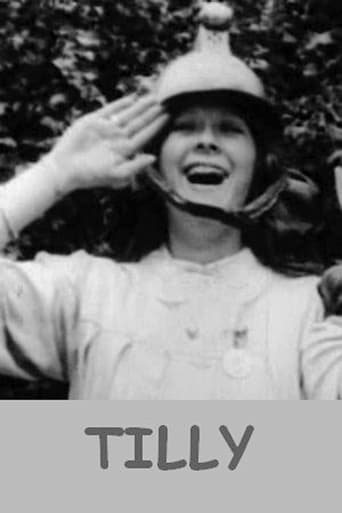
1912 · Short film; exact runtime unavailable

Also available on: Archive.org
Tilly in a Boarding House

Tilly in a Boarding House

1912 Short film; exact runtime unavailable United Kingdom

Plot

A group of girls disguise themselves in boys’ clothing and use the change of identity to cause confusion among a boarding house full of male lodgers. Their impersonation allows them to move about with unusual freedom for the period, and the comedy builds out of the boarders’ inability to see through the ruse. As the masquerade continues, the girls steer the situation toward increasingly ridiculous misunderstandings, embarrassing the unsuspecting men and turning ordinary domestic space into a playground for slapstick deception. The film’s known plot premise suggests a fast, light comic structure typical of British one-reel comedies of the era, with the final effect depending on visual gagging, costume confusion, and the eventual revelation of the trick.

About the Production

Release Date 1912
Production Gaumont British Picture Corporation
Filmed In United Kingdom

This was a short British silent comedy directed by Hay Plumb, a filmmaker associated with the early period of Gaumont’s production activity in Britain. Like many films from 1912, it was almost certainly mounted as a brief one-reeler for the popular trade in weekly cinema programmes, with an emphasis on clear visual action rather than intertitles-heavy storytelling. The film’s appeal likely rested on the comic reversal of gender presentation, a recurring device in early cinema that allowed performers such as Alma Taylor and Chrissie White to demonstrate physical comedy, quick changes, and playful social satire. No surviving production paperwork is widely cited in standard public references, so detailed information about budget, studio set construction, or exact location shooting is not presently documented in readily available sources.

Historical Background

Tilly in a Boarding House was produced in 1912, a moment when cinema was rapidly shifting from short novelty and comic subjects toward more complex narrative forms, yet the one-reel comedy remained highly important in the marketplace. In Britain, companies such as Gaumont were helping professionalize production while audiences continued to enjoy light domestic comedies, melodramas, and chase films shown in mixed programmes. The film also reflects Edwardian-era social anxieties and amusements around class, manners, and gender presentation, using disguise not as psychological drama but as a device for safe comic disorder. In a broader film-historical sense, it belongs to the early development of screen comedy in which costume-based trickery and social inversion could be presented quickly and understood instantly by international audiences.

Why This Film Matters

Although not a landmark title in the popular sense, the film is culturally significant as an example of early British comedy built around gender disguise and domestic farce. Such films helped establish recurring comic formulas that would continue through silent cinema and beyond, especially stories involving masquerade, mistaken identity, and the disruption of respectable social spaces. The presence of Alma Taylor and Chrissie White also gives the film value in the study of early screen actresses, whose work helped shape audience expectations of femininity, playfulness, and comic performance in silent British film. For historians, the title is useful as a small but revealing artifact of how early cinema negotiated social behavior through humor, especially in the relatively permissive space of pantomime-like visual storytelling.

Making Of

Little specific behind-the-scenes documentation survives in widely accessible sources for this film, which is common for British productions of the 1910s. What can be said with confidence is that the film was directed by Hay Plumb and featured Alma Taylor and Chrissie White, performers who were well suited to the light comic style of the period. The production likely depended on economical studio staging, straightforward blocking, and expressive pantomime to communicate the disguise-and-revelation premise to audiences without spoken dialogue. Because the film is short and built around a simple trick plot, its making would have required careful timing of entrances, exits, and costume changes to keep the action legible and amusing.

Visual Style

The cinematography would have followed the conventions of early 1910s silent comedy: static or minimally mobile framing, carefully staged action within the shot, and emphasis on full-body performance so the audience could read the disguise and reactions. Visual clarity was essential, especially for a plot centered on cross-dressing and trickery, so costume contrast and blocking would have been more important than camera movement. The film likely used bright, even lighting typical of studio productions of the era to keep facial expressions and physical gags visible. Any visual style would have been practical and theatrical, designed to support the comic business rather than call attention to formal experimentation.

Innovations

No major technical innovation is associated with this film in the surviving record. Its significance lies in the efficient use of silent-comedy devices: visual disguise, coherent staging, and paced comic revelation. The film likely demonstrates the craftsmanship needed in early cinema to sustain a comic narrative in a short running time without reliance on dialogue or elaborate editing. Its production belongs to the broader technical norm of the period rather than to a uniquely innovative subset of films.

Music

As a 1912 silent film, it had no synchronized recorded soundtrack. In exhibition, it would have been shown with live musical accompaniment, likely provided by a pianist or small ensemble depending on the venue and exhibition context. Music would have been chosen to match the comic rhythm of the action, with the accompanist improvising to emphasize moments of surprise, pursuit, or embarrassment. No original composed score is known to survive for this specific title.

Memorable Scenes

  • The girls’ first entrance in boys’ clothing, establishing the disguise that drives the comedy.
  • The boarders’ oblivious reactions as the masquerade lets the girls manipulate the boarding house situation.
  • A sequence of escalating misunderstandings built around the men failing to detect the deception.
  • The likely reveal or partial reveal, which would have supplied the film’s final comic payoff.

Did You Know?

  • The film is a British silent comedy from the early 1910s, when single-reel subjects were still a dominant exhibition format.
  • It stars Alma Taylor and Chrissie White, two popular actresses who appeared frequently in British films of the period.
  • Hay Plumb was an important early British director and actor, working in a transitional era when the industry was still defining its style and production methods.
  • The plot uses a gender-disguise premise, a common comic device in silent cinema that often relied on costume, mistaken identity, and physical business rather than dialogue.
  • Because it was made in 1912, the film belongs to the formative years of narrative film comedy in Britain, before feature-length comedies became standard.
  • The film is listed under the title Tilly in a Boarding House, indicating a central character-driven setup rather than a broad ensemble farce.
  • As with many films of its era, detailed contemporary reviews and production documentation are scarce, so surviving knowledge comes largely from catalog records and plot summaries.
  • The film reflects the popularity of domestic and boarding-house settings in early comedy, which provided a convenient closed environment for escalating misunderstandings.
  • The cast pairing of Alma Taylor and Chrissie White is notable because both women became familiar names in British silent cinema and were associated with light entertainment and youth-oriented roles.
  • Its surviving historical significance comes less from technical innovation than from its value as a representative example of early British comic filmmaking.

What Critics Said

No substantial body of contemporary critical commentary is readily preserved for this specific title, which is typical for many short films of 1912. Based on its surviving catalog identity and premise, it would have been received as a light entertainment item rather than a prestige production, with appeal derived from visual comedy, star appeal, and the novelty of the disguise scenario. Modern reception is therefore largely archival rather than critical: film historians and database users value it primarily as part of the record of early British studio output and as evidence of recurring comic conventions in the silent era. Its current reputation rests on historical interest more than on extensive surviving review literature.

What Audiences Thought

Direct audience records are not widely available, but films of this type were generally intended to amuse general cinema audiences with immediately readable comic situations. The boarding-house trick premise would likely have played well because it required no specialized knowledge and offered clear visual payoff in a short running time. Audiences of the period were accustomed to films driven by physical behavior, disguise, and social embarrassment, so the film’s premise would have been easy to follow and enjoy. Any contemporary success would have been measured through routine exhibition demand rather than formal box-office reporting, which was uncommon for many early shorts.

Film Connections

Influenced By

  • Stage farce and pantomime traditions
  • Early British music-hall comedy
  • Silent-era costume comedy conventions
  • Domestic trick-film formulas common in early cinema

This Film Influenced

  • Later silent comedies using gender disguise and mistaken identity
  • British domestic farce shorts of the 1910s and 1920s
  • Broad comedy routines built around masquerade and social inversion

Film Restoration

Preservation status is not clearly documented in widely available public sources for this specific title; no restoration details are commonly cited. The film may survive only in archive records or fragments, but a confirmed extant preservation copy is not readily verified from standard reference information. In practical database terms, it should be treated as having uncertain availability unless a specific archive holding is identified.

Themes & Topics