When Paris Loves
Plot
Jean Clédat, a young sculptor studying at the Fine Arts Academy in Paris, has fallen in love with Gabrielle Normand, who is herself an artist and a painter. His father, Clédat Senior, had expected Jean to return to their native town after his studies and to resume a respectable career path, while Jean's kind-hearted fiancée Marie-Claire waits at home, believing he will eventually come back to her. Suspicious of his son's prolonged absence, the father travels unexpectedly to Paris and confirms his fear that Jean has become attached to a woman there. His misunderstanding deepens when he sees what appears to be a doll in Jean's studio and assumes it is evidence of Gabrielle having borne a child. In fact, the supposed child is only Gabrielle's four-year-old little sister, and the father's intervention, based on a false assumption, forces the lovers into a painful crisis before the truth can emerge.
About the Production
When Paris Loves is a French silent drama from the period when feature-length, prestige-oriented productions were being cultivated to elevate cinema's artistic status. The film was directed by René Leprince and associated with Le Film d'Art, a company known for literary and theatrical adaptation as well as more refined dramatic subjects. Like many French films of 1913, it was produced in an era when standardized production records were not always preserved, so precise budgetary, exhibitory, and box-office figures are not reliably documented. Surviving documentation is limited, but the film is notable for its art-world premise, its emphasis on moral misunderstanding, and its Parisian setting, all of which align it with early 1910s French dramatic filmmaking.
Historical Background
When Paris Loves was made in 1913, French cinema was in a period of artistic ambition and industrial expansion. Companies such as Le Film d'Art were part of a broader effort to legitimize film as a serious cultural form by presenting literary, theatrical, and socially refined subjects to audiences who might otherwise have dismissed cinema as merely popular entertainment. The film emerged just before the upheaval of the First World War, at a time when Paris was still being represented onscreen as a center of romance, artistic aspiration, and social tension. Its focus on artists, domestic honor, and a parental authority figure reflects early twentieth-century concerns about modern life, generational conflict, and changing social mores. For modern viewers, the film is important less for spectacle than for what it reveals about French narrative cinema's development, its moral codes, and the kinds of stories considered suitable for respectable audiences in the prewar era.
Why This Film Matters
The film is culturally significant as a representative example of early French prestige melodrama, especially one set in the symbolic world of Parisian art. Its narrative draws on enduring cultural myths: the struggling young artist, the city as a place of temptation and freedom, and the conflict between individual desire and family expectation. Even without a large body of surviving publicity or review material, the film stands as part of the broader prewar French contribution to narrative film form, when cinema was rapidly moving from brief scenarios toward more elaborate character-driven stories. It also helps document the early screen presence of professional stage actors and the use of dramatic social situations to attract audiences who valued literary or theatrical quality. In archival terms, it is one of the many titles that help reconstruct the texture of lost or partially documented silent-era film culture.
Making Of
Very little detailed behind-the-scenes documentation survives for this 1913 production, which is typical of many early silent films. What can be said with confidence is that it was made within the artistic orbit of Le Film d'Art, a company that often recruited trained performers and emphasized polished dramatic staging over sensational spectacle. René Leprince worked in a French cinema environment where films were frequently adapted from stage traditions or conceived with a theatrical sense of tableau composition, and this production appears to follow that pattern in its emphasis on family misunderstanding, social propriety, and an artist's emotional life. As with many films of the period, the production likely relied on studio-built interiors and carefully arranged Parisian settings rather than extensive location shooting, though precise records are not extant.
Visual Style
Specific shot-by-shot cinematographic documentation is limited, but films of this type and period typically relied on static or gently modulated camera placement, carefully composed interior scenes, and a clear presentation of performers within theatrical space. The visual style would likely have emphasized legible staging, expressive gesture, and contrast between the controlled domestic world of the father and the more bohemian environment of the artists in Paris. Early French prestige dramas often used elaborate sets and attention to costume and decor to signal status, realism, and emotional tone. As a silent film, it would have depended heavily on visual clarity, intertitle support, and actor expression to convey the unfolding misunderstanding and eventual emotional stakes.
Innovations
The film does not appear to be associated with any major technical innovation, but it is historically important as part of the maturation of feature-length silent storytelling in France. Its achievement lies in the refinement of dramatic structure: a carefully built misunderstanding, a visual reveal, and a morally charged resolution rooted in character rather than action spectacle. In the broader context of 1913 filmmaking, this kind of work helped normalize more elaborate narrative construction, professional acting styles, and production values aimed at prestige rather than novelty. The film also contributes to the historical record of how early cinema dramatized domestic and social conflict using visually readable, stage-influenced methods.
Music
As a silent film, it had no synchronized recorded soundtrack. In original exhibition, it would have been accompanied by live music, typically a theater pianist, small ensemble, or local musical accompaniment adapted to the venue and audience. No surviving cue sheet or official score is currently documented in the available information. Modern presentations, if any, would generally use a reconstructed or improvised accompaniment appropriate to early French silent drama.
Memorable Scenes
- Clédat Senior's unexpected visit to Paris, which sets the story's conflict in motion and allows him to confront the life his son has built away from home.
- The moment when the father sees the doll-like figure in Jean's studio and wrongly concludes that Gabrielle has had a child, a pivotal misunderstanding that drives the melodrama.
- The revelation that the 'child' is actually Gabrielle's four-year-old little sister, which retroactively transforms the father's accusations into tragic-comic error.
Did You Know?
- The film is a silent French drama from 1913, placing it among the early feature-era productions that helped define narrative cinema before World War I.
- Its title is sometimes encountered in English-language sources as When Paris Loves, but the original French title is associated with the release of a Parisian melodrama centered on artists and family conflict.
- The story hinges on a misunderstanding involving a young girl mistaken for a child of the heroine, a classic melodramatic device common in pre-war European cinema.
- René Leprince was active in early French cinema and later became known for directing a number of silent-era productions across the 1910s and 1920s.
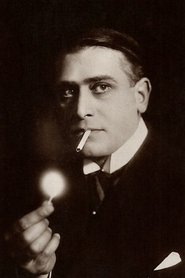
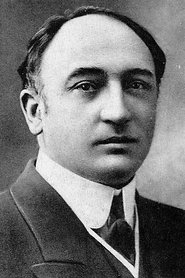
- The cast includes René Alexandre, Louis Ravet, and Gabrielle Robinne, all of whom were part of the professional acting culture that French prestige films often drew upon.
- The film reflects the early cinema fascination with the bohemian artist's life in Paris, a subject that recurs frequently in French literature and film.
- Because it dates from 1913, any surviving print information is likely incomplete, and many details about production and exhibition are not documented in contemporary trade sources.
- The involvement of Le Film d'Art connects the film to a company that was important in the movement to make cinema appear more respectable and culturally elevated to middle-class audiences.
- Its plot combines family duty, romantic love, and social expectation, making it representative of the moral melodramas that were popular in the years just before the First World War.
- The film is of archival interest as part of the surviving record of pre-1914 French feature filmmaking, even where full production records are scarce.
What Critics Said
Contemporary critical responses are not well preserved in accessible form, so a detailed reception history cannot be reliably reconstructed. Based on its production context and the conventions of Le Film d'Art releases, it was likely received as a respectable dramatic entertainment aimed at viewers who appreciated emotionally serious, artist-centered stories. Modern assessments, where the film is discussed at all, tend to value it primarily as an archival and historical artifact rather than as a widely screened classic. Its appeal to present-day scholars lies in its illustration of prewar French dramatic style, narrative morality, and the cultivation of cinema as an art form. Because the film is obscure and early silent-period documentation is limited, it has not accumulated a large modern critical reputation beyond specialist interest.
What Audiences Thought
No reliable box-office or audience-survey data survives for this film. As a 1913 French drama, it would have been seen by audiences accustomed to short and medium-length silent features, and its themes of love, family duty, and mistaken identity were well aligned with popular melodramatic tastes of the period. The prestige branding of Le Film d'Art would likely have signaled a more elevated attraction than straightforward comic or sensational fare. Today, audience reception is necessarily limited because the film is obscure and not widely circulated, so modern viewership is mainly confined to archivists, historians, and silent-film enthusiasts. Where seen, it is generally appreciated for its period atmosphere and for the insight it provides into early French screen melodrama.
Film Connections
Influenced By
- French literary and theatrical melodrama
- Early prestige films from Le Film d'Art
- Stage traditions of the domestic drama
- Bohemian artist narratives common in 19th-century French fiction
This Film Influenced
- Later French melodramas centered on artists and domestic misunderstanding
- Silent-era dramas that combine romance, family honor, and mistaken identity
You Might Also Like
More Drama Films
View allMore from René Leprince
View allFilm Restoration
Preservation status is uncertain from the available information. The film is documented in film databases and archival references, but no widely known modern restoration or complete accessible preservation record is readily confirmed here. It may survive in archives or survive only partially; detailed public access information is not consistently available. In practical terms, it should be treated as an obscure early silent film with uncertain circulation status until a holding archive is identified.