Struggle for Life
Plot
An honest working man loses his livelihood when he is made redundant, placing him and his prospects in immediate jeopardy. Faced with poverty and the pressure to survive in a harsh social order, he is forced to confront the realities of class, employment, and personal dignity. Rather than descending into tragedy, the story turns on a pragmatic and socially pointed solution: he resolves his troubles by marrying the employer's daughter. The film’s dramatic arc uses this union to expose the tension between labor and privilege, while also suggesting a route by which economic desperation can be converted into social advancement.
About the Production
This is a French silent drama from the early 1910s, a period when feature-length narrative cinema was consolidating its language and social melodramas were especially common. Surviving documentation on the production is limited, and detailed records such as exact shooting locations, budget, and box office are not readily available in standard film histories. The film is associated with Pathé, one of the dominant French film companies of the era, and was directed by René Leprince, a filmmaker active in the silent period. Like many films of its type, it likely relied on studio-based staging, theatrical acting styles, and strong moral or social contrasts rather than elaborate location shooting.
Historical Background
Struggle for Life was released in 1914, in the final months of Europe’s prewar cinematic world. French cinema in this period was still highly influential internationally, with companies such as Pathé and Gaumont shaping production, distribution, and exhibition practices across Europe and beyond. Social melodramas about labor, class tension, marriage, and economic insecurity were especially resonant at a time when industrialization had transformed urban life and class divisions were increasingly visible. The film also belongs to the transitional moment when cinema was moving toward longer, more plot-driven features rather than brief one-reel attractions, making narrative coherence and character psychology more central.
Why This Film Matters
Although not among the best-known surviving classics of the silent era, the film is culturally significant as an example of early French social melodrama and of the way cinema engaged with class mobility and economic desperation. Its central premise—an unemployed worker finding resolution through marriage into the employer’s family—captures both the anxieties and fantasies of the period, dramatizing the possibility of crossing social boundaries while also suggesting the instability of working life. For historians, the film helps illustrate how early cinema used domestic and romantic structures to comment on labor relations without overt political polemic. It is also valuable as a record of Pathé-era production culture and of the acting and storytelling conventions of prewar French film.
Making Of
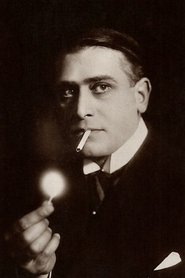
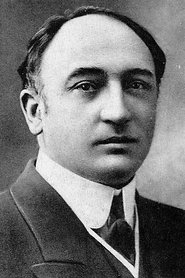
Detailed behind-the-scenes records for this film are scarce, which is common for productions from 1914. What can be established is that it was made in the French silent era under the Pathé umbrella and directed by René Leprince, whose work often dealt with domestic drama and moral conflict. The casting of Gabrielle Robinne, René Alexandre, and Gabriel Signoret suggests an emphasis on performers with strong theatrical presence, since silent-era acting depended heavily on expressive gesture and clear visual characterization. As with many films of the time, the production would have been shaped by the conventions of stage-derived melodrama, with carefully arranged tableaux, intertitles, and visual contrasts between working-class hardship and bourgeois comfort.
Visual Style
The film would have relied on the visual grammar of early 1910s French silent cinema, likely using composed tableaux, expressive blocking, and clear spatial relationships to communicate social status and emotional tension. Given the era and production context, the camera was probably relatively static compared with later classical cinema, with emphasis placed on staging within the frame rather than rapid editing or elaborate movement. Contrast between the worker’s hardship and the employer’s domestic world would have been conveyed visually through settings, costume, and actor placement. The cinematography’s chief historical interest lies in how early melodrama rendered class conflict legible without sound, using faces, gestures, and scenographic distinctions.
Innovations
There are no widely cited technical innovations associated with this film. Its importance lies instead in its participation in the maturing language of silent feature drama, where storytelling was increasingly organized around sustained narrative, character motivation, and social conflict. The film likely demonstrates the careful framing, intertitle integration, and performance clarity that characterized French studio melodramas of the period. Its significance is historical and stylistic rather than technological.
Music
As a silent film, it had no synchronized recorded soundtrack. Like most presentations of the period, it would originally have been accompanied by live music in the theater, often improvised or drawn from cue sheets, repertory compilations, or local accompanists’ selections. No specific original score is known to survive in the available record. Any modern screenings would typically use a newly prepared accompaniment or a historically informed silent-film music track if one is available.
Memorable Scenes
- The pivotal moment when the worker is made redundant and must immediately face the consequences of losing his livelihood.
- The dramatic social reversal in which the protagonist moves from laboring hardship toward the possibility of marriage into his employer’s family.
- The final resolution, which uses marriage as both a romantic and economic answer to the protagonist’s crisis.
Did You Know?
- The film is a silent French drama made just before the outbreak of World War I, a major historical turning point for European cinema.
- It is directed by René Leprince, who was active in French silent filmmaking and later worked on a range of melodramatic and literary adaptations.
- The cast includes Gabrielle Robinne, René Alexandre, and Gabriel Signoret, all of whom were notable performers associated with early French screen and stage culture.
- The story centers on a laborer’s social mobility through marriage, a theme that reflects the class anxieties often explored in prewar melodrama.
- The film is cataloged under the English title 'Struggle for Life,' though it is a French production and is also known through archival databases by its original French title information.
- Because it is a 1914 silent film, it predates synchronized sound and would originally have been shown with live musical accompaniment in theaters.
- Many films from this era survive only in fragmentary documentation, so plot summaries and cast information are often more accessible than full production records.
- Its narrative can be read as both a social critique and a pragmatic romantic solution, which was a common dramatic device in early cinema.
- Pathé’s involvement places it within one of the most influential film production and distribution networks of the silent era.
- The film belongs to a period when French cinema was still a global leader in production style, story construction, and international distribution.
What Critics Said
Contemporary critical reaction is not well documented in readily available sources, so there is no comprehensive record of early reviews to summarize with confidence. In later film-historical writing, the film is usually discussed more as a catalogued example of René Leprince’s early output and of Pathé melodrama than as a widely analyzed masterpiece. Modern assessment tends to focus on its historical interest: its class-based plot, its silent-era performance style, and its place in the development of French narrative cinema. Because the film is obscure and documentation is limited, its reputation is primarily archival rather than critical.
What Audiences Thought
Specific audience reception data from 1914 is not readily available. As a Pathé drama with a socially legible premise, it was likely intended for broad popular appeal among silent-era audiences who responded well to melodrama, romance, and moral conflict. The film’s narrative of hardship resolved by marriage would have been accessible and emotionally direct to contemporary viewers. Today, its audience is largely historians, archivists, and silent-film enthusiasts rather than a mass public, especially given its obscurity and the limited availability of screening information.
Film Connections
Influenced By
- French stage melodrama
- Early Pathé social dramas
- 19th-century realist fiction about labor and class
- Theatrical acting traditions of the silent era
This Film Influenced
- null
You Might Also Like
More Drama Films
View allMore from René Leprince
View allFilm Restoration
The survival status is uncertain in mainstream reference sources, and no widely documented restoration is commonly cited. It is best treated as an obscure early silent film with limited accessibility, and its preservation details are not clearly established in the available records. If extant, it is not widely circulated and appears to be available primarily through archival references rather than standard home-video or streaming release channels.