
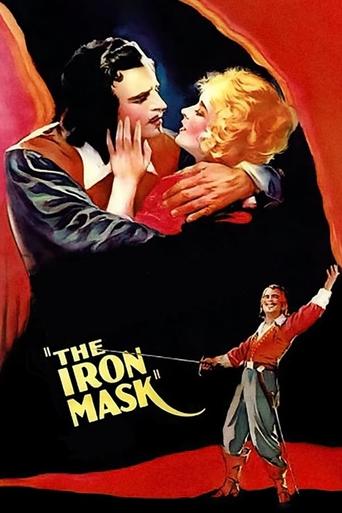
Within the Law
"Revenge within the law's letter"
Keys: Space play/pause · ←/→ 10s · F fullscreen · M mute · </> speed
About this film
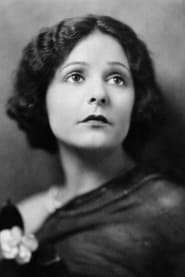
Framed Mary Turner vows legal vengeance on those who sent her to prison. Norma Talmadge stars in the 1923 adaptation of Bayard Veiller's hit play.
Cast & crew
More films like this
More Drama films
View all →







More from Frank Lloyd
View all →

More about this film
About the production
Release dateFebruary 11, 1923
Box officeThe film was a commercial success, contributing to Norma Talmadge's position as one of the highest-paid stars of the 1920s
ProductionNorma Talmadge Productions, Joseph M. Schenck Productions
Filmed inLos Angeles, California, Norma Talmadge Studio, Hollywood
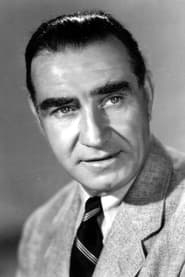
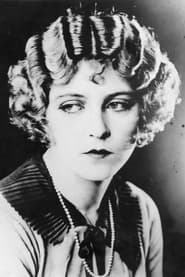
The film was one of several adaptations of Bayard Veiller's popular 1912 play. Norma Talmadge, who was married to producer Joseph M. Schenck, had significant creative control over her productions. The film featured elaborate sets and costumes, reflecting Talmadge's status as a top star of the era. Production took place during a transitional period in Hollywood when studios were establishing more standardized production methods.
Themes
Justice and revengeTransformation and redemptionGender and powerLegal loopholes and moralityClass conflict
Themes & topics
wrongful imprisonmentrevenge plotlegal dramamelodramasilent film1920sfemale protagonistcourtroomdepartment storeprisontransformationmoral ambiguity
Historical background
Archival records place Within the Law in 1923, a year when the silent feature period shaped what theaters booked.
Why this film matters
Retrospectives include Within the Law when mapping craft and subject matter from the silent feature period.
Making of
The production of 'Within the Law' was characteristic of the star-driven system of 1920s Hollywood. As one of the era's biggest stars, Norma Talmadge had significant control over her projects through her production company. The film was adapted from a successful stage play that had already proven its appeal to audiences. Director Frank Lloyd, who would later become an Academy Award-winning director, worked closely with Talmadge to create a vehicle that showcased her dramatic range. The production design was elaborate, with detailed sets representing both the prison and the wealthy environments of the Gilder family. The filming process would have used the standard techniques of the era, including natural lighting where possible and the use of title cards for dialogue. Talmadge was known for her meticulous preparation for roles, and she likely spent considerable time developing the character of Mary Turner's transformation from innocent victim to calculating avenger. The film's success helped solidify Talmadge's reputation as a serious dramatic actress capable of handling complex moral themes.
What critics said
Critics revisiting Within the Law emphasize performative and technical choices visible in surviving prints.
Did you know?
- This was the third film adaptation of Bayard Veiller's popular 1912 play, following versions in 1915 and 1917
- Norma Talmadge was one of the highest-paid actresses of the silent era, earning approximately $8,000 per week at the time of the release
- The film's success led to a 1926 sequel called 'The Dove' which also starred Norma Talmadge
- Director Frank Lloyd would go on to win three Academy Awards for Best Director, including for 'Cavalcade' (1933) and 'Mutiny on the Bounty' (1935)
- The play 'Within the Law' was so popular that it ran for 341 performances on Broadway and was revived multiple times
- Norma Talmadge's sister Constance Talmadge was also a major silent film star, though they appeared in different types of films
- The film's themes of legal loopholes and revenge were considered somewhat controversial for their time
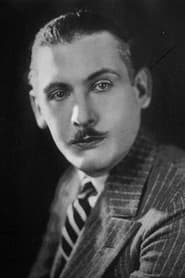
- Lew Cody, who plays Richard Gilder, was a popular leading man of the silent era who tragically died young at age 50
- The film was released during the Prohibition era, which may have influenced audience reception to themes of justice and morality
- Norma Talmadge Productions was one of the few independent production companies operated by a female star in the 1920s
Awards & recognition
- No major awards were given for the release, as the first Academy Awards ceremony was held in 1929
Visual style
The cinematography of 'Within the Law' was handled by Tony Gaudio and Ray June, both of whom would go on to have distinguished careers in Hollywood. The film employs the visual techniques typical of high-quality productions of the early 1920s, including careful lighting to create mood and emphasize emotional moments. The prison scenes are shot with darker, more shadowy lighting to convey the oppressive nature of Mary Turner's incarceration, while the scenes in the Gilder mansion use brighter, more elegant lighting to reflect the wealth and privilege of her adversaries. The camera work is relatively static by modern standards, but includes occasional tracking shots to follow characters through key scenes. The film makes effective use of close-ups to capture Talmadge's emotional expressions, which was crucial for conveying the character's inner turmoil in a silent film. The courtroom scenes use wider shots to establish the formal setting, then move to medium shots and close-ups to highlight the dramatic confrontations between characters.
Innovations
While 'Within the Law' did not introduce revolutionary technical innovations, it exemplified the high production standards of major silent films in 1923. The film features elaborate set designs, particularly for the department store, prison, and courtroom scenes, which required significant construction resources. The makeup techniques used to show Mary Turner's transformation over time were advanced for the period. The film also employed sophisticated editing techniques for its time, including cross-cutting between different storylines and the use of flashbacks to provide background information. The title cards were designed to be both informative and aesthetically pleasing, reflecting the importance of text in silent film storytelling. The film's success demonstrated the effectiveness of the multi-reel feature format, which was becoming the industry standard by 1923. The production also utilized the increasingly standardized lighting equipment and techniques that were being developed in Hollywood during this period.
Music
As a silent film, 'Within the Law' would have been accompanied by live musical performance during its original theatrical run. The score would have been compiled from existing classical pieces and popular songs of the era, along with original compositions by the theater's music director. The music would have been carefully synchronized with the on-screen action, with different themes for Mary Turner's transformation, the romantic elements, and the revenge sequences. The prison scenes would likely have been accompanied by somber, minor-key music, while the revenge sequences might have used more dramatic, tension-building pieces. The romantic moments between Mary and Richard would have featured lighter, more romantic themes. Some larger theaters might have had small orchestras, while smaller venues would have used a piano or organ. The film's success led to the publication of suggested cue sheets for theaters, helping standardize the musical accompaniment across different venues.
Famous quotes
As a silent film, 'Within the Law' contained no spoken dialogue, but featured significant intertitles including: 'I will live to see them pay for what they did to me!' - Mary Turner's vow in prison
'The law has loopholes, and I shall use them!' - Mary's realization of how to seek revenge
'Love has no place in a heart filled with vengeance' - Intertitle reflecting Mary's internal conflict
'Justice delayed is justice denied' - Theme expressed through intertitles
'I have learned that the law protects the guilty as well as the innocent' - Mary's cynical observation after her imprisonment
Memorable scenes
- Mary Turner's transformation scene in prison where she learns how to use the law to her advantage, marked by a change in her appearance and demeanor
- The courtroom climax where Mary must choose between continuing her revenge or finding redemption through love
- The department store scene where Mary is initially framed, establishing the injustice that drives the entire plot
- Mary's first meeting with Richard Gilder, unaware that he is the son of the man who wronged her
- The confrontation scene between Mary and Edward Gilder where she reveals her true identity and purpose
What audiences thought
Within the Law was well-received by audiences upon its release in 1923, contributing to Norma Talmadge's status as especially popular stars of the silent era. The film's themes of justice and revenge resonated with post-World War I audiences who were grappling with changing social values. The story's clear moral framework, despite its exploration of legal loopholes, provided satisfying entertainment for moviegoers of the time. Audience turnout was strong, particularly in urban areas where Talmadge's popularity was highest. The film's success led to increased demand for similar melodramas featuring strong female protagonists. Contemporary accounts suggest that audiences particularly appreciated the film's courtroom scenes, which provided dramatic tension without relying on action sequences. The film's reception helped solidify Talmadge's reputation for choosing projects that combined entertainment value with serious dramatic themes.
Film connections
Influenced by
- Bayard Veiller's 1912 play 'Within the Law'
- Earlier film adaptations of the same play (1915, 1917)
- Contemporary melodramas featuring strong female characters
- The tradition of revenge narratives in literature and theater
This film influenced
- The Dove (1926) - sequel also starring Norma Talmadge
- Later revenge melodramas of the 1920s and 1930s
- Film noir revenge narratives of the 1940s and 1950s
- Modern legal thrillers featuring protagonists who use the system against itself
Film restoration
Unfortunately, 'Within the Law' (1923) is now considered a lost film. Like many silent films, particularly those from the 1920s, it was not preserved adequately, and no complete copies are known to exist in film archives or private collections. This loss is particularly significant given Norma Talmadge's status as a major star of the era and the film's importance in her filmography. Some still photographs and promotional materials from the film survive in archives, providing some visual documentation of the production. The loss of the release is part of the larger tragedy of silent cinema, with estimates suggesting that up to 75% of American silent films have been lost. Film preservation efforts were minimal during the silent era, and the highly flammable nitrate film stock used at the time contributed to the loss of many titles through deterioration and fires.
Where to watch
- As a lost film, 'Within the Law' (1923) is not available for viewing in any format. No complete copies are known to exist in film archives, museums, or private collections. Film enthusiasts interested in the story can seek out Bayard Veiller's original play script, which is available in some theatrical libraries. The 1917 film adaptation, also titled 'Within the Law' and starring Alice Joyce, survives in archives and may be available through specialized film screenings or archives. Some film historians have included clips or stills from the 1923 version in documentaries about silent cinema or Norma Talmadge's career. The Library of Congress and other major film archives continue to search for lost films, and discoveries are occasionally made, so there remains a possibility that a copy may surface in the future.