

A Corner in Wheat
"This doubles the price of bread."
Keys: Space play/pause · ←/→ 10s · F fullscreen · M mute · </> speed
About this film
On a whim, a greedy tycoon decides to corner the world market in wheat. This doubles the price of bread, forcing grain producers into charity lines and others further into poverty. The film contrasts the differences between the lives of those who work to grow the wheat and the life of the man who dabbles in its sale for profit.
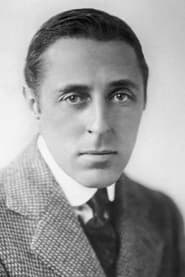
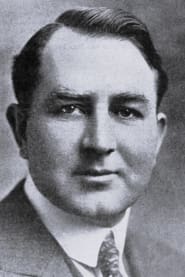
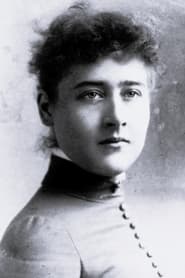
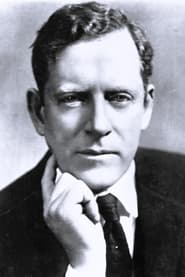
Cast & crew
More films like this
More Drama films
View all →







More from D.W. Griffith
View all →
More about this film
About the production
Release dateDecember 13, 1909
Box officeBox office records from 1909 are not available, but it was commercially successful for Biograph
ProductionAmerican Mutoscope and Biograph Company
Filmed inNew York City (studio scenes), New Jersey (field scenes)
Filmed in just two days with a small crew and basic equipment. The grain elevator scenes were particularly challenging to shoot, requiring the construction of a special set that could safely simulate the massive storage facility. Griffith insisted on using real wheat rather than props, which had to be sourced and transported to the studio. The film was shot on 35mm black and white film stock using hand-cranked cameras. The famous final scene in the grain elevator required innovative camera positioning and careful choreography to ensure actor safety while creating the dramatic effect of the tycoon being consumed by wheat.
Themes
Economic inequalityThe dehumanizing effects of capitalismSocial justiceThe disconnect between producers and consumersThe moral consequences of greed
Themes & topics
wheatstock marketpovertygreedsocial injusticewealth inequalityfarmersbread linesWall Streetgrain elevatordeathpoetic justicecross-cuttingsocial commentary
Historical background
Exhibitors around 1909 slotted A Corner in Wheat into mixed bills where shorts, newsreels, and features shared the same program.
Why this film matters
Historians treat A Corner in Wheat as evidence of what typical 1909 audiences could see in a program slot.
Making of
The production of 'A Corner in Wheat' was remarkably efficient even by 1909 standards. Griffith, working under contract for Biograph, had to produce multiple films each month. Despite these constraints, he managed to create a visually sophisticated and thematically ambitious work. The grain elevator sequence required special engineering - the crew built a wooden bin and filled it with real wheat, creating a platform system that could safely lower actor Frank Powell into the grain. The field scenes were shot on location in rural New Jersey, where Griffith insisted on using real farmers as extras to add authenticity. The studio scenes depicting the tycoon's luxury were filmed on Biograph's indoor sets in New York City. Griffith's innovative use of cross-cutting between these three distinct environments was considered groundbreaking and would influence filmmakers for decades. The entire production was completed in just two days of shooting, with minimal takes due to the expensive nature of film stock at the time.
What critics said
Audience data from 1909 is sparse; reception for A Corner in Wheat is inferred from reissue and archival interest.
Did you know?
- The film was inspired by Frank Norris's 1903 novel 'The Pit' and a G.K. Chesterton story called 'The Bread Line'
- It was selected for preservation in the United States National Film Registry in 1994 for being 'culturally, historically, or aesthetically significant'
- The film represents one of the earliest examples of social commentary in American cinema
- D.W. Griffith was only 24 years old when he directed
- The Wheat King character was played by Frank Powell, who later became a director himself
- The film's cross-cutting technique between different social classes was revolutionary for its time
- The famous grain elevator scene was accomplished by having the actor stand on a platform that was gradually lowered into a bin of wheat
- The film was part of Griffith's series of socially conscious films made before he gained fame with epics like 'The Birth of a Nation'
- It was one of the first films to explicitly critique capitalism and wealth inequality in America
- The original negative was lost but a paper print survived in the Library of Congress, allowing for restoration
Awards & recognition
- National Film Registry selection (1994)
- Named one of the '1000 Greatest Films' by The New York Times (2004)
Visual style
The cinematography by G.W. Bitzer, Griffith's regular collaborator, was groundbreaking for its time. Bitzer employed innovative camera techniques including dynamic framing and strategic positioning to create visual contrasts between the different social environments. The wheat field scenes utilized natural lighting to create a pastoral, almost romantic vision of agricultural labor. The tycoon's office was shot with dramatic lighting to emphasize his power and isolation. The grain elevator sequence featured remarkable low-angle shots that emphasized the overwhelming scale of industrial agriculture. Bitzer's camera work in the bread line scenes used medium shots to humanize the suffering of the poor. The film's most innovative aspect was its use of cross-cutting between these visually distinct environments, creating a rhythmic editing pattern that emphasized the connections between different social classes. The cinematography helped establish the visual language that would define American cinema for decades.
Innovations
A Corner in Wheat was technically groundbreaking for 1909. Its most significant achievement was the sophisticated use of parallel editing to tell multiple stories simultaneously, a technique that was revolutionary at the time. The film demonstrated advanced understanding of cinematic time and space, cutting between different locations to create thematic connections. The grain elevator sequence required innovative set construction and camera work to safely film the dramatic death scene. The film's use of location shooting for the farming scenes was unusual for the period, when most filming still took place on studio sets. The production also experimented with different camera angles and movements to create visual variety and emphasize social contrasts. The film's pacing and rhythm, achieved through careful editing, showed a sophisticated understanding of cinematic storytelling that was years ahead of its time. These technical innovations would influence filmmaking practices throughout the silent era and beyond.
Music
As a silent film, A Corner in Wheat originally had no synchronized soundtrack. However, it would have been accompanied by live music during theatrical screenings. Typical accompaniment would have included a pianist or small orchestra playing popular classical pieces and original compositions. The film's dramatic structure suggested specific musical cues: pastoral music for the farming scenes, dramatic classical pieces for the tycoon's scenes, and somber music for the bread line sequences. Modern restorations have been accompanied by newly composed scores by silent film specialists. The 2010 restoration by the Museum of Modern Art featured an original score by composer Stephen Horne. Some contemporary screenings have used period-appropriate music compiled from 1909 sheet music collections. The absence of dialogue in the film makes the musical accompaniment particularly important for conveying emotion and enhancing the narrative impact.
Famous quotes
(Intertitle) 'The Wheat King - A man who could control the price of bread for all the world'
(Intertitle) 'While the poor starved, the Wheat King counted his millions'
(Intertitle) 'The law of supply and demand - when one man controls both'
(Intertitle) 'In the grain elevator - the wheat that made him rich became his tomb'
(Intertitle) 'And so the wheel turns - the farmer returns to his fields, the poor receive bread, and the Wheat King sleeps in his golden grave'
Memorable scenes
- The opening sequence showing wheat being harvested by hand, emphasizing the connection between labor and food
- The dramatic cross-cutting between the tycoon's luxurious office celebration and the bread lines of starving people
- The powerful final scene where the Wheat King falls into the grain elevator and is consumed by the wheat he commodified
- The sequence showing farmers abandoning their wheat fields because they cannot afford to harvest their own crops
- The shot of the Wheat King's body being discovered in the grain, covered in the very commodity that made him wealthy
What audiences thought
The film was well-received by audiences of 1909, who were impressed by its dramatic power and technical sophistication. Contemporary newspaper accounts reported that audiences responded particularly strongly to the contrast between the wealthy tycoon's lifestyle and the suffering of the poor. The grain elevator death scene was described as 'genuinely shocking' and 'deeply moving' by viewers of the time. The film's clear moral message resonated with working-class audiences who were experiencing the effects of economic inequality firsthand. Despite its serious themes, the film was commercially successful for Biograph, leading to increased demand for Griffith's socially conscious works. Modern audiences encountering the film through retrospectives and film festivals continue to be impressed by its technical mastery and timeless themes. The film's inclusion in the Library of Congress's National Film Registry has introduced it to new generations of viewers who often express surprise at how sophisticated and relevant a 1909 film can be.
Film connections
Influenced by
- Frank Norris's novel 'The Pit'
- G.K. Chesterton's 'The Bread Line'
- Progressive Era social reform movements
- Naturalist literature of the early 1900s
- Contemporary newspaper reports about market manipulation
- The social realist paintings of the Ashcan School
This film influenced
- The Grapes of Wrath (1940)
- Intolerance (1916)
- Strike (1925)
- The General Line (1929)
- Modern Times (1936)
- The Great Depression documentary films
- Contemporary social issue documentaries
- The films of Ken Loach
- Parasite (2019)
Film restoration
The film is preserved in the Library of Congress as part of the National Film Registry. The original camera negative was lost, but a complete paper print survived in the Library's collection, which was used to create a restored 35mm version in the 1990s. The Museum of Modern Art also holds a restored print. The film is considered to be in good preservation condition with no missing footage. It has been digitally remastered for home video and streaming platforms.
Where to watch
- The Criterion Channel
- Kino Lorber's 'The D.W. Griffith Collection' DVD/Blu-ray set
- YouTube (public domain versions)
- The Library of Congress's National Screening Room
- Museum of Modern Art's film collection screenings
- Various streaming services specializing in classic cinema
- Film archives and cinematheques worldwide