1941 · Approximately 7 minutes

Also available on: Wikimedia
All's Well

All's Well

1941 Approximately 7 minutes United States
Domestic chaosFrustration and perseveranceSlapstick comedyOrder versus disorderCaregiving absurdity

Plot

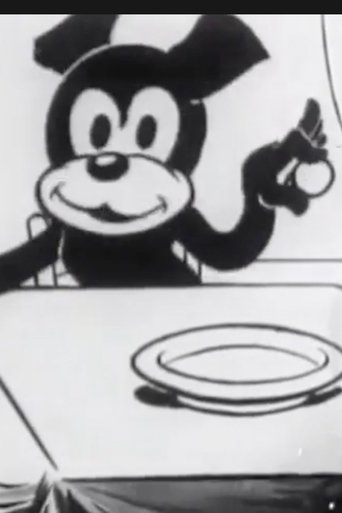
Gabby, the well-meaning but exasperatingly fussy heroine, spends the cartoon trying to make everything around her "all well," even when ordinary domestic chores become absurdly complicated. The central gag revolves around a troublesome baby who refuses to cooperate, leading Gabby into an escalating attempt to change the infant's diaper and restore order to the household. As with many Fleischer-era shorts, the comedy depends on frantic physical business, exaggerated facial reactions, and a succession of escalating mishaps rather than a complex narrative. The short builds to a series of slapstick reversals in which Gabby's attempts at caregiving only make the situation more chaotic, keeping the tone light, fast, and broadly comic from start to finish.

About the Production

Release Date 1941
Production Paramount Pictures, Famous Studios
Filmed In New York City, New York, USA

All's Well is a short animated theatrical release associated with the Famous Studios era of the Fleischer/Paramount cartoon output, directed by Dave Fleischer. Like many studio cartoons of the early 1940s, it was produced as a labor-intensive hand-drawn short meant to be exhibited in theaters ahead of feature films. Surviving documentation on exact budget, box office, and even some release details is limited, which is typical for animated shorts of this period. Its humor is built around domestic slapstick and character comedy, reflecting the studio's reliance on recurring cartoon personalities and fast gag construction rather than elaborate narrative continuity. The film appears to have been produced in the United States and released through Paramount's distribution system.

Historical Background

All's Well was made in 1941, a year when the United States was on the brink of entering World War II and American popular entertainment was still dominated by theatrical exhibition. Animated shorts were an important part of the weekly cinema experience, often screened before the main feature, and studios like Famous/Paramount were expected to supply a steady stream of light comedy for all ages. The film belongs to the final years of the classical theatrical cartoon system in which hand-drawn shorts were produced in volume for cinema audiences, long before television reruns and home video would transform how such works were consumed. Its domestic, low-stakes humor reflects a broader trend in early-1940s animation toward easily legible gag cartoons that could play quickly and effectively for diverse audiences.

Why This Film Matters

Although not one of the best-known cartoons of its era, All's Well is culturally significant as a representative example of early-1940s American theatrical animation and of the Fleischer/Famous house style. It helps document how studios used recurring characters such as Gabby to build short-form comedy around everyday frustrations, broadening animation beyond fantasy spectacle into domestic situational humor. For historians, films like this are valuable because they illuminate the industrial routine of the period: rapid production, theatrical distribution, and reliance on gag pacing and expressive movement. Its significance lies less in celebrity or awards than in its place within the evolving language of American cartoon comedy and the preservation of studio-era animation practices.

Making Of

All's Well was produced during a transitional period in the Fleischer/Famous Studios lineage, when the classic New York-based animation unit was continuing its short-subject output for Paramount. Dave Fleischer's involvement places the film squarely within the studio's long-running house style, which emphasized lively timing, expressive character animation, and gag-driven storytelling. As with many shorts from this era, the production likely relied on a small team of animators, layout artists, background painters, and ink-and-paint staff working under tight deadlines to supply theaters with regular cartoon programming. Specific production anecdotes, casting notes, and surviving internal records are scarce, but the short's domestic setup and diaper-change premise indicate the studio was mining everyday situations for broad comedic exaggeration. The film's relative obscurity today is not unusual for the period, as many such shorts circulated widely in theaters but received limited long-term documentation compared with feature films.

Visual Style

As an animated short, All's Well does not use live-action cinematography in the conventional sense, but it does rely on the visual principles of staging, composition, and motion control that define classic cartoon filmmaking. The visual style would have followed the studio's characteristic hand-drawn approach: clear poses, elastic movement, tightly timed reaction shots, and gags staged for maximum readability on a theater screen. Backgrounds in Famous Studios shorts of this era typically supported the action without overwhelming it, allowing the characters' physical comedy to dominate the frame. The animation likely emphasizes facial expressions and repeated action beats, using close visual emphasis on the baby-care gag to keep the audience focused on escalating chaos.

Innovations

The film's technical achievements are those of polished studio-era short animation: precise synchronization between action and music, exaggerated motion for comic effect, and efficient storytelling within a very short runtime. Its craftsmanship lies in the economy of setup and payoff, with a simple premise sustained through escalating visual gags. As a product of the early 1940s, it reflects the mature hand-drawn production techniques of the period rather than any single groundbreaking innovation. The short demonstrates the studio's ability to turn a simple domestic premise into a rhythmically structured cartoon built around timing, pose, and reaction.

Music

Specific music cue sheets for this short are not readily available in widely accessible sources, but it would have featured the standard studio practice of synchronized orchestral underscore supporting gag timing and physical action. Like many early-1940s theatrical cartoons, the soundtrack likely used energetic, scene-specific cues, comedic stingers, and accent hits to punctuate slapstick moments. Dialogue, if present, would be brief and functional, with the humor carried primarily by timing, voice characterization, and sound effects. The score would have been designed to work in lockstep with the animation, reinforcing each mishap and reaction.

Famous Quotes

No widely documented quotable dialogue is readily available for this short.
The film is better known for its gag-driven action than for memorable spoken lines.

Memorable Scenes

  • Gabby attempting to change the baby's diaper while the situation spirals into increasingly frantic slapstick.
  • The repeated escalation of domestic mishaps as Gabby tries to keep everything "all well" and under control.
  • The baby's fussiness serving as the comic engine that defeats every attempt at order.

Did You Know?

  • The short is directed by Dave Fleischer, one of the key creative figures behind the Fleischer studio legacy and its transition into the Famous Studios period.
  • It features Gabby, a character associated with the Fleischer/Paramount cartoon universe, in a domestic-comedy setting rather than a fantasy or adventure setting.
  • The plot premise centers on a baby and a diaper-change gag, a type of broad domestic humor that was common in theatrical cartoons of the early 1940s.
  • The title "All's Well" is a punning phrase that fits the short's comedic tone and hints at the absurd attempt to keep everything orderly.
  • As with many theatrical shorts from this era, the film was designed to play as a supporting program item rather than as a stand-alone feature.
  • Documentation on many Famous Studios shorts is sparse, so surviving synopses are often brief and derived from archive records or plot descriptions rather than full contemporary reviews.
  • The cartoon belongs to a period when American animation was heavily geared toward short-form theatrical exhibition before television changed the market.
  • Because it is an early-1940s animated short, original theatrical prints would likely have been shown in 35mm with optical sound.
  • The film's comedy depends on escalating slapstick and character reaction shots, a hallmark of Fleischer-style cartoon timing.
  • It represents one of the many lesser-known shorts in the studio's catalog that are now primarily of interest to animation historians and collectors.

What Critics Said

Contemporary critical coverage of shorts like All's Well was typically minimal, since reviews tended to focus on feature films rather than the supporting cartoons. Available evidence suggests it would have been received as a routine comedic program short, appreciated for its slapstick mechanics and character antics rather than judged as a major standalone work. In modern terms, the short is generally of interest to animation scholars, archive viewers, and fans of Fleischer/Famous Studios output, who value it as part of the broader studio catalogue. Because it is relatively obscure, there is little widely circulated modern criticism, though it is likely seen as a competent example of the era's domestic gag cartoon format.

What Audiences Thought

Original audience reception is not well documented, but theatrical cartoon shorts like All's Well were generally consumed as part of the regular cinema program and expected to deliver quick laughs rather than generate sustained public discussion. Audiences of the time would likely have responded to the exaggerated baby-care chaos and Gabby's increasingly frantic efforts as familiar slapstick comedy. Today, the film is mostly encountered by specialized viewers, animation researchers, and collectors, so audience response tends to be appreciation for its historical context, character animation, and period humor. Its limited modern visibility means it does not have a broad popular audience, but it remains a curiosity within classic cartoon fandom.

Film Connections

Influenced By

  • Vaudeville and slapstick comedy traditions
  • Classic silent comedy timing
  • Fleischer Studios cartoon style
  • Everyday domestic humor in early animation

This Film Influenced

  • Later domestic gag cartoons from the Golden Age of American animation
  • Short-form studio comedies that centered on caregiving or household chaos

Film Restoration

The film is not known to be lost and appears to survive in archival or collector circulation, though detailed restoration information is not widely documented.

Themes & Topics