At the Altar
"Boarding-house suitors compete for a romantic landlady's daughter."
Keys: Space play/pause · ←/→ 10s · F fullscreen · M mute · </> speed
About this film
Boarding-house suitors the male boarders were all smitten with the charms of Minnie, the landlady's pretty daughter, but she was of a poetic turn of mind and her soul soared above plebeianism and her aspirations were romantic. Most persistent among her suitors was Grigo, a coarse Sicilian, whose advances were odiously repulsive. The arrival at the boarding house from the old country of Giuseppe Cassella, the violinist, filled the void in her yearning heart. Romantic, poetic and a talented musician, Giuseppe was indeed a desirable husband for Minnie.
Cast & crew
More films like this


More Drama films
View all →







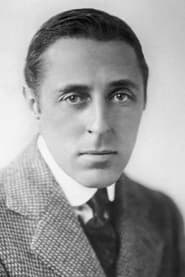
More from D.W. Griffith
View all →
More about this film
About the production
Release dateMarch 22, 1909
ProductionAmerican Mutoscope and Biograph Company
Filmed inNew York City, Fort Lee, New Jersey
This was one of D.W. Griffith's early directorial efforts for Biograph, filmed during his first year with the company. The film was shot on location in the New York area, typical of Biograph's production methods at the time. The boarding house setting was likely a rented location or studio set designed to evoke an authentic Italian immigrant atmosphere.
Themes
Romantic idealism versus realityImmigrant experience in AmericaArtistic sensibility versus coarsenessCultural preservation in a new landFemale agency in partner selection
Themes & topics
Historical background
By 1909, distribution networks were widening, and At the Altar reached viewers through the same short-program bills that mixed comedy, news, and spectacle.
Why this film matters
For historians, At the Altar is less a blockbuster than a datapoint—showing what audiences in 1909 could see on a typical program.
Making of
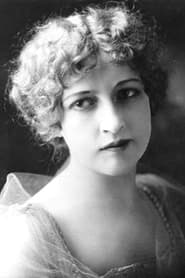
The making of 'At the Altar' occurred during D.W. Griffith's formative period as a director at Biograph. Griffith, who had transitioned from acting to directing in 1908, was rapidly developing his cinematic language and storytelling techniques. The film was shot with the primitive equipment of the era, using hand-cranked cameras that required precise timing. Marion Leonard, already an established actress, worked closely with Griffith to develop the nuanced performance required for Minnie's character. The production likely took only one or two days to shoot, typical of Biograph's rapid production schedule. The Italian boarding house setting required careful attention to period detail and authenticity, as Biograph films were known for their realistic approach to production design. The musical element of the story, centered on Giuseppe's violin playing, would have been suggested through the actors' performances and intertitles, as the film itself was silent.
What critics said
Audience surveys from 1909 are scarce; reception for At the Altar must be inferred from reissue patterns and how often programmers still book it.
Did you know?
- This was one of over 40 short films D.W. Griffith directed in 1909 alone, demonstrating his incredible productivity during his early Biograph period
- Marion Leonard, who played Minnie, was one of Griffith's favorite early actresses and appeared in numerous Biograph films between 1908-1911
- The film was released during a period when Italian immigration to America was at its peak, making the subject matter particularly relevant to contemporary audiences
- At 11 minutes, this was considered a relatively long film for 1909, as most films of the era were under 10 minutes
- The character of Giuseppe Cassella as a violinist reflects the early film industry's fascination with artistic and musical characters
- This film was part of Biograph's strategy to produce films with ethnic themes to appeal to America's growing immigrant population
- The boarding house setting was a common backdrop in early films, representing the melting pot nature of American urban life
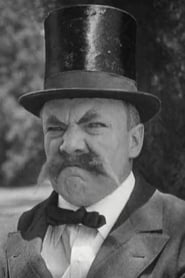
- Charles Inslee, who played Grigo, was a regular character actor in Griffith's early films, often playing villainous or comic relief roles
- The film's title 'At the Altar' suggests a wedding conclusion, though the actual ending focuses more on the romantic resolution than the ceremony itself
- This was one of the first films to portray Italian-American characters with some depth rather than as simple caricatures
Visual style
The cinematography of 'At the Altar' reflects the technical limitations and aesthetic conventions of 1909 filmmaking. The film was likely shot using a hand-cranked camera, resulting in the slightly variable frame rates characteristic of the era. The lighting would have been primarily natural or basic artificial lighting, creating the high-contrast images typical of early cinema. Camera movement was minimal, with most shots being static medium or long takes, as dollies and other mobile equipment were not yet in common use. The composition would have followed theatrical conventions, with actors positioned to face the camera directly. Close-ups were rare in 1909, so the film would have relied primarily on medium shots and long shots to tell its story. The visual style would have emphasized clarity and legibility to ensure the narrative was easily understood by audiences still adapting to the new medium of cinema.
Innovations
While 'At the Altar' does not feature major technical innovations, it represents the refinement of existing filmmaking techniques in 1909. The film demonstrates improved continuity editing compared to earlier cinema, with more sophisticated scene transitions and temporal relationships. The use of intertitles would have been more integrated into the narrative flow than in earlier films. The production shows the development of location shooting techniques, as Biograph was pioneering the use of authentic outdoor and interior locations rather than relying solely on studio sets. The film's length of 11 minutes represents the gradual expansion of narrative capacity in early cinema. The lighting techniques, while basic by modern standards, show improvements in creating mood and atmosphere within the technical constraints of the era.
Music
As a silent film, 'At the Altar' would have been accompanied by live musical performance during its theatrical exhibition. The typical accompaniment would have consisted of a pianist or small ensemble in nickelodeons and smaller theaters, while larger venues might have featured a small orchestra. The music would have been selected to match the mood of each scene, with romantic themes for Minnie and Giuseppe's scenes, more dramatic or comical music for Grigo's appearances, and suspenseful music during confrontations. Popular songs of the era and classical pieces would have been adapted for the accompaniment. The violinist character in the story would have suggested musical elements in the score, with string instruments prominently featured. The accompaniment would have been improvised or arranged by the house musician, varying from theater to theater.
Famous quotes
As a silent film, 'At the Altar' contained no spoken dialogue. Any quotes would have appeared in intertitles, but specific intertitle text from this film has not been preserved in available documentation.
Memorable scenes
- The arrival of Giuseppe Cassella at the boarding house, where his refined demeanor and violin case immediately distinguish him from the other boarders
- The confrontation scene between the brutish Grigo and the artistic Giuseppe, highlighting the contrast between coarse passion and refined love
- Minnie's reaction to hearing Giuseppe play the violin for the first time, showing her emotional response to true artistry
- The final resolution where Minnie chooses her poetic soulmate over her persistent but unsuitable suitor
What audiences thought
Audience reception in 1909 was generally positive for Biograph films, which were known for their quality and entertainment value. The film's romantic storyline and relatable immigrant setting would have appealed to the diverse urban audiences of nickelodeons and small theaters. Italian-American audiences in particular would have appreciated the authentic representation of their culture and community. The film's length of 11 minutes was substantial for the era, providing audiences with a complete narrative experience. The boarding house setting and familiar character types would have resonated with working-class audiences who lived in similar urban environments. The romantic resolution would have provided the satisfying emotional payoff that early film audiences expected from melodramatic productions.
Film connections
Influenced by
- Theatrical melodrama traditions
- Contemporary literature about immigrant life
- Italian opera and musical traditions
- Progressive Era social reform literature
- Earlier Biograph short films
- Stage plays about urban life
- Newspaper stories about immigrant communities
This film influenced
- Later Biograph films with ethnic themes
- Griffith's subsequent works featuring artistic characters
- Early 1910s films about immigrant life
- Romantic melodramas of the silent era
- Films featuring musicians as protagonists
Film restoration
The film is preserved in the Library of Congress collection and has been made available through various archival channels. As a Biograph film, it benefited from the company's practice of maintaining copies of their productions. The film exists in 16mm and digital formats, though some degradation may be present due to the age of the original nitrate material. The preservation status allows for continued study and exhibition of this important early work.
Where to watch
- Library of Congress National Screening Room
- Museum of Modern Art Film Collection
- UCLA Film & Television Archive
- Early cinema streaming platforms specializing in public domain films
- Academic film archives and university collections
- Silent film festivals and special screenings