

Billy the Kid
"Billy the Kid and Pat Garrett"
Keys: Space play/pause · ←/→ 10s · F fullscreen · M mute · </> speed
About this film
Billy, after shooting down land baron William Donovan's henchmen for killing Billy's boss, is hunted down and captured by his friend, Sheriff Pat Garrett. He escapes and is on his way to Mexico when Garrett, recapturing him, must decide whether to bring him in or to let him go.
Cast & crew
More films like this
More Western films
View all →

More from King Vidor
View all →
More about this film
About the production
Release dateOctober 18, 1930
BudgetApproximately $700,000
Box officeEstimated $1.5 million (domestic)
ProductionMetro-Goldwyn-Mayer (MGM)
Filmed inZion National Park, Utah, Grand Canyon, Arizona, Gallup, New Mexico, Porter Ranch, San Fernando Valley, California, Kit Carson Cave, New Mexico
The film was a massive undertaking for MGM, intended to be a flagship production for their new 'Realife' 70mm widescreen process. Director King Vidor insisted on shooting on location to capture the authentic scale of the West, leading the crew to remote areas of Utah and Arizona. Because most theaters were not yet equipped for widescreen projection due to the Great Depression, Vidor was forced to shoot the entire film twice: once with a 70mm camera and simultaneously with a standard 35mm camera. This dual-production method significantly increased the logistical complexity and cost of the shoot.
Themes
Justified VengeanceThe Burden of Law vs. Personal LoyaltyThe Romanticization of the OutlawThe Closing of the American FrontierBetrayal and Redemption
Themes & topics
Lincoln County WarJailbreakOutlawSheriffVengeanceNew MexicoCattle WarFrontier Justice
Historical background
Billy the Kid reached theaters around 1930, balancing wartime logistics with demand for escapist programming.
Why this film matters
Billy the Kid reflects the range of mid-century production beyond a single national mainstream.
Making of
The production of 'Billy the Kid' was plagued by the technical limitations of early sound recording in outdoor environments. Microphones had to be hidden in bushes and rocks, and actors often had to shout or speak with exaggerated slowness to ensure their lines were captured clearly over the wind and ambient noise. King Vidor struggled with the casting of Kay Johnson, later admitting he felt she was a poor fit for the role but was too far into production to replace her. The crew also faced extreme weather conditions while filming in the Grand Canyon and Zion National Park, transporting heavy 70mm equipment through rugged terrain that had rarely been used for major motion pictures.
What critics said
Press notices for Billy the Kid (1930) are sparse in digitized sources; interest today rests on preserved prints and comparison with related titles.
Did you know?
- The film was shot in an early 70mm widescreen process called 'Realife,' which was MGM's answer to Fox's 'Grandeur' process.
- Johnny Mack Brown was a former All-American college football star for the University of Alabama before becoming an actor.
- Two different endings were filmed: one for the American market where Billy escapes to Mexico, and a more historically accurate one for European audiences where he is killed.
- The film is based on Walter Noble Burns' 1926 bestseller 'The Saga of Billy the Kid,' which was the first major biography to romanticize the outlaw.
- Wallace Beery, who played Pat Garrett, was nominated for an Oscar for 'The Big House' the same year was released.
- Director King Vidor changed the names of several historical figures to avoid legal trouble with living relatives in New Mexico.
- The character 'Bob Ballinger' is a composite of historical deputies Bob Olinger and J.W. Bell, both of whom Billy killed during his escape.
- John Gilbert was originally slated to play Billy the Kid, but MGM executives replaced him with the rising star Johnny Mack Brown.
- The film features a rare appearance by Karl Dane, a silent film star whose career struggled significantly after the transition to sound.
- King Vidor later expressed that the 70mm version was vastly superior, noting that the wide frame 'seemed to see around each object.'
Awards & recognition
- Nominated for 2 Academy Awards (Cinematography and Sound Recording)
Visual style
Gordon Avil's cinematography is the film's most celebrated feature. Using the Realife 70mm process, Avil captured sweeping, panoramic vistas of the American Southwest that provided a sense of depth and scale previously unseen in cinema. The use of natural light and deep focus in the outdoor sequences was decades ahead of its time, though much of this impact is lost in the surviving 35mm prints.
Music
The film features a minimal score, typical of early sound films which often relied on diegetic music or silence to avoid distracting from the dialogue. Douglas Shearer, the head of MGM's sound department, oversaw the recording, which was considered a technical marvel for its time despite the 'plodding' nature of the recorded speech. The sound of gunfire and galloping horses was emphasized to showcase the power of the new medium.
Famous quotes
Billy: 'Before I die, I'm gonna shoot down like a dog every man that had anything to do with this.'
Pat Garrett: 'I'm a lawman now, Billy. There ain't no room for friends in a sheriff's badge.'
Billy: 'I ain't worth it, Miss Claire. A man like me is just a shadow on the trail.'
Memorable scenes
- The Siege of the McSween House: A high-tension sequence where Billy and his allies are trapped in a burning building while Donovan's men wait outside.
- The Jailbreak: Billy uses a hidden gun to kill his guards and makes a daring leap from the balcony of the Lincoln County Courthouse.
- The Final Ambush: A tense, quiet confrontation in the dark where Pat Garrett must decide whether to pull the trigger on his old friend.
What audiences thought
The film was a moderate success at the box office, grossing over $1.5 million, but it failed to reach the blockbuster heights MGM had hoped for given its high production costs. While audiences appreciated the star power of Wallace Beery, the 'wooden' delivery of the dialogue—a common issue in early sound films—prevented it from becoming a definitive hit. However, it remained a staple of the Western genre in the early 1930s.
Film connections
Influenced by
- The Saga of Billy the Kid (1926 book by Walter Noble Burns)
- The Covered Wagon (1923)
- The Big Parade (1925)
This film influenced
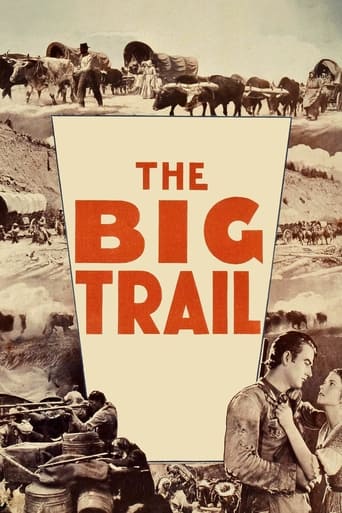
- The Big Trail (1930)
- Billy the Kid (1941 remake)
- The Left Handed Gun (1958)
- Pat Garrett and Billy the Kid (1973)
- Young Guns (1988)
Film restoration
The original 70mm 'Realife' widescreen version was long considered lost, with only the 35mm 'standard' version available for decades. However, a 70mm print was reportedly discovered and a restoration was showcased at the 70th Berlin International Film Festival in 2020. The 35mm version is well-preserved and widely available.
Where to watch
- Warner Archive Collection (DVD)
- TCM (Turner Classic Movies)
- Amazon Prime Video (Rent/Buy)
- Apple TV (Rent/Buy)
- YouTube (Public Domain/Licensed uploads)