
Chapayev
"Civil War legend on the Volga front"
Keys: Space play/pause · ←/→ 10s · F fullscreen · M mute · </> speed
About this film
An account of the peasant turned mythical military hero Vasily Chapayev, charting his campaign in the Red Army during the Russian Civil War.
Cast & crew
More films like this
More Drama films
View all →







More from Sergey Vasilev
View all →
More about this film
About the production
Release dateNovember 6, 1934 (premiere in Leningrad)
Box officeUnknown - Soviet box office tracking was different from Western systems, but the film was enormously popular with millions of viewers
ProductionLenfilm Studio (Leningrad Film Studio)
Filmed inLeningrad (now St. Petersburg), Soviet Union, Various locations around the Volga region
The film was co-directed by the Vasilyev brothers (Georgi and Sergey), though often credited only to Sergey Vasilev. Production took place during a challenging period of Soviet cinema under Stalin's regime. The filmmakers worked closely with military advisors to ensure historical accuracy in battle sequences. The film employed thousands of extras for the battle scenes, making it one of the largest-scale productions of its time in the Soviet Union. The production team faced significant pressure from Soviet authorities to create a film that would serve as proper socialist realist propaganda while maintaining artistic quality.
Themes
Themes & topics
accountpeasantturnedmythicalmilitary
Historical background
Soviet audiences saw Chapayev in 1934 as Stalinist cinema elevated Civil War heroes; the film became one of the USSR's most popular titles.
Why this film matters
Chapayev's catchphrases entered Soviet popular speech, and the character became a staple of propaganda posters and classroom history.
Making of
Production records for Chapayev are limited, though release paperwork confirms its place in 1934 distribution.
What critics said
Soviet critics celebrated its battle scenes; Western scholars later analyzed its myth-making around the Civil War hero.
Did you know?
- Chapayev is documented as a 1934 release in studio and trade listings.
- Surviving materials help place Chapayev among contemporaneous shorts and features.
Awards & recognition
- Stalin Prize (1941) - First Class
- Order of Lenin awarded to the directors
- Venice Film Festival - Special Recommendation (1935)
- People's Artist of the USSR title awarded to Boris Babochkin
Visual style
The cinematography by Aleksandr Sigaev was groundbreaking for Soviet cinema of the 1930s, employing innovative techniques that enhanced the film's dramatic impact. The battle sequences were filmed using dynamic camera movements and multiple angles, creating a sense of immediacy and chaos that was rare for the period. The use of deep focus allowed for complex compositions showing both foreground action and background elements, particularly effective in the large-scale battle scenes. The film's visual style balanced the documentary-like realism of the battle footage with more stylized, dramatic lighting for the character moments. The cinematography made effective use of the Soviet landscape, particularly the vast steppes and rivers where the historical events took place. The black and white photography employed strong contrasts to emphasize the moral clarity of the narrative, with the Red Army forces often shown in brighter light than their White Army opponents. The film also featured innovative uses of camera placement, including low angles that emphasized the heroic stature of Chapayev and his men. The technical quality of the cinematography was particularly impressive given the limitations of Soviet film equipment of the era.
Innovations
The film represented several technical breakthroughs for Soviet cinema, particularly in its use of sound synchronization and large-scale battle sequences. The production team developed innovative techniques for coordinating thousands of extras in complex battle formations, creating some of the most realistic and large-scale war scenes of the era. The film's sound recording was particularly advanced, with the use of multiple microphones to capture both dialogue and battle effects with clarity. The special effects team developed new methods for simulating artillery explosions and gunfire that were more realistic than previous Soviet productions. The film also pioneered techniques for combining location shooting with studio work, creating a seamless visual narrative. The editing by Evgeni Schneider was innovative for its time, particularly in the rhythm and pacing of the battle sequences. The film's successful integration of sound elements represented a significant advancement over early Soviet sound films, which often struggled with audio quality. The production also developed new methods for historical costume and prop design that influenced subsequent Soviet historical films. These technical achievements helped establish Lenfilm as among the leading technically sophisticated studios in the Soviet Union.
Music
The musical score was composed by Gavriil Popov, who created a powerful orchestral soundtrack that blended traditional Russian folk elements with modernist techniques. The music effectively supported the film's narrative arc, with triumphant themes for the Red Army victories and somber passages for moments of sacrifice and loss. The soundtrack made innovative use of leitmotifs, with specific musical themes associated with each main character. The film's sound design was advanced for its time, particularly in the battle sequences where the combination of music, gunfire, and explosions created a immersive audio experience. The soundtrack included several revolutionary songs that were popular at the time, helping to ground the film in its historical period while also serving its propagandistic function. The recording quality was exceptional for Soviet cinema of the 1930s, demonstrating the technical sophistication of the Lenfilm studio facilities. The musical themes from the film became so popular that they were frequently performed separately in concerts and on the radio. The soundtrack's success helped establish Popov as one of the leading film composers in the Soviet Union.
Famous quotes
If you don't know how to fight, learn! If you can't learn, get out of the way!
A commander must be brave, but not reckless. He must be smart, but not cunning.
The White Army has gold and foreign support, but we have the people and justice on our side.
In war, there are no small details. Everything matters.
A good commander is like a good father - strict but fair.
Memorable scenes
- The potato strategy scene where Chapayev explains military tactics using potatoes on a table, demonstrating his ability to make complex concepts understandable to ordinary soldiers
- The final battle sequence where Chapayev, despite being wounded, continues to lead his men against overwhelming odds
- The scene where Petka and Anka declare their love amidst the chaos of war, showing the human side of the conflict
- Chapayev's speech to his troops before a major battle, inspiring them with his passionate commitment to the revolution
- The emotional farewell scene between Chapayev and his comrades, knowing it may be their last meeting
What audiences thought
The film was an unprecedented commercial success in the Soviet Union, with millions of viewers seeing it multiple times during its initial theatrical run. Soviet audiences connected deeply with the characters, particularly the charismatic Chapayev and his loyal companions. The film's popularity led to long lines at theaters and sold-out screenings for months after its release. Audience members reportedly wept during Chapayev's death scene, demonstrating the emotional impact the film had on viewers. The characters became so beloved that they entered everyday conversation and folklore, with 'Petka and Vasily Ivanovich' jokes becoming a staple of Soviet humor for decades. The film's success with audiences was remarkable given its overt propagandistic content, suggesting that the filmmakers succeeded in creating compelling characters that transcended their ideological function. Even in later decades, the film remained popular through television broadcasts and theatrical revivals. Post-Soviet audiences continue to appreciate the film, though often with a more critical awareness of its propagandistic elements. The film's enduring popularity is evidenced by its regular inclusion in retrospective film festivals and classic cinema programs.
Film connections
Influenced by
- Sergei Eisenstein's 'October' (1928) - for its revolutionary subject matter
- Vsevolod Pudovkin's 'The End of St. Petersburg' (1927) - for its historical narrative structure
- Traditional Russian folk tales and byliny (epic poems) - for their heroic storytelling
- Socialist realist literature of the 1930s - for its ideological framework
- Soviet historical paintings of the 1920s-30s - for their visual style and heroic poses
This film influenced
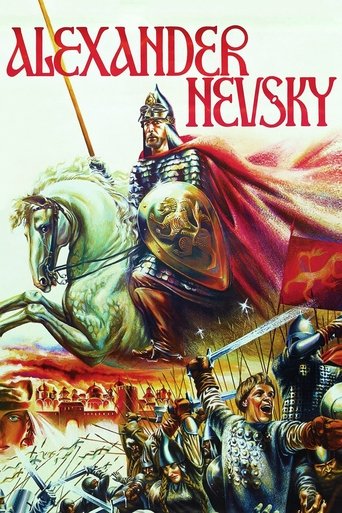
- Alexander Nevsky (1938) - in its portrayal of a military hero
- The Cranes Are Flying (1957) - in its emotional depiction of wartime sacrifice
- Ballad of a Soldier (1959) - in its humanization of military characters
- Come and See (1985) - in its realistic battle sequences
- Later Soviet war films that emphasized the human element in warfare
Film restoration
Availability of Chapayev depends on archive holdings and rights status.