Chicago
"She danced her way to acquittal."
Keys: Space play/pause · ←/→ 10s · F fullscreen · M mute · </> speed
About this film
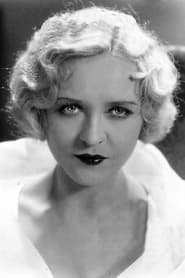
Based on a true story, two-timing boozing wife Roxie Hart kills her lover in cold blood after he leaves her, and finagles her way out being indicted. The basis for Kander/Ebb's 1975 Broadway musical of the same name and its Oscar-winning 2002 film adaptation. The first film adaptation of Maurine Dallas Watkins' 1926 play of the same name, the film stars Phyllis Haver as Roxie Hart, a fame-obsessed housewife who kills her lover in cold blood and, after trying to coerce her husband into taking the blame, is put on trial for murder.
Cast & crew
More films like this
More Comedy films
View all →







More about this film
About the production
Release dateDecember 23, 1927
Box officeModerately successful - exact figures not recorded but considered profitable for DeMille Pictures Corporation
ProductionCecil B. DeMille Pictures Corporation, Pathé Exchange
Filmed inDeMille Studios, Hollywood, California
This was one of Cecil B. DeMille's productions where he served as producer but not director, handing the reins to Frank Urson, his trusted assistant. The film was rushed into production to capitalize on the success of the Broadway play. The jazz age setting required elaborate period costumes and sets that reflected the roaring twenties Chicago atmosphere. The film featured several dance numbers and musical sequences that were accompanied by live orchestras in theaters, as this was still a silent production.
Themes
Media sensationalism and the commodification of crimeThe corrupting influence of fameGender roles and female agency in the 1920sJustice versus celebrityThe American Dream's dark side
Themes & topics
murdermedia manipulationjazz agecourtroom dramacelebrity criminalinfidelityfemme fataletabloid journalismlegal systempublicitymarriagecrime of passionvaudeville1920sChicago
Historical background
Silent-era production in 1927 relied on intertitles, live accompaniment, and studio systems that were rapidly consolidating into national industries. Archival sources describe Chicago as 1927 film by frank john urson. Contemporary context can be traced through sources such as the Wikipedia article on Chicago (1927 film).
Why this film matters
Chicago remains part of the screen heritage of its era, offering evidence of prevailing genres, production methods, and audience tastes. Later revivals, archive screenings, and digitization have kept such titles accessible to researchers and dedicated viewers long after their first commercial runs.
Making of
The production faced several challenges during filming, including the need to create authentic 1920s Chicago atmosphere on Hollywood sets. Director Frank Urson, though less famous than DeMille, brought a dynamic visual style to the film, using innovative camera movements and lighting techniques to enhance the dramatic scenes. Phyllis Haver underwent a significant transformation for the role, adopting a more sophisticated and glamorous appearance that contrasted with her previous comedic roles. The courtroom scenes were particularly complex to stage, requiring precise choreography of multiple characters to convey the media circus atmosphere. The film's jazz sequences were carefully rehearsed to match the period's dance styles, with Haver performing many of her own dance numbers. The production team worked closely with legal consultants to ensure the courtroom procedures, while dramatized, retained enough authenticity to be believable to contemporary audiences.
What critics said
Trade and newspaper reviews from the silent period for Chicago survive only in fragments, making precise reception history difficult to reconstruct. Modern assessment tends to emphasize historical value, craft, and cultural context rather than box-office performance.
Did you know?
- The film is based on the 1926 Broadway play by Maurine Dallas Watkins, who was inspired by real murder cases she covered as a Chicago reporter, specifically the trials of Beulah Annan and Belva Gaertner
- Phyllis Haver was a former Mack Sennett bathing beauty and comedienne before taking on this dramatic role, which proved to be one of her most acclaimed performances
- The film was considered quite scandalous for its time due to its sympathetic portrayal of an unrepentant murderess and its critique of media sensationalism
- Cecil B. DeMille originally planned to direct the film himself but was too busy with other projects, leading to Frank Urson taking the director's chair
- The film's success helped establish the 'famous criminal' archetype that would influence countless later films about media-savvy criminals
- This version was thought to be lost for decades before a print was discovered in the 1980s
- The film's depiction of corrupt lawyers and media manipulation was considered remarkably prescient for its time
- Virginia Bradford, who played the 'good woman' character Katie, was actually a former journalist like the original playwright
- The film featured several elaborate dance sequences that showcased Phyllis Haver's background as a performer
- The movie's release coincided with the height of the real-life media frenzy over celebrity criminal trials in the 1920s
Awards & recognition
- No major awards were given to this film, as it was released before the establishment of most major film awards ceremonies
Visual style
The cinematography by James Wong Howe employed innovative techniques for the era, including dynamic camera movements during the dramatic sequences and expressive lighting that emphasized the psychological states of the characters. Howe used soft focus techniques to create a dreamlike quality during Roxie's fantasy sequences and sharp, harsh lighting for the courtroom scenes to emphasize the harsh reality of her situation. The film featured several tracking shots that were technically advanced for silent cinema, particularly in scenes showing the media frenzy outside the courtroom. The visual style contrasted the glamorous, jazz-filled nightlife scenes with the stark reality of the prison sequences, creating a powerful visual narrative that complemented the story's themes.
Innovations
The film employed several technical innovations for its time, including sophisticated editing techniques that created rapid-fire montages to represent media coverage and public reaction. The production used multiple cameras for some scenes, allowing for more dynamic coverage of dramatic moments. The lighting design was particularly advanced, using chiaroscuro effects to emphasize moral ambiguity and psychological tension. The film's special effects, while simple by modern standards, included clever use of superimposition for fantasy sequences and innovative matte work for creating the Chicago cityscape. The sound stage design allowed for complex crowd scenes that effectively conveyed the media circus atmosphere central to the story.
Music
As a silent film, Chicago originally featured no recorded soundtrack but was accompanied by live musical performances in theaters. The score was typically provided by theater orchestras or organists who used cue sheets provided by the studio. These musical accompaniments emphasized the dramatic moments with appropriate popular songs of the era and classical pieces. The film's jazz sequences were particularly enhanced by live musicians who could recreate the authentic jazz-age atmosphere. Modern restorations have sometimes included newly composed scores or compilations of period-appropriate music to recreate the original viewing experience.
Famous quotes
I shot him because he was leaving me! A woman has a right to protect her happiness!
Amos, you're the sweetest, most trusting fool in all Chicago!
Fame is the best lawyer money can't buy!
In this town, murder is just bad publicity unless you know how to work it!
I didn't kill him for money - I killed him for love! Isn't that romantic?
Memorable scenes
- Roxie's dramatic confession scene where she transforms from frightened wife to calculating media star, complete with carefully arranged tears and strategic revelations to maximize newspaper coverage
- The courtroom sequence where Roxie performs for the cameras and jury, using her pregnancy as a prop while secretly manipulating the legal proceedings behind the scenes
- The opening jazz club sequence establishing Roxie's character as a carefree, amoral woman of the 1920s, complete with authentic period dancing and revelry
- The final scene where Roxie, acquitted and famous, abandons her husband for a vaudeville career, demonstrating the complete triumph of celebrity over morality
What audiences thought
The 1927 'Chicago' was a commercial success with audiences of its time, who were drawn to its scandalous subject matter and the charismatic performance of Phyllis Haver. Contemporary theater-goers were fascinated by the film's depiction of jazz-age Chicago and its critique of media sensationalism, which resonated with their own experiences of tabloid journalism. The film's combination of crime, romance, and social commentary appealed to the sophisticated urban audiences of the late 1920s. Modern audiences who have seen the restored version often express surprise at its contemporary relevance and the sophistication of its themes. The film's enduring popularity is evidenced by the continued interest in its story through multiple adaptations across different media.
Film connections
Influenced by
- Real criminal cases of Beulah Annan and Belva Gaertner
- Maurine Dallas Watkins' 1926 Broadway play
- Contemporary tabloid journalism practices
- German Expressionist cinema's psychological depth
- American melodrama tradition
This film influenced
- Roxie Hart (1942)
- Chicago (2002)
- Bonnie and Clyde (1967)
- Natural Born Killers (1994)
- Monster (2003)
- I Love You Phillip Morris (2009)
Film restoration
The film was considered lost for many years but a complete 35mm print was discovered in the 1980s at the Cinémathèque Française. The film has been preserved by the UCLA Film and Television Archive and has undergone restoration efforts. While not in pristine condition due to age and storage issues, the surviving print is complete and viewable. The restored version has been shown at film festivals and special screenings, and is available through various film archives and specialty distributors.
Where to watch
- The Criterion Collection (Blu-ray/DVD)
- Kino Lorber (DVD release)
- Film Movement (streaming)
- Various film archive screenings
- Museum of Modern Art (MoMA) film collection
- UCLA Film & Television Archive screenings