

Dames Ahoy
"Shore leave and a grift"
Keys: Space play/pause · ←/→ 10s · F fullscreen · M mute · </> speed
About this film
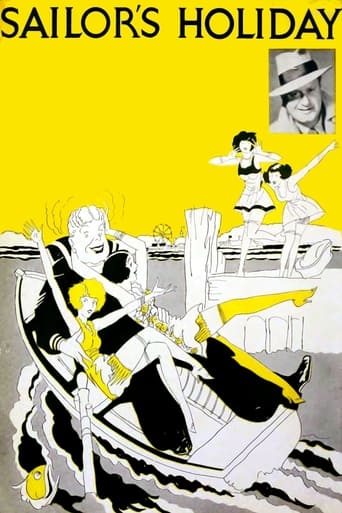
Three sailors go searching for a girl who swindled one of them out of half his pay. Exhibitors circulated the 1930 print in short programs.
Cast & crew
More films like this
More Comedy films
View all →







More about this film
About the production
Release dateFebruary 9, 1930
BudgetApproximately $150,000 (estimated based on Universal 'Program' picture standards of 1930)
ProductionUniversal Pictures
Filmed inUniversal Studios - 100 Universal City Plaza, Universal City, California, USA, Long Beach, California (Amusement park exteriors)
The film was produced during the industry's 'dual-version' era, where Universal created both a synchronized sound version with dialogue and a silent version for theaters not yet equipped with sound systems. Associate producer Edward Cline reportedly ordered significant trims after initial editing to tighten the plot, resulting in the removal of several high-profile cameos. The film features early appearances by future stars Walter Brennan and Andy Devine in uncredited bit roles as a side-show barker and a marine, respectively.
Themes
Camaraderie and Male BondingThe 'Gold Digger' and the SwindleWorking-Class RomanceEscapism and LeisurePersistence and Justice
Themes & topics
SailorShore LeaveSwindlerAmusement ParkDance MarathonSearchBlondeBirthmark1930sComedy of Errors
Historical background
Dames Ahoy reached screens around 1930, produced in its country of origin. Postwar distribution and sound standards shaped how it was marketed.
Why this film matters
Researchers cite Dames Ahoy when tracing screen culture of its decade.
Making of
The production was a typical example of Universal's 'factory' style of the early 1930s, prioritizing speed and efficiency. Director William James Craft utilized the Universal backlot's existing sets to simulate a vibrant naval port and amusement park. A significant challenge during production was the transition to sound; the crew had to manage bulky early microphones while filming the energetic dance marathon sequences. Interestingly, the film underwent heavy re-editing by Edward Cline, who felt the original cut was too long and digressed too much from the central 'manhunt' plot, leading to the loss of several celebrity cameos that were originally intended to bolster the film's appeal.
What critics said
Reviewers in 1930 weighed Dames Ahoy on clarity, pacing, and audience response rather than prestige status. No single canonical review dominates later reference works for the title.
Did you know?
- Future three-time Oscar winner Walter Brennan appears in an early uncredited role as a Side Show Barker.
- The film was one of Universal's last features to be released in both silent and sound versions.
- Andy Devine, who became a famous character actor in Westerns, appears uncredited as a Marine at the dance contest.
- Several major stars, including Harold Lloyd and Louise Brooks, reportedly had cameos that were edited out of the final release to focus on the main plot.
- Lead actress Helen Wright was a newcomer from Long Beach who had previously worked primarily in fashion layouts.
- The film's plot revolves around a birthmark above a woman's knee, which was considered quite suggestive for the time.
- Director William James Craft was a specialist in fast-paced comedies and action films for Universal's 'B' unit.
- The film was marketed as a 'Program' picture, intended to fill the lower half of double bills.
Visual style
The cinematography by Gilbert Warrenton is functional and typical of early sound films, utilizing static setups for dialogue scenes but becoming more dynamic during the outdoor amusement park sequences. The use of high-key lighting emphasizes the 'sunny' disposition of the comedy, while the night scenes in the park use practical light sources to create a sense of atmosphere.
Innovations
The film is notable for its use of the Western Electric Sound System, which was the industry leader at the time. It successfully integrated location-style sound for the amusement park scenes, which was technically demanding given the primitive state of mobile recording equipment in 1930.
Music
The film features a synchronized score credited to Gregory Stone. As an early talkie, the 'soundtrack' consists primarily of dialogue and diegetic music during the dance hall scenes. There are no standalone hit songs, but the musical accompaniment is used to punctuate the slapstick gags and the rhythmic nature of the dance marathon.
Famous quotes
Bill Jones: 'I tell ya, Jimmy, I'd know that birthmark anywhere—it was shaped just like a horseshoe, only luckier!'
Side Show Barker: 'Step right up, gents! See the wonders of the world, and maybe a few things the Navy never taught ya!'
Memorable scenes
- The Dance Marathon: A lengthy and energetic sequence where Jimmy and Mabel must keep dancing despite exhaustion, leading to various physical comedy gags as the other sailors try to sabotage their rivals.
- The Birthmark Reveal: A comedic climax where the sailors mistakenly identify several women based on a vague description of a birthmark, leading to a series of slaps and chases through the park.
What audiences thought
Audiences of the time responded well to the film's slapstick energy and the relatable 'working man' personas of the three sailors. It was particularly popular in naval towns and urban centers where the amusement park setting resonated with local weekend culture. The dance marathon sequence was a highlight for viewers, reflecting a popular real-world fad of the era.
Film connections
Influenced by
- The 'Flagg and Quirt' characters from 'What Price Glory?' (1926)
- Early Mack Sennett slapstick shorts
- The real-life popularity of dance marathons in the late 1920s
This film influenced
- Follow the Fleet (1936)
- On the Town (1949)
- Various 'Service Comedies' of the 1940s starring Abbott and Costello
Film restoration
The film is preserved in the Universal Pictures archives. While not widely available on modern home video formats, 35mm prints exist and have been screened at specialized film festivals focusing on early sound cinema.
Where to watch
- Currently not available on major streaming platforms (Netflix, Max, etc.)
- Occasional broadcasts on Turner Classic Movies (TCM)
- Available for research viewing at the Library of Congress and UCLA Film & Television Archive