

Defense of Tsaritsyn
"Civil war city defended"
Keys: Space play/pause · ←/→ 10s · F fullscreen · M mute · </> speed
About this film
Soviet 1942 propaganda feature dramatizes Bolshevik defense of Tsaritsyn (later Stalingrad) during the Civil War, emphasizing Stalin's role under Mikhail Chiaureli's direction.
Cast & crew
More films like this
More Drama films
View all →







More about this film
About the production
Release dateOctober 19, 1942
Box officeNot publicly documented - Soviet era distribution
ProductionMosfilm Studio, Goskino
Filmed inMoscow, USSR, Stalingrad (for location shots), Mosfilm Studios
Filmed during the height of World War II and the Battle of Stalingrad, the production faced significant challenges including wartime resource constraints and air raids. The film was commissioned directly by Stalin's government as part of the wartime propaganda effort to boost morale and reinforce his cult of personality. Director Georgi Vasilyev worked with historical consultants from the Red Army to ensure military accuracy, though the narrative was heavily fictionalized to enhance Stalin's role. The battle sequences utilized real Red Army soldiers as extras and actual military equipment, lending authenticity to the combat scenes.
Themes
Leadership and authorityPatriotism and national defenseSacrifice for the collective goodHistorical determinismClass struggle
Themes & topics
Russian Civil WarStalingradRed ArmyWhite ArmyJoseph StalinBattleSiegePropagandaLeadershipMilitary strategyRevolutionCommunismPatriotismSacrificeVictory
Historical background
Defense of Tsaritsyn was made while World War II raged; historical parallel to contemporary siege was explicit.
Why this film matters
'Defense of Tsaritsyn' represents a pinnacle of Stalin-era propaganda cinema, establishing visual and narrative tropes that would define Soviet historical films for decades. The film's portrayal of Stalin as an infallible military leader contributed significantly to the cult of personality that surrounded him during and after World War II. Its impact extended beyond cinema, influencing how Soviet history was taught in schools and presented in other media. The film's success demonstrated the power of cinema as a tool for political messaging during wartime, and its techniques were studied by filmmakers in other socialist countries. The movie also helped cement the mythos of Stalingrad as a symbol of Soviet resilience and military glory, a narrative that would persist throughout the Soviet era. After Stalin's death, the film became an important historical artifact for understanding the mechanisms of Soviet propaganda and personality cult construction.
Making of
The production of 'Defense of Tsaritsyn' was a massive undertaking during critical periods of World War II. Director Georgi Vasilyev, working with his brother Sergei Vasilyev (who co-directed their earlier films), faced enormous pressure to deliver a film that would inspire the Soviet people during the darkest days of the war. The casting of Mikhail Gelovani as Stalin was particularly significant - he had been personally approved by Stalin after previous successful portrayals and would become synonymous with the role. The film's production was given priority status by the government, with resources allocated despite the severe wartime shortages. Military advisors were constantly on set to ensure authenticity, and the production team had access to actual Red Army units for the battle sequences. Interestingly, some scenes had to be reshot when Stalin requested changes to better reflect his 'actual' role in the historical events, despite historians questioning the accuracy of these depictions.
What critics said
Historians treat it as doctrinal hagiography; useful for studying Stalin cult cinema.
Did you know?
- Mikhail Gelovani, who played Stalin, became the official actor to portray Stalin in Soviet films, playing him in 12 different productions
- The film was released during the actual Battle of Stalingrad (1942-1943), creating a powerful parallel between the historical defense and the contemporary struggle
- Stalin personally reviewed and approved the script, requesting several changes to further emphasize his leadership role
- The original working title was 'Stalin at Tsaritsyn' but was changed to 'Defense of Tsaritsyn' to appear less overtly propagandistic
- The film was one of the first Soviet productions to use the new Agfacolor film stock acquired from Germany, though most scenes were shot in black and white
- Director Georgi Vasilyev had previously co-directed 'Chapaev' (1934), one of Stalin's favorite films
- The battle scenes required over 3,000 extras, many of whom were actual soldiers preparing for deployment to the front
- The film was temporarily banned during Khrushchev's de-Stalinization period but later restored for historical study
- Real historical figures like Voroshilov and Yegorov appear as characters, though their roles were diminished to highlight Stalin
- The premiere was held in Moscow's House of the Unions with Stalin and other Soviet leaders in attendance
Awards & recognition
- Stalin Prize, First Class (1943)
- Order of the Red Banner of Labor awarded to director Georgi Vasilyev (1943)
- State Prize of the RSFSR (1943)
Visual style
The cinematography by Yuri Yekelchik employed dramatic lighting and composition techniques characteristic of Soviet socialist realism. Battle sequences utilized multiple cameras and dynamic movement to create a sense of chaos and heroism, with carefully choreographed action scenes that emphasized individual bravery within collective struggle. The film made innovative use of low angles when filming Stalin, literally and figuratively elevating his status above other characters. Contrast between dark, shadowy scenes representing White Army advances and bright, hopeful lighting for Red Army victories reinforced the moral clarity of the narrative. The camera work in the council scenes used formal composition to establish hierarchy, with Stalin positioned centrally and lit to emphasize his importance. Location shooting in and around Stalingrad added authenticity, though some scenes had to be recreated in Moscow due to wartime conditions.
Innovations
The film pioneered several technical innovations in Soviet wartime cinema. It was among the first Soviet productions to use synchronized sound recording on location, allowing for more authentic battle scenes. The production team developed new techniques for creating large-scale battle sequences with limited resources, using clever camera angles and editing to create the illusion of massive armies. The film also experimented with early color processes for certain sequences, though most of the final cut was in black and white. Special effects for explosions and artillery fire were achieved through innovative use of miniatures and practical effects that appeared more realistic than previous Soviet war films. The sound design was particularly advanced for its time, using multiple audio tracks to create immersive battle scenes with distinct layers of gunfire, explosions, and human voices.
Music
The musical score was composed by Vano Muradeli, one of the Soviet Union's prominent composers. The soundtrack features powerful orchestral arrangements that combine traditional Russian folk themes with Soviet patriotic music. The main theme, 'The Song of the Volga Defenders,' became popular and was frequently played on Soviet radio. Muradeli incorporated military marches and revolutionary songs to enhance the film's patriotic atmosphere. The music swells dramatically during Stalin's speeches and battle victories, while more somber tones accompany moments of sacrifice and loss. The soundtrack was recorded by the Moscow State Symphony Orchestra and choir, creating a rich, full sound that emphasized the epic scale of the narrative. Some musical cues were later reused in other Soviet war films, becoming part of the standard musical vocabulary for Soviet patriotism.
Famous quotes
Tsaritsyn is not just a city - it is the gateway to the revolution's heart! We will not yield one inch of Soviet soil!
History will remember this day as the moment the fate of Russia was decided not by numbers, but by will!
Comrades! The White Army believes we are trapped. They forget that the revolutionary spirit cannot be surrounded!
Every shell that falls on Tsaritsyn is a test of our resolve. Let them fall - our resolve is iron!
In this struggle, there is no room for doubt. There is only the party line and victory!
Memorable scenes
- The climactic battle sequence where Stalin personally directs artillery fire from a hilltop overlooking the city, with sweeping camera movements capturing the scale of the engagement
- The tense war room scene where Stalin outlines his defense strategy to skeptical commanders, using maps and models to demonstrate his tactical genius
- The emotional moment when workers from the Tsaritsyn factories volunteer to fight, dramatically throwing down their tools and picking up rifles
- The night scene of the city under bombardment, with silhouettes of defenders against fires, creating a powerful visual of resistance
- The final victory celebration with Red Army soldiers marching through liberated streets, intercut with Stalin's stoic, approving gaze
What audiences thought
The film was enormously popular with Soviet wartime audiences, who attended in massive numbers despite the hardships of war. Many viewers reported being deeply moved by the parallels between the historical defense of Tsaritsyn and the contemporary Battle of Stalingrad. Soldiers at the front received special screenings, and the film was credited with boosting morale among troops. In Stalingrad itself, the film was shown in makeshift theaters even as the battle raged, creating a powerful emotional connection between past and present struggles. After the war, the film continued to be shown regularly on Soviet television and in theaters, becoming a staple of patriotic education. During the de-Stalinization period, audience reactions became more ambivalent, though many older viewers retained their affection for the film as a product of their generation's defining struggle.
Film connections
Influenced by
- Chapaev (1934) - also directed by the Vasilyev brothers
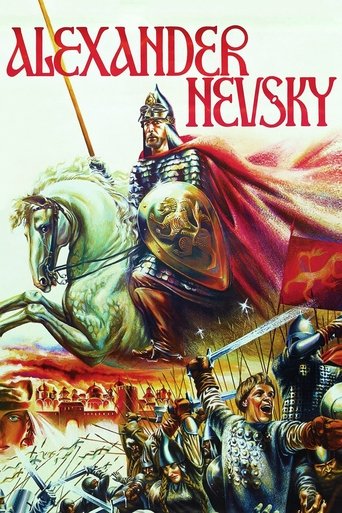
- Alexander Nevsky (1938) - Eisenstein's historical epic
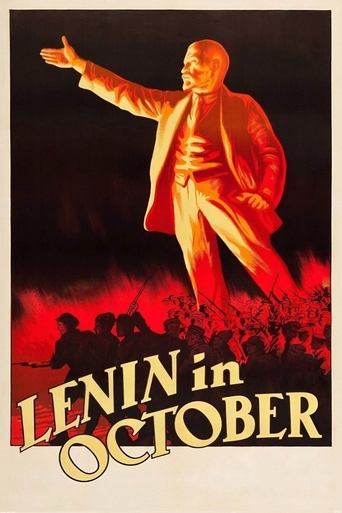
- Lenin in October (1937) - established the genre of Soviet leader biopics
- The Rise of Catherine the Great - earlier Soviet historical drama
- Battleship Potemkin (1925) - influenced editing techniques
This film influenced
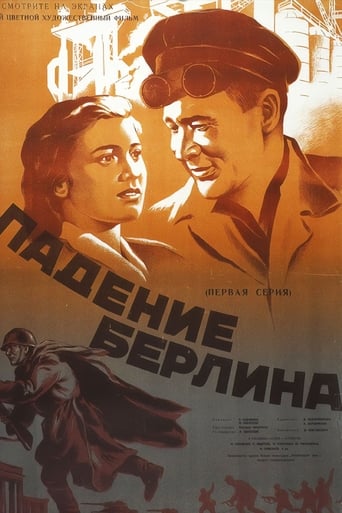
- The Fall of Berlin (1949)
- The Unforgettable Year 1919 (1951)
- Lenin in Poland (1966)
- Liberation film series (1970-1971)
- Stalingrad (1993) - drew on visual tropes established
Film restoration
The film has been preserved in the Gosfilmofond Russian State Archive and has undergone digital restoration. Original nitrate elements were successfully transferred to safety stock in the 1970s. A restored version was released in 2012 as part of the Moscow International Film Festival's retrospective of Soviet war cinema. The film remains accessible through Russian state archives and has been made available on various streaming platforms specializing in classic cinema.
Where to watch
- Mosfilm's official streaming platform
- Russian State Film Archive's digital collection
- Kino Klassika Foundation streaming service
- Some specialized classic film streaming services with licensing agreements
- Available on DVD in special edition collections of Soviet cinema