



Dorothy Vernon of Haddon Hall
"the year 1550, Sir George Vernon agrees to have his"
Keys: Space play/pause · ←/→ 10s · F fullscreen · M mute · </> speed
About this film
In the year 1550, Sir George Vernon agrees to have his young daughter Dorothy betrothed to John Manners, the son of the Earl of Rutland. Sir George signs a contract, promising that the marriage will take place on Dorothy's 18th birthday, or else he will have to pay a large penalty to Rutland. But when the two children have grown older, rumors of John's wild behavior in France provoke Sir George to call off the engagement, and to pledge his daughter instead to her cousin Malcolm. Rutland now claims the forfeit from Sir George, and meanwhile, John has befriended Mary Stuart, the sworn enemy of E…
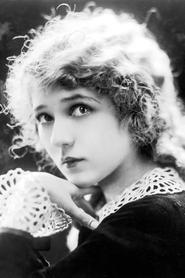
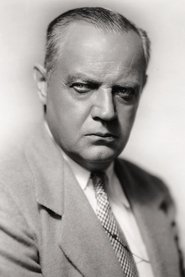
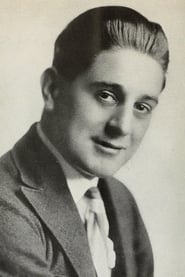
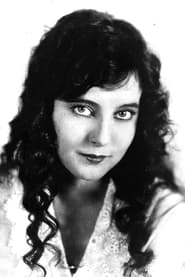
Cast & crew
More Romance films
View all →




More from Marshall Neilan
View all →
More about this film
About the production
Release dateNovember 30, 1924 (premiere), December 1924 (general release)
Budget$500,000 (estimated, a substantial sum for a silent film in 1924)
Box officeThe picture was a commercial success, though exact figures are not documented. It performed well in major markets and was one of Pickford's successful productions of the mid-1920s.
ProductionPickford Corporation, United Artists
Filmed inPickford-Fairbanks Studios, Hollywood, California, On-location shooting in California for exterior scenes
The picture was one of Mary Pickford's most expensive productions to date, featuring elaborate costumes and sets to recreate 16th-century England. Pickford, who was also a producer through her Pickford Corporation, insisted on historical accuracy in costumes and set design. The production faced challenges with recreating authentic Tudor architecture, leading to the construction of detailed sets at the studio. Director Marshall Neilan and Pickford had previously worked together successfully on several films, though their working relationship was becoming strained during this production. The picture featured a large cast of extras for crowd scenes, particularly for the sequences depicting court life.
Themes
Duty versus personal desireFamily honor and obligationPolitical intrigue and power strugglesRomantic love overcoming obstaclesClass differences and social mobility
Themes & topics
historical romanceTudor Englandbetrothalfamily feudpolitical intriguecourt lifearranged marriageelopementnobilityElizabethan erareligious conflictinheritancehonorforbidden lovecousinspenalty clauseQueen Elizabeth IMary Queen of Scots
Historical background
By 1924, Pickford Corporation was supplying United States theaters with titles like Dorothy Vernon of Haddon Hall, part of the broader expansion of filmed entertainment into working-class districts and small towns.
Why this film matters
Programmers and historians revisit Dorothy Vernon of Haddon Hall (1924) because its story—in the year 1550, sir george vernon agrees to have his young daughter dorothy betrothed to john manners, the son of the earl of rutland—illustrates popular narrative habits and production norms of the period.
Making of
The production of 'Dorothy Vernon of Haddon Hall' was marked by both creative tension and technical innovation. Mary Pickford, as co-founder of United Artists and head of her own production company, exercised unprecedented creative control. She clashed with director Marshall Neilan over various aspects of the production, including the pacing and dramatic emphasis. Neilan wanted to focus more on the action and political intrigue, while Pickford insisted on emphasizing the romantic elements. the picture required extensive research into Tudor-period costumes and customs, with Pickford hiring historical consultants to ensure authenticity. The production design was particularly challenging, as the art department had to recreate authentic 16th-century English interiors on Hollywood soundstages. cinematographer Charles Rosher experimented with new lighting techniques to create the period atmosphere, using innovative methods to simulate candlelight and torchlight effects. The large-scale battle sequences and court scenes required hundreds of extras and weeks of preparation. Pickford, known for her perfectionism, demanded multiple takes for emotional scenes, sometimes exhausting her co-stars. the picture's post-production was equally meticulous, with Pickford personally overseeing the editing process to ensure the final cut met her exacting standards.
What critics said
English-language trade reviews of Dorothy Vernon of Haddon Hall are limited for 1924. Where notices survive, they stress pacing and photographic clarity; later criticism values the title as archival evidence of studio style.
Did you know?
- This was Mary Pickford's first historical costume drama, marking a departure from her usual roles as young girls or innocent young women.
- the picture was based on the 1902 novel 'Dorothy Vernon of Haddon Hall' by Charles Major, who also wrote 'When Knighthood Was in Flower'.
- Pickford was 32 years old when she played the teenage Dorothy Vernon, continuing her tradition of playing much younger characters.
- The real Haddon Hall in Derbyshire, England, where the historical Dorothy Vernon lived, still stands and is a popular tourist destination.
- This was one of the last films Pickford made with director Marshall Neilan, as their creative partnership dissolved shortly after.
- the picture's elaborate costumes were designed by Mitchell Leisen, who would later become a prominent director himself.
- Pickford's husband Douglas Fairbanks was reportedly unenthusiastic about her making this particular film, preferring she stick to more contemporary stories.
- the picture's success led to Pickford making more historical dramas, though none achieved quite the same level of popularity.
- Several scenes were shot on location at the newly-built Hollywood Bowl, which doubled for outdoor English settings.
- the picture featured one of the largest casts assembled for a Pickford production up to that time.
Awards & recognition
- No major awards were recorded for, as it was released before the establishment of the Academy Awards
Visual style
The cinematography by Charles Rosher was widely praised for its innovative techniques and visual beauty. Rosher employed sophisticated lighting methods to create the atmosphere of 16th-century England, using practical effects to simulate candlelight and torchlight in interior scenes. the picture featured extensive use of soft focus lighting for romantic sequences, a technique that was becoming increasingly popular in the mid-1920s. Rosher also experimented with camera movement, using tracking shots for the grand procession scenes and court sequences. The exterior scenes utilized natural lighting effectively, creating a sense of authenticity that contrasted with the more stylized interior lighting. the picture's visual style was influenced by German Expressionist cinema, particularly in its use of dramatic shadows and architectural compositions. The battle sequences featured dynamic camera work that was ahead of its time, with multiple angles and rapid editing to create tension and excitement. The costume photography was particularly noteworthy, with Rosher using specific lighting techniques to highlight the textures and colors of the elaborate Tudor-era costumes.
Innovations
the picture featured several technical innovations for its time. The production utilized newly developed panchromatic film stock for certain scenes, which allowed for better tonal reproduction in the elaborate costume sequences. The set construction involved advanced techniques for creating the illusion of Tudor architecture, including forced perspective and matte paintings. The lighting equipment used was state-of-the-art for 1924, with new types of arc lamps providing better control over illumination. the picture's editing employed sophisticated techniques for the time, including cross-cutting between parallel storylines and the use of dissolves for temporal transitions. The battle sequences featured early examples of action editing that created a sense of chaos and movement. The production also experimented with color tinting for certain scenes, using amber tones for interior scenes and blue tints for night sequences. The makeup techniques used to age the characters were particularly advanced for the period, with subtle applications that looked convincing on the relatively insensitive film stock of the era.
Music
As a silent film, 'Dorothy Vernon of Haddon Hall' would have been accompanied by live musical performances during its original theatrical run. the picture was distributed with a compiled score suggestion sheet that recommended classical pieces appropriate for various scenes. Typical accompaniment would have included works by English composers such as Henry Purcell and Edward Elgar, along with popular classical pieces of the era. Major theaters with full orchestras would have performed elaborate arrangements, while smaller venues might have used a piano or organ accompaniment. The musical cues were carefully synchronized with the on-screen action, with romantic themes for the love scenes, dramatic music for the conflict sequences, and stately processional music for the court scenes. Some theaters may have used popular songs of the day that matched the mood of particular scenes. the picture's original score materials have not survived, but reconstruction efforts by silent film accompanists have created approximations based on typical practices of the period and the picture's dramatic structure.
Famous quotes
Dorothy: 'My heart knows no law but love, and no master but truth.'
Sir George: 'Honor is the coin of our house, and we cannot spend it foolishly.'
John Manners: 'I would rather die a thousand deaths than live without your love.'
Dorothy: 'In this world of men's making, a woman's heart is her only true kingdom.'
Malcolm: 'Blood may be thicker than water, but honor is thicker than both.'
The Earl of Rutland: 'A promise made is a debt unpaid, and debts of honor are the hardest to pay.'
Memorable scenes
- The grand ballroom scene where Dorothy and John first dance together, featuring elaborate choreography and hundreds of extras in period costume
- The secret meeting in the garden at night, lit only by torches, where Dorothy and John declare their love
- The tense confrontation between Sir George and the Earl of Rutland in the great hall, with dramatic shadows and architectural framing
- Dorothy's decision scene at the altar, where she must choose between duty and love
- The final chase sequence on horseback through the English countryside, showcasing innovative camera work and stunt riding
What audiences thought
the picture was well-received by audiences in 1924-1925, proving to be a box office success for United Artists. Contemporary audience reaction was generally enthusiastic, with many viewers appreciating the opportunity to see Mary Pickford in a more mature role and in lavish historical settings. The romantic storyline resonated with audiences of the time, and the picture's spectacle elements - including elaborate costumes and large crowd scenes - were particularly praised. Theater owners reported good attendance, especially in major cities where the picture received extensive promotion. the picture's success helped reinforce Pickford's status as among the leading reliable box office draws of the era. However, some audience members found the historical setting less accessible than Pickford's contemporary stories, and a few critics noted that the picture didn't quite achieve the same level of popular success as some of her earlier works. Despite this, the picture performed well enough to be considered a successful production and helped establish the viability of historical dramas as commercial entertainment.
Film connections
Influenced by
- 'When Knighthood Was in Flower' (1922) - another historical romance that proved the genre's commercial viability
- German Expressionist cinema - for its dramatic lighting and visual style
- Literary adaptations of English history - popular in the early 1920s
- Stage melodramas - for their emotional intensity and plot structure
- Historical paintings of the Tudor period - for visual reference
This film influenced
- 'The Iron Mask' (1929) - another historical adventure with romantic elements
- 'The Private Life of Henry VIII' (1933) - for its approach to Tudor history
- Later Mary Pickford productions - in demonstrating her viability in more mature roles
- Costume dramas of the early sound era - for their production values and approach to historical material
Film restoration
the picture is preserved in the archives of the Library of Congress and the Academy Film Archive. While not completely intact, a majority of the picture survives in 35mm format. Some deterioration is evident in existing prints, particularly in the later reels. The Mary Pickford Foundation holds a collection of materials related to the picture, including stills and production documents. Restoration efforts have been undertaken periodically, with the most recent preservation work completed in the early 2000s. the picture is considered to be in relatively good condition for a silent film of its age, though some scenes show signs of nitrate decomposition before being transferred to safety stock. No original color-tinted versions are known to survive, though records indicate that certain scenes were originally released with color tints.
Where to watch
- the picture is occasionally screened at silent film festivals and special cinema events
- DVD releases are available through specialty distributors of classic films
- Streaming access may be available through classic film subscription services
- The Mary Pickford Foundation occasionally makes the picture available for educational screenings
- Some film archives and libraries with moving image collections may have access to the picture for research purposes