



Doughboys
"Caught between society and falls"
Keys: Space play/pause · ←/→ 10s · F fullscreen · M mute · </> speed
About this film
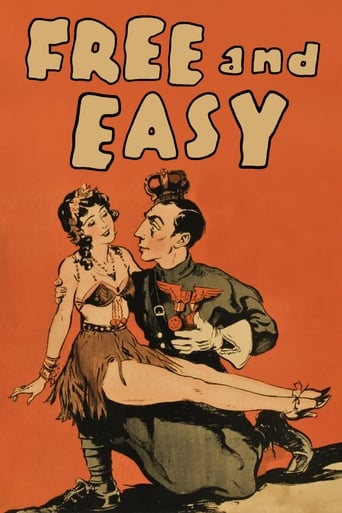
Elmer, rich society loafer, falls for Mary, but she'll have nothing to do with him until (mistakenly thinking that he's hiring a new chauffeur) he accidentally volunteers for the army. Luckily, Mary's signed up to entertain the troops. Unluckily, Elmer's sergeant likes Mary, too. And worst of all, they're all about to ship out for France.
Cast & crew
More films like this
More Comedy films
View all →







More from Edward Sedgwick
View all →

More about this film
About the production
Release dateAugust 30, 1930
BudgetApproximately $441,000
Box office$1,241,000 (Global gross)
ProductionMetro-Goldwyn-Mayer (MGM)
Filmed inMGM Studios, Culver City, California, San Pedro, Los Angeles, California (Port scenes)
This was Buster Keaton's second 'talkie' and marked a significant transition in his career under the MGM studio system. Unlike his independent silent films, Keaton had to work from a rigid script, though director Edward Sedgwick allowed him some room for physical improvisation. The film was shot simultaneously in multiple languages (Spanish, French, and German) to cater to international markets, with Keaton phonetically learning his lines for the foreign versions titled 'De frente, marchen' and 'Wir schalten um auf Hollywood'.
Themes
Accidental HeroismClass ConflictMilitary AbsurdityUnrequited LoveCamaraderie
Themes & topics
World War IArmy LifeMistaken IdentityTrench WarfareSocialiteDrill SergeantFranceUkulele
Historical background
Contemporary records classify Doughboys (1930) as 1930 film by edward sedgwick, placing it within the studio-system peak and early sound decades.
Why this film matters
Doughboys (1930) helps trace genre evolution, performer careers, and the material conditions of sound exhibition.
Making of
The production was characterized by the tension between Buster Keaton's improvisational genius and MGM's desire for structured, dialogue-heavy scripts. Director Edward Sedgwick, a close friend of Keaton, acted as a buffer between the star and the studio heads. Keaton reportedly spent much of his downtime on set playing baseball with the crew, a lifelong passion that often distracted him from the rigid shooting schedules. The film also utilized early sound-on-film technology, which required the actors to stay close to hidden microphones, somewhat limiting the expansive physical movements Keaton was known for in the silent era.
What critics said
Retrospective notes on Doughboys emphasize its value as a period production rather than blockbuster reception.
Did you know?
- Buster Keaton was actually a veteran of World War I in real life, having served in the 40th Infantry Division in France, which added a layer of personal irony to his performance.
- The film's title 'Doughboys' was a popular slang term for American infantrymen during World War I.
- Cliff Edwards, who plays 'Porky', was a famous ukulele player known as 'Ukulele Ike' and later became the voice of Jiminy Cricket in Disney's Pinocchio.
- The film features a rare moment where Buster Keaton smiles on camera, a departure from his 'Great Stone Face' persona, though it was done in a mocking context.
- MGM executives were reportedly thrilled with the film's financial success, which outperformed many of their more prestigious dramas that year.
- The 'Spanish' version of the film featured a different supporting cast but kept Keaton as the lead.
- During the mess hall scene, the physical comedy involving the tray was a routine Keaton had perfected during his years in Vaudeville.
- The film was one of the top-grossing comedies of 1930, proving that Keaton could still draw a massive audience in the sound era.
- Keaton's character name, Elmer, was a name he frequently used for his more 'hapless' personas in the early 1930s.
- The trench sets were considered quite elaborate for a comedy and were reused in other MGM war productions.
Awards & recognition
- Photoplay Magazine Medal of Honor (Nominated/Shortlisted)
Visual style
The cinematography is functional and typical of early sound films, utilizing static shots to accommodate the bulky sound equipment. However, the outdoor 'trench' sequences feature some impressive tracking shots that give a sense of the scale of the battlefield, and the lighting in the nighttime sequences in France is notably atmospheric for a comedy.
Innovations
The most significant technical achievement was the 'Multi-Language Version' (MLV) production process. Before dubbing became standard, MGM had Keaton film the same scenes multiple times, speaking his lines phonetically in Spanish and German to ensure the film could be sold globally without losing the star's voice.
Music
The soundtrack features several musical numbers performed by Cliff Edwards on the ukulele, including 'Sing (It's Good for Ya)'. The use of sound effects for comedic timing—such as whistles, explosions, and the clatter of mess kits—was innovative for 1930 and helped bridge the gap between silent slapstick and sound comedy.
Famous quotes
Sergeant Brophy: 'What's your name?' Elmer: 'Elmer. What's yours?'
Elmer: 'I didn't want to join the army, I just wanted a chauffeur!'
Sergeant Brophy: 'You're in the army now, not a country club!'
Memorable scenes
- The enlistment scene where Elmer accidentally signs his life away while trying to complain about his car.
- The 'Left-Right' drill sequence where Elmer's inability to follow simple commands leads to a chaotic pile-up of soldiers.
- The scene where Elmer tries to cook a meal in the trenches using a variety of non-edible military supplies.
- The climactic sequence where Elmer uses a series of wine bottles and a player piano to distract and capture German soldiers.
What audiences thought
The film was a massive hit with 1930s audiences, who were eager to see how the 'Great Stone Face' would handle dialogue. It was among the leading profitable films of the year for MGM, particularly in the Midwestern United States and in international markets where the multi-language versions were screened.
Film connections
Influenced by
- The Big Parade (1925)
- Shoulder Arms (1918)
- Vaudeville slapstick traditions
This film influenced
- Buck Privates (1941)
- At War with the Army (1950)
- Stripes (1981)
Film restoration
The film is well-preserved and exists in its entirety. It has been released on DVD and Blu-ray as part of various Buster Keaton collections by Warner Archive and other specialty labels.
Where to watch
- Warner Archive Collection (DVD/Blu-ray)
- Amazon Prime Video (Rental/Purchase)
- Apple TV
- Criterion Channel (Occasionally)