

Ivan the Terrible, Part I
"Eisenstein's Ivan the Terrible faces boyar betrayal."
Keys: Space play/pause · ←/→ 10s · F fullscreen · M mute · </> speed
About this film
The early reign of Ivan IV of Russia, beginning with his coronation as Tsar at age 16. Ivan marries Anastasia Romanovna and attempts to consolidate power against the powerful boyar aristocracy who resist his centralizing reforms. When Ivan falls ill, the boyars plot against him, leading to his growing paranoia and determination to establish absolute authority. The film depicts key historical events including the conquest of Kazan and Ivan's transformation from a young idealist into the formidable ruler known as Ivan the Terrible, setting the stage for his increasingly autocratic rule.
Cast & crew
More films like this

More Drama films
View all →






More from Sergei Eisenstein
View all →
More about this film
About the production
Release dateJanuary 1944 (premiered in Moscow)
BudgetExact budget figures are not publicly available, but it was
Box officeSoviet films did not track box office earnings in the Western sense; the film was shown widely across the USSR to millions of viewers as part of state-controlled distribution
ProductionMosfilm
Filmed inMoscow, USSR (Mosfilm studios), Some location shooting in and around Moscow
Filmed during World War II under extremely difficult conditions, with resources diverted to the war effort. The production faced constant scrutiny from Soviet authorities, with Stalin taking personal interest in the project. Eisenstein employed innovative techniques including prosthetic makeup for Cherkasov that took hours to apply, elaborate costumes based on historical research, and complex choreographed sequences. The film's production was interrupted multiple times due to wartime air raids on Moscow.
Themes
Absolute power and its corrupting influenceNational unity and identityThe conflict between individual conscience and state necessityThe burden of leadershipBetrayal and paranoia
Themes & topics
tsarcoronationbetrayalpower strugglehistorical drama16th centuryRussian historypolitical intrigueautocracyboyarsconquestmarriageillnessparanoiapropaganda
Historical background
Ivan the Terrible, Part I (1944) reached screens through Mosfilm. Exhibitors of the time built studio-era schedules that mixed shorts, features, and live acts, so a clear premise helped Ivan the Terrible, Part I travel between cities and exchange markets.
Why this film matters
Archivists and revival programmers still cite Ivan the Terrible, Part I (1944) when tracing studio habits, casting pools, and the visual rhetoric audiences once took for granted. Even modest surviving prints help map how Ivan the Terrible, Part I fit beside competing releases of its day.
Making of
The making of Ivan the Terrible Part I was fraught with challenges and political intrigue. Eisenstein, who had fallen out of favor with Soviet authorities in the 1930s, saw this project as his chance for redemption. He worked closely with historian Nikolai Kostomarov's research to ensure historical accuracy, while also incorporating his own artistic vision. The production team created over 3,000 period costumes and built massive sets representing 16th-century Russian architecture. Eisenstein experimented with innovative camera techniques, including complex tracking shots and dramatic lighting effects that would become hallmarks of his style. The relationship between Eisenstein and his lead actor Cherkasov was particularly collaborative, with the two spending hours discussing Ivan's psychology and motivations. Despite wartime shortages, the Soviet government allocated significant resources to the production, recognizing its propaganda value in presenting a strong Russian leader during the nation's darkest hours.
What critics said
Trade coverage around 1944 discussed Ivan the Terrible, Part I for pacing, clarity, and program fit rather than blockbuster grosses. Later writers value it as evidence of period style and as a reference point beside other films from the same era.
Did you know?
- Stalin personally approved the project and viewed rough cuts, giving Eisenstein unusual creative freedom initially
- Nikolai Cherkasov's makeup took up to 4 hours to apply each day to age him progressively throughout the film
- The film was shot on Agfa color film stock captured from the Germans, but processed in black and white due to wartime shortages
- Eisenstein suffered a heart attack during filming but continued to work on the project
- The famous coronation scene involved thousands of extras and was filmed over several weeks
- Many of the elaborate palace sets were built full-scale at Mosfilm studios and remain standing today
- The film's score by Sergei Prokofiev was composed simultaneously with the filming, an unusual practice at the time
- Cherkasov prepared for the role by studying historical documents and visiting museums with Ivan's artifacts
- The film was initially planned as a single epic but was split into parts during production
- Some scenes were censored even before release due to their potentially controversial political content
Awards & recognition
- Stalin Prize (First Class) - 1946
- Venice Film Festival - Special Recommendation (1946)
- National Board of Review - Best Foreign Film (1946)
Visual style
The cinematography, primarily by Andrei Moskvin and Eduard Tisse, represents some of the most innovative camera work of its era. Eisenstein employed dramatic low-angle shots to emphasize Ivan's power, and used elaborate lighting schemes to create psychological depth. The film features complex compositions with multiple planes of action, influenced by Eisenstein's theories of montage. The coronation sequence uses sweeping camera movements and architectural framing to create epic scale. Black and white photography is used with remarkable contrast, creating stark, expressionistic images that emphasize the moral ambiguity of Ivan's character. The film's visual style blends historical authenticity with modernist abstraction, creating a unique aesthetic that influenced countless later historical films.
Innovations
The film pioneered numerous technical innovations that would influence cinema for decades. Eisenstein developed new techniques for creating period authenticity while maintaining artistic expression. The makeup effects, particularly the aging of Ivan, were groundbreaking for their time. The film's sound recording was innovative for its use of music and effects to create psychological atmosphere. The production design created some of the most elaborate historical sets ever built, with attention to architectural detail that set new standards. The film's editing, while maintaining Eisenstein's montage theory, evolved toward a more seamless narrative flow. The cinematography pushed the boundaries of what was possible with black and white film, creating images of remarkable depth and complexity. These technical achievements were accomplished despite wartime shortages and primitive equipment by modern standards.
Music
The score by Sergei Prokofiev is considered one of the greatest film compositions ever written. Prokofiev worked closely with Eisenstein, creating music that both supports the narrative and provides independent commentary. The soundtrack incorporates Russian folk melodies, Orthodox liturgical music, and modernist orchestration to create a range of sound. Key themes are associated with specific characters and ideas, with Ivan's theme evolving throughout the film to reflect his changing psychological state. The music for the coronation scene is particularly grand, using full orchestra and chorus to create ceremonial splendor. Prokofiev's innovative use of leitmotifs and his ability to convey complex emotions through orchestration set new standards for film music. The score was later adapted into a concert suite that remains popular in classical music repertoire.
Famous quotes
I am the Tsar! I am the master of Russia! - Ivan IV during his coronation
The people are like children - they need a strong hand to guide them - Ivan explaining his philosophy of rule
Better to be feared than loved, if one cannot be both - paraphrasing Machiavelli in the context of Ivan's rule
Russia is not a country that can be ruled by half-measures - Ivan to his advisors
The boyars plot like spiders in their webs, but the eagle sees all from above - Ivan's metaphor for his surveillance
Memorable scenes
- The coronation sequence: A spectacular scene with thousands of extras in elaborate costumes, filmed with sweeping camera movements and dramatic lighting, establishing Ivan's divine right to rule
- Ivan's deathbed scene: A powerful sequence where the young Tsar appears to be dying, leading the boyars to reveal their true loyalties before Ivan miraculously recovers
- The conquest of Kazan: An extended battle sequence demonstrating Eisenstein's mastery of large-scale action choreography and montage
- The wedding scene: Combines intimate character moments with grand ceremonial spectacle, showing both the personal and political aspects of Ivan's marriage to Anastasia
- The boyars' conspiracy scene: A tense sequence of cross-cutting between various nobles plotting against Ivan, building paranoia and suspense
What audiences thought
Soviet audiences responded enthusiastically to the film during its initial release, seeing it as both entertainment and patriotic inspiration during wartime. The character of Ivan resonated with viewers as a symbol of Russian strength and determination. The film was screened widely across the USSR, including in factories and military units. After the war, it continued to be popular, though its reception became more complex as audiences became aware of its political undertones. International audiences were initially limited due to Cold War restrictions, but where it was shown, it impressed viewers with its scale and artistry. Modern audiences often find the film challenging but rewarding, with its stylized performances and complex narrative structure requiring close attention.
Film connections
Influenced by
- The Battleship Potemkin (Eisenstein's own earlier work)
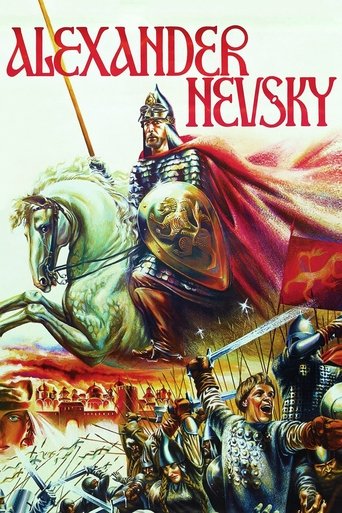
- Alexander Nevsky (Eisenstein's previous historical epic)
- German Expressionist cinema
- Soviet montage theory
- Traditional Russian theater
- Historical paintings of the 19th century
- Shakespearean tragedy
- Byronic heroes in literature
This film influenced
- Ivan the Terrible, Part II
- Alexander Nevsky (1938)
- The Rise and Fall of the Roman Empire
- Peter the Great (TV miniseries)
- Lawrence of Arabia
- The Godfather Part II
- Ran
- Braveheart
- Elizabeth
- The Last Emperor
Film restoration
The film is well-preserved in the Gosfilmofond archive in Russia. Multiple high-quality prints exist, and the film has been digitally restored by Mosfilm and Criterion Collection. The restoration work has preserved the film's remarkable visual quality, including its deep blacks and subtle gradations of gray. Original camera negatives and sound elements are intact, ensuring the film's survival for future generations. The restored version has been released on Blu-ray and is available in streaming formats, making it accessible to modern audiences while maintaining its artistic integrity.
Where to watch
- The Criterion Channel
- Kanopy (with library card)
- MUBI (periodically)
- DVD/Blu-ray from The Criterion Collection
- Mosfilm's official YouTube channel (with subtitles)
- Various streaming platforms specializing in classic cinema
- Film archives and cinematheques worldwide
- Educational film distribution services