Ivan the Terrible, Part II: The Boyars' Plot
“The forbidden masterpiece of the Russian cinema.”
About Ivan the Terrible, Part II: The Boyars' Plot
Following his return to Moscow, Czar Ivan IV finds himself increasingly isolated as he attempts to consolidate power against the treacherous Boyar class and the influence of the Orthodox Church. His aunt, Efrosinia Staritskaya, spearheads a deadly conspiracy to assassinate Ivan and place her simple-minded son, Vladimir, on the throne. As Ivan descends into paranoia and ruthlessness, he establishes the Oprichniki, a personal guard of fanatical followers, to purge his enemies through a series of psychological and physical confrontations. The conflict reaches a fever pitch during a lavish, color-saturated banquet where Ivan manipulates the dim-witted Vladimir into a fatal trap, effectively neutralizing the Boyar threat but cementing his legacy as a lonely, blood-stained tyrant. The film concludes with Ivan standing victorious but spiritually hollow, having sacrificed his humanity for the sake of a unified Russian state.
Cast & crew
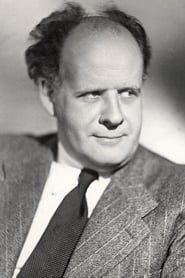
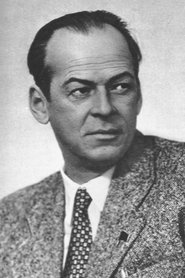
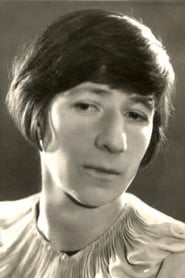
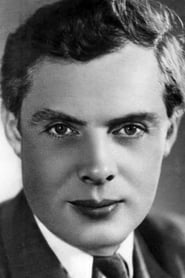
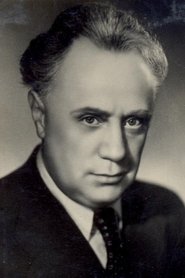
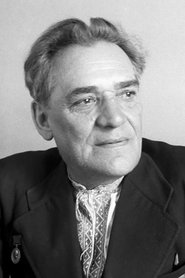
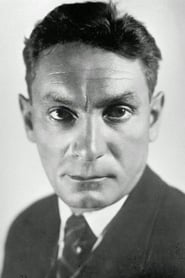

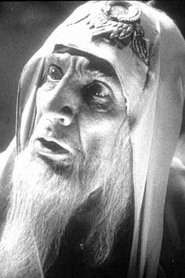

More films like this
More from Sergei Eisenstein
View all →
More about Ivan the Terrible, Part II: The Boyars' Plot
Production
- Release date
- September 1, 1958
- Country
- Soviet Union
- Box office
- Negligible during initial release due to limited distribution; primarily a prestige archival success.
- Production
- Mosfilm
- Filmed in
- Alma-Ata, Kazakh SSR (during WWII evacuation), Mosfilm Studios, Moscow, USSR
Production was severely impacted by World War II, forcing the crew to evacuate to Alma-Ata where they worked in primitive conditions with limited equipment. Eisenstein suffered a near-fatal heart attack on the night he finished editing Part II, which contributed to the third part never being completed. The use of Agfacolor film for the final sequence was possible because the Soviet Army captured a large stock of German color film stock during the fall of Berlin. Stalin personally screened the film and was reportedly incensed by the depiction of Ivan's secret police, seeing it as a veiled critique of his own NKVD.
Themes & topics
Historical background
The film was produced during the height of World War II and the subsequent early Cold War period. Stalin had commissioned the film to rehabilitate the image of Ivan the Terrible, whom he viewed as a personal hero and a necessary 'strongman' who unified Russia. However, as the war ended and Stalin's paranoia increased, Eisenstein's depiction of a ruler haunted by guilt and surrounded by a murderous secret police became too close to home for the Soviet leader. The film's suppression reflects the 'Zhdanovshchina' period, a time of strict cultural censorship in the USSR where any art deemed 'formalist' or 'anti-people' was liquidated.
Why this film matters
Ivan the Terrible, Part II is regarded as one of the greatest achievements in world cinema, specifically for its mastery of visual composition and its use of color as a narrative device. It represents the pinnacle of Eisenstein's theory of 'vertical montage,' where sound, image, and rhythm work in total synthesis. It remains a primary text for film students studying the transition from silent to sound cinema and the use of expressionism in historical epics. Its eventual release in 1958 was a landmark moment in the 'Khrushchev Thaw,' signaling a brief period of increased artistic freedom in the Soviet Union.
Making of
The making of Part II was a period of intense creative experimentation and political pressure for Eisenstein. Working in the wake of the success of Part I, he began to push the boundaries of 'intellectual montage' and visual symbolism, moving away from the socialist realism demanded by the state. The production was a race against failing health and shifting political winds. Eisenstein spent months meticulously planning the color sequence, which he viewed as a psychological tool rather than a mere technical novelty. The relationship between Eisenstein and Nikolai Cherkasov (Ivan) became strained as the director demanded increasingly stylized, almost Kabuki-like performances that the actor found physically exhausting and emotionally draining.
What critics said
Initially, Soviet critics under Stalin's regime condemned the film for its 'historical inaccuracies' and 'formalist' tendencies. Upon its 1958 release and subsequent international distribution, it was hailed by Western critics as a masterpiece of baroque cinema. Modern critics, such as Roger Ebert, have praised its 'operatic' intensity and the terrifying performance of Nikolai Cherkasov. It currently holds a very high rating among cinephiles for its unique, non-naturalistic approach to history.
What audiences thought
Contemporary audiences often find the film's pacing slow and its acting style jarringly theatrical compared to modern standards. However, those with an interest in art history and classic cinema are typically mesmerized by its visual grandeur. It is frequently screened in museums and repertory cinemas, where it continues to draw crowds for its status as a 'forbidden' artifact of the Soviet era.
Visual style
The cinematography by Andrei Moskvin (interiors) and Eduard Tisse (exteriors) is characterized by extreme high-contrast lighting, deep shadows, and low-angle shots that make the characters appear monumental. The film is famous for its transition from black-and-white to color for the final banquet scene, which uses a limited palette of red, gold, and black to symbolize blood, power, and death. Every frame is composed like a Renaissance painting, with heavy use of foreground objects to create a sense of claustrophobia.
Innovations
The film is a pioneer in the psychological use of color, using the Agfacolor process not for realism, but to heighten the emotional stakes of the climax. Eisenstein also utilized 'polyphonic montage,' where different visual and auditory elements are layered to create a complex sensory experience. The set designs were revolutionary for their time, using forced perspective and exaggerated architecture to reflect the distorted psyche of the Czar.
Music
Sergei Prokofiev's score is integral to the film's structure, featuring booming choral arrangements and sharp, dissonant orchestral movements. The music does not merely accompany the action but often dictates the rhythm of the editing. The 'Song of the Oprichniki' and the 'Lullaby' sung by Efrosinia are particularly haunting highlights that underscore the film's themes of power and betrayal.
Film restoration
The film is well-preserved and has undergone several digital restorations. The most notable restoration was conducted by Mosfilm, which significantly improved the clarity of the color sequence and the fidelity of Prokofiev's score.
Did you know?
- The film was completed in 1946 but banned by Stalin personally; it was not released until five years after Stalin's death and ten years after Eisenstein's.
- The color sequence at the end of the film was shot on Agfacolor stock seized from the German UFA studios at the end of WWII.
- Sergei Eisenstein drew many of the costume designs and storyboards himself, focusing on geometric shapes and shadows.
- The actor playing Vladimir, Pavel Kadochnikov, was actually a leading man of Soviet cinema and had to use significant makeup and physical acting to appear 'simple-minded'.
- Stalin reportedly told Eisenstein in a private meeting that his depiction of Ivan was 'too weak' and 'too much like Hamlet'.
- The film's score was composed by Sergei Prokofiev, marking one of the most famous collaborations between a director and composer in film history.
- Part III was partially filmed, but the footage was largely destroyed by the Soviet authorities after the banning of Part II.
- Eisenstein used 'typage' casting, selecting actors based on their physical features to represent specific social classes or moral states.
- The film's shadows were often painted directly onto the walls of the sets to ensure they remained sharp and expressive regardless of lighting changes.
- The 'Dance of the Oprichniki' is considered one of the most homoerotic sequences in early Soviet cinema, which added to the censors' discomfort.
Awards & recognition
- Locarno International Film Festival - Special Mention (1946)
- Stalin Prize (awarded for Part I, but often associated with the project's overall technical mastery)
Memorable scenes
- The Banquet of the Oprichniki: A startling transition into color where the secret police dance in masks while Ivan manipulates Vladimir.
- The Cathedral Confrontation: Ivan faces the Metropolitan Philip in a tense standoff beneath massive, looming icons.
- The Assassination: Vladimir, dressed in the Czar's robes as a joke, is stabbed in the dark cathedral by an assassin intended for Ivan.
- The Lullaby: Efrosinia sings a chilling song to her son Vladimir, revealing her ruthless ambition for him to take the throne.
Influenced by
- The plays of William Shakespeare (specifically Macbeth and Hamlet)
- Russian Orthodox Iconography
- Kabuki Theater
- German Expressionism (The Cabinet of Dr. Caligari)
This film influenced
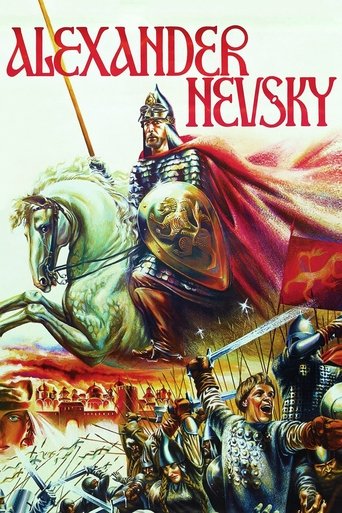
- Alexander Nevsky (Eisenstein's own earlier work)
- The Godfather Part II
- Star Wars (the aesthetic of the Galactic Empire)
- 300 (stylized historical violence)
Where else to watch
- The Criterion Collection (Blu-ray/DVD)
- Criterion Channel
- Mosfilm Official YouTube Channel (often available for free with subtitles)
- HBO Max (periodically)
Famous quotes
A Czar must have no one to whom he must account, save God.
I will be the first! I will be the only one!
The Czar is alone. The Czar has no friends.
You are too small for the crown of Russia!
I have become the very thing I sought to destroy for the sake of Russia.