
Mabel's Blunder
"She dressed as a man to escape her boss."
Keys: Space play/pause · ←/→ 10s · F fullscreen · M mute · </> speed
About this film
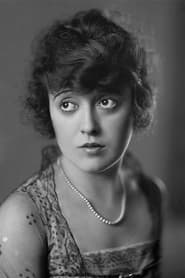
Mabel is pursued by her boss, despite being engaged to his son, in a gender-bending comedy of errors and mistaken identities.
Cast & crew
More films like this
More Comedy films
View all →







More from Mabel Normand
View all →
More about this film
About the production
Release dateOctober 1914
ProductionKeystone Studios, Mack Sennett Comedies
Filmed inLos Angeles, California, Keystone Studios lot
This was one of the early films where Mabel Normand took on directing duties, showcasing her multifaceted talent in the male-dominated film industry of the 1910s. The film was shot quickly, typical of Keystone's rapid production schedule, with most scenes completed in one or two takes. The gender-bending elements were considered quite daring for the time period, reflecting the more permissive attitudes in early cinema before the Hays Code.
Themes
Gender identityWorkplace harassmentMistaken identitySocial classFemale agency
Themes & topics
comedysilent filmgender disguisemistaken identityworkplace romanceslapstickchaseboss-employee relationshipengagementcross-dressing
Historical background
Contemporary documentation places Mabel's Blunder (1914) within the silent era; Mabel's Blunder (1914) is an American short silent comedy film directed by, written by, and starring Mabel Normand, the most successful of the early silent screen comediennes.
Why this film matters
Scholars and collectors reference Mabel's Blunder when discussing how the silent era filmmakers addressed popular themes.
Making of
Mabel Normand directed this film during her peak years at Keystone Studios, working closely with Mack Sennett who mentored her in directing. The production was typical of Keystone's fast-paced approach, with minimal scripting and heavy reliance on improvisation and physical comedy. Normand's dual role as director and star required her to direct scenes while also performing, a challenging feat that demonstrated her exceptional talent. The gender-bending elements required careful choreography to maintain the comedic effect while keeping the disguise believable within the context of silent film comedy. The film was shot on Keystone's Edendale studio lot, with exterior scenes filmed on the surrounding streets of Los Angeles, which were still relatively undeveloped at the time.
What critics said
Where contemporary reviews survive, Mabel's Blunder is read against the tastes of 1914; revival screenings keep it in circulation.
Did you know?
- This was one of the first films where Mabel Normand was credited as both director and star, establishing her as a pioneering woman in early Hollywood
- The film showcases early examples of gender-bending comedy that would become more common in later decades
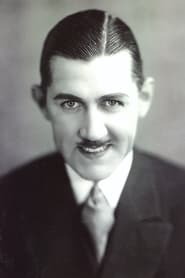
- Harry McCoy, who plays the lecherous boss, was a frequent collaborator with both Mabel Normand and Mack Sennett
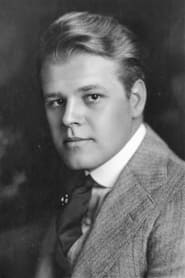
- Charley Chase appears under his real name Charles Parrott in this early role before becoming a comedy star in his own right
- The film was produced during Keystone's most prolific period, when the studio was releasing multiple short films per week
- Mabel Normand was one of the few women in early cinema to achieve both critical and commercial success as a director
- The film's themes of workplace harassment were remarkably progressive for 1914
- Keystone Studios was known for its chaotic comedic style, which is fully displayed in this film's chase sequences
- The preservation of this film is particularly valuable as it showcases Normand's directorial style, much of which has been lost due to film deterioration
- The film's success led to more directing opportunities for Normand, though she eventually focused primarily on acting
Visual style
The cinematography by Frank D. Williams and Hans F. Koenekamp employed the straightforward, functional style typical of Keystone productions, with clear compositions designed to maximize the visibility of physical comedy. The camera work prioritized the performers' actions over artistic flourishes, using medium shots to capture full-body movements essential to the slapstick sequences. The film utilized the natural lighting available on the Keystone lot and Los Angeles locations, creating the bright, high-contrast look characteristic of early California filmmaking. The camera movement was minimal, relying instead on carefully choreographed performer movement within the frame to create visual interest.
Innovations
While not technologically innovative in terms of camera work or editing, the film demonstrated advanced narrative techniques for its period, particularly in its handling of mistaken identity and gender disguise. The continuity editing was more sophisticated than many contemporary films, maintaining clear spatial and temporal relationships despite the rapid pace. The film's success in making the gender disguise believable within the comedic context required careful attention to costume design and performance, representing an achievement in visual storytelling. The chase sequences, though standard for Keystone, showed efficient use of multiple locations and extras to create the illusion of a sprawling pursuit.
Music
As a silent film, Mabel's Blunder would have been accompanied by live musical performance during its original theatrical run. The typical Keystone score would have consisted of popular songs of the era, classical pieces, and original improvisations by the theater's pianist or organist. The music would have been synchronized to enhance the comedic timing, with faster tempos during chase sequences and more romantic themes during the scenes between Mabel and her fiancé. No original score has survived, though modern restorations are typically accompanied by newly composed period-appropriate music.
Famous quotes
As a silent film, dialogue was conveyed through intertitles. No specific quotes from the intertitles have been widely documented as particularly memorable, though the visual gags and physical comedy were the primary vehicles for the film's humor.
Memorable scenes
- The transformation scene where Mabel disguises herself as a man, complete with suit, hat, and mustache, which was considered quite daring for 1914. The chase sequence through the Keystone studio lot, where Mabel in disguise must evade both her boss and her confused fiancé while maintaining her masculine persona. The climactic reveal scene where the disguise comes off, leading to the resolution of the various misunderstandings and the exposure of the boss's inappropriate behavior.
What audiences thought
The film was well-received by contemporary audiences who appreciated Normand's comedic talents and the film's clever premise. Theater audiences responded particularly well to the gender-bending elements and the chaotic chase sequences that were hallmarks of Keystone comedies. The film's success at the box office helped cement Normand's status as especially popular comediennes of the era. Modern audiences who have seen the film through screenings at film archives and festivals have noted its surprisingly progressive themes and sophisticated humor that holds up remarkably well over a century later.
Film connections
Influenced by
- Keystone comedy style
- Mack Sennett's production methods
- French and Italian slapstick traditions
- Stage comedy conventions of the 19th century
This film influenced
- Later gender-bending comedies
- Workplace romance films
- Slapstick chase sequences in sound films
- Comedies featuring female protagonists in male disguise
Film restoration
The film has survived and is preserved in several film archives, including the Library of Congress and the Museum of Modern Art. While some deterioration is evident, the film remains largely intact and viewable. It has been included in several DVD collections of Keystone comedies and Mabel Normand's work. The preservation of this film is particularly significant as it represents one of the few surviving examples of Mabel Normand's work as a director.
Where to watch
- The film is available on various public domain websites
- Included in Keystone Studios DVD collections
- Available through some streaming services specializing in classic cinema
- Screened occasionally at film festivals and archive events
- Accessible through university film libraries and archives