My Baby
"Then comes a cold hard fact of life."
Keys: Space play/pause · ←/→ 10s · F fullscreen · M mute · </> speed
About this film
When the double wedding takes two daughters away from the old man at once, the youngest, now the only one left, in outraged spirit promises never to leave her father, but soon she too is departing for a new home. Then comes a cold hard fact of life. The son-in-law claims his right to make a home alone for his wife.
Cast & crew
More films like this
More Drama films
View all →







More from D.W. Griffith
View all →
More about this film
About the production
Release dateNovember 14, 1912
BudgetApproximately $500 - $1,000 (standard Biograph one-reeler budget)
ProductionBiograph Company
Filmed inNew York City, New York, Biograph Studio (11 East 14th Street, NYC)
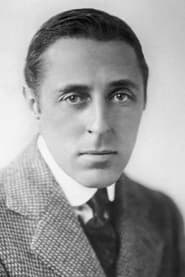
The film was produced during a prolific period for D.W. Griffith at Biograph, where he was refining the 'one-reeler' format. It features a screenplay by Anita Loos, who would later become one of Hollywood's most famous screenwriters. The production utilized the standard Biograph stock company, which functioned as a tight-knit ensemble. While Griffith is the primary director of record, some historians suggest Frank Powell may have assisted or co-directed certain sequences, a common practice at the studio during this high-output era.
Themes
Family LoyaltyGenerational ConflictForgivenessLonelinessThe Passage of Time
Themes & topics
Father daughter relationshipGrandchildReconciliationWeddingEstrangementOld agePromise
Historical background
Exhibitors around 1912 slotted My Baby into mixed bills where shorts, newsreels, and features shared the same program.
Why this film matters
Surviving prints of My Baby document how 1912-era filmmakers solved story problems with limited means.
Making of
During the filming of 'My Baby,' the Biograph Company was at the height of its creative powers but also facing internal tension as stars like Mary Pickford began to realize their individual box-office value. Griffith was known for his 'rehearsal' method, where he would have the actors run through scenes repeatedly without film in the camera to perfect their timing and emotional beats. This film specifically highlights Griffith's interest in domestic melodrama and the 'generation gap'—a theme he would revisit in his later features. The cinematography by G.W. 'Billy' Bitzer used natural light through studio windows supplemented by Cooper Hewitt mercury vapor lamps, creating the soft, high-contrast look characteristic of 1912 Biograph productions.
What critics said
Press files from 1912 mention My Baby in roundup columns of what played that week.
Did you know?
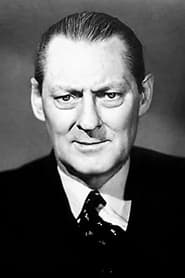
- The film features an incredible ensemble of future legends in bit parts, including Lillian Gish, Dorothy Gish, Lionel Barrymore, and Jack Pickford as wedding guests.
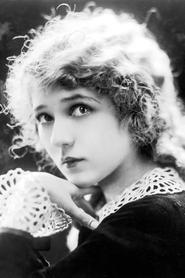
- This was one of the final films Mary Pickford made for Biograph before her departure to work with Adolph Zukor at Famous Players.
- The scenario was written by Anita Loos, who was only 24 at the time and had recently started selling scripts to Griffith for $25 each.
- The child actor Eldean Steuart, who played the titular 'baby,' appeared in several Biograph shorts during this period.
- The film is often cited for its use of 'intimate' acting styles, moving away from the broad theatrical gestures common in 1912.
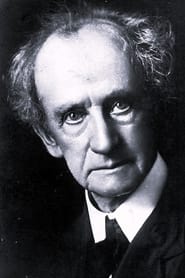
- W. Chrystie Miller, who plays the father, was a regular in Griffith's films, often cast in 'venerable old man' roles.
- The film was released on a split-reel in some markets, though it was primarily a standalone one-reeler (approx. 1000 feet of film).
- The title 'My Baby' refers both to the daughter's promise to remain her father's 'baby' and the literal grandchild who facilitates the ending.
Visual style
Shot by the G.W. Bitzer, the film utilizes a stationary camera but achieves depth through careful blocking of actors (staging in depth). The use of the medium shot allows for a clearer view of the actors' facial expressions compared to the long shots of the previous decade. Bitzer's lighting creates a distinct atmosphere for the father's lonely house versus the brighter, more hopeful scenes of the young couple.
Innovations
The film is notable for its sophisticated use of the 'cut-back' (parallel editing) to contrast the father's isolation with the daughter's new life. It also demonstrates Griffith's increasing comfort with the 'psychological' close-up, using the camera to focus on the father's changing expressions as he looks at the baby, thereby telling the story through emotion rather than just physical action.
Music
As a silent film, it had no recorded soundtrack. Original screenings would have been accompanied by a live pianist or organist, likely playing standard 'melodramatic' cues or popular sentimental songs of 1912 such as 'When I Lost You' by Irving Berlin.
Famous quotes
Intertitle: 'The youngest daughter's promise: "I will never leave you, Father."'
Intertitle: 'The son-in-law claims his right to make a home alone for his wife.'
Intertitle: 'Heart hunger craves another sight.'
Memorable scenes
- The double wedding scene: A crowded, bustling sequence featuring a 'who's who' of silent cinema stars as extras.
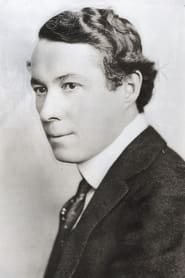
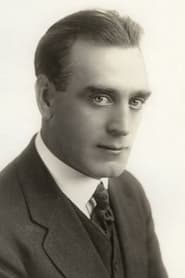
- The confrontation: A tense moment where the father denies his daughter and her husband entry to his home, showcasing Henry B. Walthall's dramatic intensity.
- The gate scene: The emotional climax where the lonely grandfather first sees the baby, unaware it is his own kin, leading to the final reconciliation.
What audiences thought
Audiences in 1912 responded strongly to the film's sentimental themes of family reconciliation, which were a staple of nickelodeon programming. Mary Pickford was already a major draw, and her presence ensured the film was a success in the General Film Company's distribution circuit. Viewers often wrote to magazines asking for the names of the 'Biograph actors,' as the studio famously did not credit its performers on screen at the time.
Film connections
Influenced by
- Victorian stage melodrama
- The short stories of Guy de Maupassant
- D.W. Griffith's own earlier short 'The Country Doctor' (1909)
This film influenced
- Way Down East (1920)
- The Old Maid (1939)
- Various family-centered silent melodramas of the 1920s
Film restoration
Preserved. Prints exist in the film archives of the Museum of Modern Art (MoMA) and the Library of Congress (American Film Institute/Mary Pickford collection).
Where to watch
- YouTube (Public Domain uploads)
- Library of Congress (Archival viewing)
- Museum of Modern Art (Special screenings)
- Included in various 'Griffith Biograph Shorts' DVD collections