


One Is Business, the Other Crime
"One couple is rich."
Keys: Space play/pause · ←/→ 10s · F fullscreen · M mute · </> speed
About this film
Griffith intercuts between the lives of two couples married on the same day. One couple is rich, the other poor. Time passes, and in desperation over joblessness, the poor husband attempts to burgle a home, only to be captured at gunpoint by the mistress of the house.
Cast & crew
More films like this
More Drama films
View all →







More from D.W. Griffith
View all →
More about this film
About the production
Release dateMarch 18, 1912
Box officeNot documented - box office tracking was not standardized in 1912
ProductionBiograph Company
Filmed inBiograph Studio, New York City, Fort Lee, New Jersey
was produced during Griffith's most innovative period at Biograph, where he developed many cinematic techniques. The film was shot on 35mm black and white film stock using natural light whenever possible, as artificial lighting was still primitive. Griffith was known for his fast shooting schedule, often completing films in 2-3 days. The intercutting technique between the two couples was relatively innovative for the time, showcasing Griffith's growing mastery of parallel editing to build dramatic tension and social commentary.
Themes
Class disparityMoral ambiguitySocial justiceDesperation and crimeCorruption in high society
Themes & topics
burglarybriberymarriagepovertywealthparallel storiessocial commentarydesperationcorruptiongunpointdiscoveryirony
Historical background
Exhibitors around 1912 slotted One Is Business, the Other Crime into mixed bills where shorts, newsreels, and features shared the same program.
Why this film matters
Restorations and festival bookings keep One Is Business, the Other Crime visible among classic-film communities.
Making of
The production of 'One Is Business, the Other Crime' took place during a crucial transitional period in American cinema, when D.W. Griffith was rapidly developing the language of film narrative. Griffith was known for his meticulous attention to detail and his insistence on multiple takes, which was unusual for the fast-paced production schedules of the era. The film's parallel structure required careful planning and storyboarding, as Griffith needed to ensure the narrative threads would connect effectively. The burglary scene was particularly challenging to film, as it involved complex staging with multiple characters and the dramatic reveal of the bribery evidence. Griffith often drew inspiration from contemporary social issues and newspaper stories, and likely reflected growing public concern about urban crime and corruption during the Progressive Era. The cast, all regular Biograph players, would have been familiar with Griffith's exacting directing style and his emphasis on naturalistic acting, which was revolutionary for the period.
What critics said
Modern retrospectives screen One Is Business, the Other Crime to illustrate 1912 pacing and camera norms.
Did you know?
- was part of D.W. Griffith's prolific 1912 output, during which he directed over 50 films for Biograph
- The film's title reflects Griffith's growing interest in social issues and class disparities, themes he would explore more deeply in later features
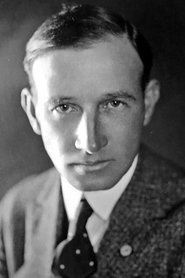
- Charles West, who plays the poor husband, was a frequent Griffith collaborator, appearing in over 40 of the director's films
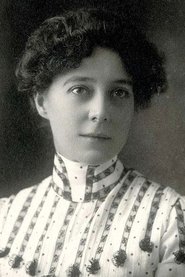
- Dorothy Bernard, who portrays the rich wife, was the daughter of stage actor William Bernard and had a successful transition from theater to film
- The film was released just months before Griffith would leave Biograph to pursue feature-length films
- This short film demonstrates Griffith's early experimentation with what would become known as cross-cutting, a technique he perfected in later works like 'The Birth of a Nation' and 'Intolerance'
- The burglary sequence was filmed using actual props and sets from Biograph's collection, demonstrating the studio's resource efficiency
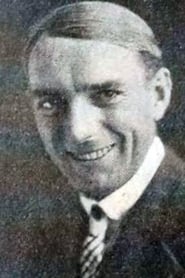
- Edwin August, who plays the rich husband, later became a director himself, directing over 60 films during his career
- The film's moral ambiguity - showing both rich and poor characters involved in criminal behavior - was somewhat progressive for its time
- Like many Biograph films of this era, it was likely shown with live musical accompaniment, typically piano or small orchestra
Visual style
The cinematography was typical of Biograph productions of 1912, utilizing natural lighting whenever possible and employing stationary camera positions with occasional pans and tilts. The film was shot by Billy Bitzer or Arthur Marvin, Griffith's regular cinematographers at Biograph. Visual storytelling was emphasized through careful composition and staging, with the contrast between the wealthy and poor couples' environments conveyed through set design and props. The burglary sequence would have featured more dynamic camera work to create tension. Griffith was beginning to experiment with camera movement and angles during this period, though most shots remained static by modern standards. The black and white cinematography would have relied on careful lighting to create mood and distinguish between the different social environments portrayed in the film.
Innovations
The film's primary technical achievement lies in its sophisticated use of parallel editing to tell two concurrent stories, a technique that Griffith was pioneering during this period. The cross-cutting between the wealthy and poor couples builds dramatic irony and social commentary, demonstrating an advanced understanding of cinematic narrative structure for 1912. The film also Griffith's developing mastery of pacing and rhythm in editing, particularly in the tense burglary sequence. The effective use of close-ups to reveal character emotions and important details (like the bribery evidence) was still relatively innovative in 1912. The film's ability to convey complex social themes within the constraints of a 17-minute running time demonstrates Griffith's growing sophistication as a storyteller and his understanding of the unique capabilities of the film medium.
Music
As a silent film, 'One Is Business, the Other Crime' would have been accompanied by live music during its theatrical run. The specific musical score is not documented, but typical accompaniment for a dramatic film of this period would have included piano or organ music, with themes for different characters and dramatic underscoring for tense scenes like the burglary. The music would have been improvised by the theater's musician or selected from stock libraries of appropriate pieces. The emotional tone of the film would have been conveyed through the musical choices, with lighter themes for the wedding scenes and more dramatic music for the confrontation and revelation scenes. Some larger theaters might have employed small ensembles rather than just a single musician.
Famous quotes
No dialogue was recorded as this is a silent film, but intertitles would have conveyed key narrative points and dramatic revelations
Memorable scenes
- The dramatic burglary sequence where the poor husband breaks into the wealthy couple's home, only to be discovered at gunpoint by the rich wife, leading to the accidental discovery of her husband's bribery evidence - this scene masterfully combines tension, irony, and social commentary
What audiences thought
Audience reception in 1912 is difficult to document precisely, but Biograph films were generally popular with theater-goers. The film's dramatic elements and moral themes would have resonated with contemporary audiences familiar with Progressive Era concerns about social justice and corruption. The burglary sequence and dramatic revelation would have provided the kind of excitement that audiences of the period enjoyed. The parallel structure, while innovative, was becoming more common in Griffith's films, so audiences would have been somewhat accustomed to his increasingly complex storytelling techniques. The film's relatively short running time (about 17 minutes) made it suitable for the typical program of multiple shorts shown in theaters of the era. As with most Griffith Biograph productions, it likely performed well commercially and contributed to the director's growing reputation.
Film connections
Influenced by
- Contemporary newspaper stories about urban crime and corruption
- Progressive Era social reform movements
- Earlier Biograph shorts with social themes
- Victorian melodrama traditions
- Stage plays dealing with social issues
- Naturalist literature of the period
This film influenced
- Later Griffith films with social themes like 'The Mothering Heart' (1913)
- Other Biograph films exploring class disparities
- Early feature films dealing with social issues
- Urban crime dramas of the 1910s
- Films using parallel narrative structures
Film restoration
The film is preserved in the Library of Congress collection and other film archives. Prints exist in 16mm and 35mm formats. The film has been included in various Griffith retrospective collections and is accessible through film archives and specialized cinema institutions. While not as widely available as Griffith's more famous feature films, it is considered preserved and accessible to researchers and cinema historians.
Where to watch
- Library of Congress (research access)
- Museum of Modern Art Film Collection
- UCLA Film & Television Archive
- The George Eastman Museum
- Specialized film archives and cinema history institutions
- Occasional screenings at film festivals and retrospective events
- Some specialized streaming services dedicated to classic cinema