Also available on: YouTube Archive.org

Rhythm 23

1925 Germany
visual rhythmabstractionfigure-ground reversalmotion as compositionmodernist experimentation

Plot

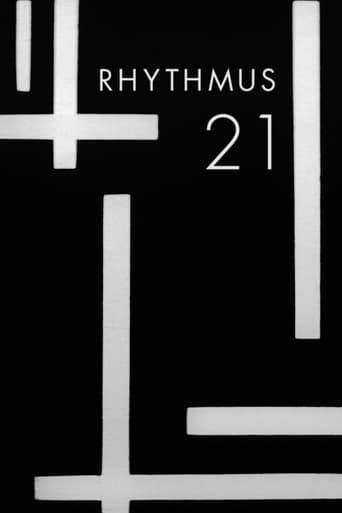
Rhythm 23 is an abstract black-and-white animation built around a simple but visually evolving rhythm of forms rather than a conventional narrative. The film begins with bright white shapes moving against a black field, their motion and spacing creating a sense of pulsing, musical choreography. As the imagery shifts, a white form expands until it fills the frame, transforming the background from black to white and causing the moving elements to reverse into black lines and figures. The piece continues as a study in optical motion, contrast, and the tension between positive and negative space, with shapes bouncing, sliding, and colliding in a manner that feels both geometric and improvisational. Like much of Hans Richter’s avant-garde work, the film functions less as story than as a visual composition in time, exploring how pure abstraction can create rhythm, surprise, and emotional energy.

About the Production

Release Date 1925
Production null
Filmed In Germany

Rhythm 23 is a very early abstract film by Hans Richter, made during the formative years of European avant-garde cinema. It belongs to Richter’s broader Rhythmus series, in which he explored the idea that cinema could function like visual music: organized by timing, contrast, and movement rather than plot. Production details are scarce, and surviving documentation on exact crew, methods, and financial backing is limited, which is common for experimental films from this period. The film’s striking simplicity suggests hand-crafted animation or frame-by-frame compositional work using cut-out or painted abstract forms, consistent with Richter’s early experiments in visual rhythm. Because it was made in the mid-1920s, it reflects the post-World War I avant-garde climate in Germany, when artists were aggressively testing the boundaries between painting, film, and design.

Historical Background

Rhythm 23 was made in 1925, in the Weimar Republic period, when German culture was one of the world’s most inventive artistic laboratories. The years after World War I saw a surge of experimentation in painting, architecture, theater, photography, and film, with many artists rejecting naturalism and searching for universal visual languages. Richter’s abstract cinema was part of this modernist wave, influenced by Dada, Constructivism, and the idea that art could be built from pure form rather than representation. The film matters historically because it demonstrates how quickly cinema expanded beyond storytelling into modern art practice, helping establish experimental animation as a serious medium. It also reflects the period’s fascination with rhythm, mechanization, and visual order, all of which became central concerns in 1920s avant-garde aesthetics.

Why This Film Matters

Rhythm 23 is significant as an early landmark in abstract animation and experimental film history. It helped demonstrate that film could operate like a moving painting or visual score, influencing later generations of filmmakers, animators, and motion designers who explored non-narrative image-making. Hans Richter’s work contributed to the legitimization of avant-garde cinema as an art form distinct from commercial storytelling, and his films are still referenced in discussions of visual music, kinetic abstraction, and modernist design. While it was never a mass-market title, its influence is outsized within film history because it helped define an entire tradition of experimental visual expression. The film remains important to scholars of animation, avant-garde art, and early 20th-century modernism.

Making Of

Rhythm 23 emerged from Hans Richter’s interest in reducing cinema to its most essential visual elements: motion, rhythm, and contrast. Rather than staging live-action scenes, Richter used abstract shapes and carefully timed transformations to create a film that behaves like a piece of visual composition. The work reflects the broader interwar avant-garde environment in Germany, where artists sought new forms of expression after the upheaval of World War I and often blurred the lines between painting, typography, design, and cinema. Exact behind-the-scenes records are limited, but the film’s construction strongly suggests painstaking frame-by-frame planning, with each shift in shape and polarity intended to produce a musical or choreographic effect. Its importance lies not in lavish production circumstances but in the radical conceptual decision to make abstraction itself the subject of film.

Visual Style

The visual style of Rhythm 23 is defined by stark black-and-white contrast, geometric abstraction, and rhythmic motion across the frame. Rather than using camera movement, lighting, or live-action composition, the film builds visual interest through changing shapes, spatial inversions, and the dynamic relationship between filled and empty space. The film’s most distinctive device is the transformation from black background with white forms to white background with black forms, effectively flipping visual polarity and renewing the image system midstream. The result is a minimalist but highly choreographed visual field in which even small shifts in shape or spacing feel significant. This approach anticipates later developments in motion graphics and abstract animation that rely on timing, pattern, and optical transformation rather than representational imagery.

Innovations

The film’s chief technical achievement is its rigorous use of abstract animation to create a sense of rhythm without any narrative scaffolding. Its inversion of black and white fields is a notable visual strategy that intensifies the viewer’s awareness of figure-ground relationships, making the frame itself feel active and unstable. Rhythm 23 is also important for advancing the idea of film as a temporal art form akin to music, where timing and repetition are primary expressive tools. In the broader history of animation, it represents an early and influential example of pure abstraction, helping pave the way for later experiments in visual music, graphic animation, and non-objective cinema. The work’s economy of means is itself innovative: it proves that a small set of shapes, if precisely organized, can produce a compelling cinematic experience.

Music

Rhythm 23 was produced as a silent film, so no original synchronized soundtrack is known to survive or be associated with the film. Like many silent avant-garde works, it may have been projected with live musical accompaniment at screenings, depending on venue and context, but no specific score is securely documented. Its title and structure suggest a close affinity with musical rhythm, and it is often discussed as if it were a visual analogue to composition or percussion. Modern screenings of silent experimental films of this type may use newly commissioned or archival accompaniment, but the original musical practice is not well documented.

Memorable Scenes

  • The opening passages of white shapes moving on a black background, establishing the film’s pulsing abstract rhythm.
  • The moment when a white form expands to fill the frame and the image flips into a white background with black moving elements.
  • The sequences of bouncing black lines and figures on the now-white field, turning the entire screen into a dynamic graphic surface.

Did You Know?

  • Rhythm 23 is part of Hans Richter’s influential Rhythmus cycle, which helped define early abstract cinema.
  • The film contains no characters, dialogue, or traditional storyline; its meaning comes entirely from motion, contrast, and form.
  • Its black-and-white design relies on the reversal of figure and ground, with the frame visually flipping from dark to light as the composition changes.
  • Hans Richter was originally associated with Dada and later became one of the key figures in avant-garde film and visual experimentation in Europe.
  • The film is often discussed alongside other early abstract works by artists such as Viking Eggeling and Walter Ruttmann.
  • Because it is an experimental silent film from the 1920s, exact production and exhibition records are not always fully documented.
  • Rhythm 23 exemplifies the idea that film can be a non-representational art form, closer to painting or music than theatrical cinema.
  • The piece is frequently cited in histories of animation and experimental film as an important step toward visual abstraction in motion pictures.
  • Richter’s abstract films were influential in later modernist design, motion graphics, and experimental animation aesthetics.

What Critics Said

Contemporary reception of Rhythm 23 is difficult to document in detail because experimental films of this kind were often screened in limited venues, art circles, or specialist contexts rather than widely reviewed in the mainstream press. Within avant-garde circles, Richter’s abstract films were admired for their formal daring and their attempt to treat film as an autonomous visual art. Modern critics and historians generally view Rhythm 23 as an important step in the development of non-narrative cinema, praising its disciplined exploration of movement, polarity, and visual tempo. Today it is usually discussed as a foundational work in abstract animation rather than as a conventional entertainment film, and its reputation rests on historical importance, artistic innovation, and influence on later experimental media.

What Audiences Thought

Audience response at the time was likely limited to small avant-garde and art-film audiences rather than the general public, and there is no evidence of large-scale commercial popularity. Viewers encountering the film in 1925 would have found it highly unusual, since it offers no characters, plot, or familiar dramatic structure. For sympathetic modernist audiences, that strangeness was likely the attraction, as the film invited viewers to experience cinema as rhythm and abstraction. Contemporary audiences approaching it today often respond with curiosity and appreciation for its historical importance, though its austere style can still feel challenging or minimalist compared with later animation. It is most often appreciated by viewers interested in film history, visual art, and experimental animation.

Film Connections

Influenced By

  • Dada art
  • Constructivism
  • early modernist painting
  • Viking Eggeling’s abstract film experiments
  • the idea of visual music

This Film Influenced

  • Rhythm 21 (1921)
  • Diagonal Symphony (1924)
  • Shape animation and abstract motion graphics
  • later experimental animation and visual music films

Film Restoration

Preserved; the film survives as an early abstract silent short and is known through archival holdings and scholarly presentations, though specific restoration details are not consistently documented in widely available sources.

Themes & Topics

abstract shapesblack and whiterhythmic motionvisual musicnon-narrative animation