Rigadin nègre malgré lui
Plot
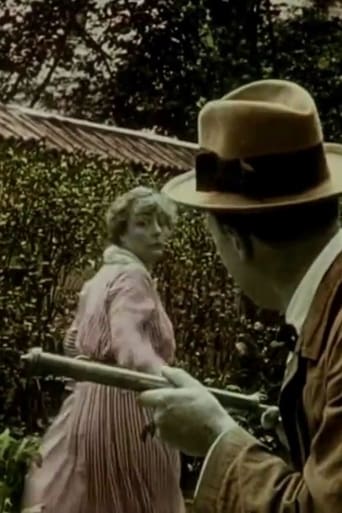
Rigadin and a companion are motoring when their car breaks down, forcing them to stop and seek help. While Rigadin goes off in search of somewhere to stay, his friend is attacked and tied up by a man in blackface, an incident that launches the film’s farcical chain of mistaken identities and racial disguise. The blackface intruder later breaks into Rigadin’s room, blackens him up as well, and then removes his own disguise so that Rigadin is left to bear the legal and social consequences. The comedy plays as a rapid succession of reversals, with Rigadin trapped in a humiliating predicament that is entirely of someone else’s making. As with many Rigadin shorts, the humor depends on slapstick escalation, deception, and the title character’s inability to control events around him.
Director
Georges MoncaCast
About the Production
This is a French short comedy from the Rigadin series, directed by Georges Monca and starring Charles Prince as the comic persona Rigadin. Like many Pathé productions of the period, it was made as a compact one-reel film designed for program filling and quick commercial circulation rather than as a prestige feature. Surviving production paperwork is limited, so details such as the exact shooting location, budget, and release logistics are not well documented in standard modern references. The film is also notable because its premise uses blackface as a central comic device, reflecting racist performance conventions that were widespread in early 20th-century European and American popular entertainment but are now recognized as deeply offensive.
Historical Background
Rigadin nègre malgré lui was made in 1912, during the maturation of the European silent film industry and just before the enormous disruptions of World War I. France, and Pathé in particular, was among the world leaders in film production and distribution, with short comedies forming a major share of the market. The film emerged in an era when cinema was rapidly standardizing into star-driven genres, and performers like Charles Prince helped create recognizable recurring characters that audiences could follow from film to film. At the same time, the picture reflects the racial attitudes of its period, when blackface remained normalized in popular entertainment across Europe and North America; historically, that makes the film a useful but uncomfortable artifact of mainstream comedy before modern civil-rights consciousness reshaped screen representation.
Why This Film Matters
The film is culturally significant less because of broad commercial impact that is now difficult to measure, and more because it documents the early international popularity of serial comic characters and the industrial reach of Pathé. It demonstrates how early cinema reused vaudevillian, music-hall, and stage-comedy traditions, including broad physical humor and racial masquerade, in a new mass-medium form. For scholars, it is an important example of how silent-era comedy normalized stereotypes while also developing the visual language of screen farce. Its value today lies in its place within the Rigadin cycle, the history of French short comedies, and the study of racism in early film culture.
Making Of
Little detailed behind-the-scenes documentation survives in commonly accessible sources, which is typical for many 1912 short comedies. What is clear is that the film was produced within the Pathé studio system, where directors such as Georges Monca worked quickly with recurring actors and established comic formulas. Charles Prince’s Rigadin character was a recognizable screen property, so the production likely depended on his established persona more than on elaborate sets or extensive narrative complexity. The most striking production element from a modern perspective is the use of blackface, which was then treated as a routine theatrical and cinematic convention; today it is understood as a racist practice that shaped the film’s comedy in ways that are historically important but ethically troubling.
Visual Style
The film was shot in the visual style typical of early 1910s French comedy: static or lightly staged framing, clear presentation of actors in full view, and emphasis on readable body language rather than camera movement. The humor would have depended on situational clarity, allowing the audience to track who is disguising whom and who is being deceived. As with many Pathé shorts, the cinematography likely prioritizes legibility and performance over expressive montage, with staging that keeps the action centered and unambiguous. The blackface disguise itself functions as a visual device that the camera must hold plainly so the audience can follow the mistaken identity plot.
Innovations
The film does not appear to be known for major technical innovation, but it is representative of the polished industrial comic filmmaking Pathé produced in the early 1910s. Its effectiveness lies in economical visual storytelling, efficient setup, and rapid comic escalation within a short runtime. The use of recurring character branding through Rigadin is itself an important commercial technique, helping create continuity across multiple films. Its historical technical interest is more about how standardized short-comedy production worked than about any single new cinematic device.
Music
As a silent film, it had no synchronized recorded soundtrack. Exhibition would typically have been accompanied by live music in the cinema, selected by local musicians or exhibitors to match the pace of the comedy. No original composed score is known to be definitively associated with the film in standard references. Any modern presentation would likely use an archival or newly created accompaniment rather than a documented original score.
Memorable Scenes
- The breakdown of the car in the middle of the journey, which sets the whole farce in motion.
- The moment Rigadin’s friend is attacked and tied up by a man in blackface, creating the first major reversal.
- The intruder breaking into Rigadin’s room and blackening him up, then removing his own disguise and shifting the blame.
- The final comic outcome in which Rigadin is left to face the consequences of a scheme he did not plan.
Did You Know?
- The film is part of the long-running Rigadin series built around Charles Prince’s popular comic character.
- Georges Monca was one of Pathé’s prolific directors, especially active in short comedies and star vehicles for established performers.
- The title translates roughly as 'Rigadin Black Man by Mistake' or 'Rigadin a Negro Despite Himself,' depending on interpretation and cataloging practice.
- The film’s comic mechanism depends on disguise, impersonation, and wrongful blame, all common devices in early French farce.
- The plot summary preserved in modern databases is brief, suggesting that the film survives in fragmentary documentation rather than in a widely circulated complete copy.
- The use of blackface in the film is historically significant as evidence of how normalized racist caricature was in mainstream early cinema.
- Charles Prince was a major comic star in French silent film, and the Rigadin character helped define his screen persona.
- The film was made at a time when Pathé distributed large numbers of short comedies internationally, so it may have been seen outside France under translated or localized titles.
- Because it is a short silent comedy from 1912, it likely relied on exaggerated gesture and visual gags rather than intertitles-heavy storytelling.
- The film belongs to a period when automobile breakdowns were a frequent comic premise because cars still signaled modern novelty and unreliable luxury.
What Critics Said
Contemporary critical reception is not well preserved in widely available English-language sources, and no major surviving review consensus is commonly cited for this specific short. Like many Pathé comedies of the period, it was likely treated primarily as light entertainment rather than as a work for extended critical discussion. Modern reception, however, would be shaped strongly by the film’s blackface imagery, which makes it difficult to evaluate purely as a comedy without also addressing its racist content. Film historians tend to approach it as an example of both the energy of early slapstick and the prejudices embedded in mainstream popular cinema of the time.
What Audiences Thought
No precise audience data survives for the film, but it would have been designed for broad popular amusement in nickelodeon-style and traveling-cinema circuits. Charles Prince was a familiar and bankable comic presence, so audiences of the time likely recognized Rigadin as a recurring character and understood the film’s humor quickly. The car breakdown, the escalating misunderstanding, and the humiliation of the protagonist all fit the brisk comic tastes of the era. Modern audiences, by contrast, are likely to react very differently because the blackface element overshadows the slapstick mechanics and makes the film difficult to view without historical framing.
Film Connections
Influenced By
- Vaudeville and music-hall farce
- French stage comedy traditions
- Early Pathé comic shorts
- Broad slapstick and trick-deception films from the 1900s and 1910s
This Film Influenced
- Later Rigadin comedies
- Subsequent French slapstick shorts that used recurring comic characters
- Early screen farces built around disguise and social humiliation
You Might Also Like
More Comedy Films
View allMore from Georges Monca
View allFilm Restoration
The film is not widely known as a lost title in standard references, but complete preservation status is uncertain from publicly accessible catalog information. It appears to survive at least in documentation and possibly in archival holdings, though the availability of a publicly accessible restoration or online viewing copy is not well established. Because many Pathé shorts of this era survive only in partial or archive-held form, the safest characterization is that its preservation status is uncertain to incomplete documentation rather than definitively confirmed as fully restored.