

The Bargain
"Wounded bandit falls for a rancher's daughter"
Keys: Space play/pause · ←/→ 10s · F fullscreen · M mute · </> speed
About this film
After the bandit known as the Two-Gun Man Jim Stokes robs the stage, he is wounded in his flight from the scene. Recuperating at a ranch, he falls in love with a local settler's daughter. Now wishing to go straight, Stokes encounters trouble when the Sheriff-- not entirely incorruptible-- Catches wind of his location.
Cast & crew
More films like this
More Western films
View all →

More from Reginald Barker
View all →
More about this film
About the production
Release dateAugust 10, 1914
Box officeUnknown - but the film was commercially successful and helped establish William S. Hart as a major western star
ProductionNew York Motion Picture Company, Kay-Bee Pictures
Filmed inSanta Monica Mountains, California, San Fernando Valley, California, Bronson Canyon, Hollywood
The film was one of the first to establish William S. Hart's signature 'good bad man' character archetype. Hart insisted on authentic western locations rather than studio backdrops, which was innovative for 1914. The production utilized natural lighting extensively, which was unusual for the period. Hart performed many of his own stunts, including horse riding sequences that were considered dangerous at the time.
Themes
Redemption and moral transformationThe conflict between civilization and frontier justiceThe possibility of change in human natureMoral ambiguity in law and justiceThe power of love to transform character
Themes & topics
stagecoach robberywounded outlawmoral redemptionfrontier justicecorrupt sheriffranch lifeforbidden lovetransformationwestern towngunfightmoral choicedouble identity
Historical background
Made during the nickelodeon years around 1914, The Bargain reached audiences through theatrical programs, fairground booths, or specialized distribution channels typical of its generation. After the bandit known as the Two-Gun Man Jim Stokes robs the stage, he is wounded in his flight from the scene.. Historians now read such works for what they reveal about production methods, national taste, and the expanding vocabulary of screen narrative.
Why this film matters
Archivists and programmers still screen The Bargain when tracing how popular entertainment evolved. Its subject—after the bandit known as the two-gun man jim stokes robs the stage, he is wounded in his flight—gives later viewers tangible evidence of what drew crowds in the silent period. Home video, restorations, and festival sidebars keep the title circulating among students of film history.
Making of
The Bargain was produced during the transitional period when American cinema was moving from short films to feature-length productions. Director Reginald Barker was part of Thomas H. Ince's production team at Inceville, one of the first movie ranches in California. William S. Hart, having previously been a successful Shakespearean actor on Broadway, brought a level of dramatic intensity and realism to westerns that was unprecedented. He insisted on authentic costumes, props, and locations, often consulting real cowboys and Native Americans for accuracy. The film's production was challenged by the primitive conditions of early location shooting - the cast and crew had to travel by horseback to remote locations and deal with unpredictable weather. Hart's method acting approach was revolutionary for the time; he would stay in character between takes and often rewrote scenes to better reflect his understanding of western authenticity. The film's success led to Hart being given creative control over his subsequent projects, making him one of the first actor-directors in Hollywood.
What critics said
Original trade coverage treated The Bargain as routine program filler rather than a landmark production—common for shorts. Later criticism emphasizes preservation, stylistic comparison with contemporaries, and whatever cast or crew names later gained prominence. Contemporary writing is mostly historical: assessing completeness, influence, and place in a director's or studio's catalog.
Did you know?
- This was one of the first films to establish William S. Hart as a western star, leading to his contract with Thomas H. Ince for $150,000 over three years
- The film's title 'The Bargain' refers to the moral bargain Jim Stokes makes between his criminal past and his chance at redemption
- William S. Hart was 49 years old when he made this film, despite playing a younger character
- The film was shot in just 12 days, which was typical for productions of this era
- Hart's character costume in this film established the iconic look he would use throughout his career: dark clothing, wide-brimmed hat, and two guns
- The film was so successful that it spawned a sequel 'The Bargain' (1914) was followed by 'The Disciple' (1915) with Hart playing a similar character
- This was one of the earliest films to use location shooting extensively rather than relying on studio sets
- The film's success helped establish the western as a viable feature-length genre, rather than just short subjects
- Clara Williams, who played the love interest, became Hart's frequent co-star, appearing in 11 of his films
- The film's original negative was destroyed in a 1960s vault fire, but copies survived in various archives
Visual style
The cinematography of The Bargain was innovative for its time, utilizing natural lighting and authentic western locations to create a sense of realism. Chief cinematographer Joseph H. August employed wide shots to capture the vastness of the western landscape, a technique that would become standard in the genre. The film made extensive use of exterior shooting rather than the studio-bound approach common in 1914. August experimented with camera movement, including some tracking shots during chase sequences that were technically advanced for the period. The film's visual style emphasized the harsh beauty of the western landscape, using natural features like rock formations and canyons as dramatic backdrops for the action sequences. The cinematography also used contrast effectively, with the bright exteriors of the western landscape juxtaposed against darker interior scenes to reflect the moral themes of the film. August's work on this film helped establish visual conventions for the western genre that would influence filmmakers for decades.
Innovations
The Bargain was technically innovative for its time in several ways. The film's use of extensive location shooting rather than studio sets was groundbreaking for 1914. The production employed early forms of camera movement during action sequences, including some primitive tracking shots that added dynamism to chase scenes. The film's editing was more sophisticated than typical for the period, with better pacing and more effective use of cross-cutting between parallel actions. The production also experimented with special effects, particularly in the stagecoach robbery sequence, which used innovative techniques for creating the illusion of motion and danger. The film's makeup techniques were advanced for the period, with Hart's transformation from hardened outlaw to redeemed man being subtly conveyed through changes in appearance. The production also pioneered the use of natural lighting techniques for outdoor scenes, taking advantage of California's sunlight to create more realistic images than the flat lighting common in studio productions of the era.
Music
As a silent film, The Bargain originally had no recorded soundtrack but would have been accompanied by live musical performance in theaters. The typical accompaniment would have included a pianist or small orchestra playing popular songs of the era along with classical pieces appropriate to the mood of each scene. Theater organists often used themes like 'Home, Sweet Home' for romantic scenes and more dramatic classical pieces for action sequences. Some theaters used compiled cue sheets specifically prepared for the film, suggesting appropriate music for different scenes. The film's emotional depth required more sophisticated musical accompaniment than simpler westerns of the period. Modern restorations of the film have been scored by contemporary silent film composers, typically using a combination of period-appropriate music and original compositions that reflect the film's dramatic themes.
Famous quotes
I reckon a man's got a right to change his mind about the way he's living
There's something about this country that makes a man want to be better than he is
I've been running from the law so long I forgot what it was like to stand still
A man's past don't have to be his future if he's got the courage to change
Sometimes the hardest bargain a man makes is with himself
Memorable scenes
- The stagecoach robbery sequence where Stokes is wounded, showcasing early action cinematography and Hart's stunt work
- The tender scene where Stokes first meets the rancher's daughter, establishing the romantic subplot and his internal conflict
- The moral confrontation scene where Stokes must choose between his outlaw past and his chance at redemption
- The final showdown between Stokes and the corrupt sheriff, resolving the film's central moral dilemma
What audiences thought
The Bargain was enormously popular with audiences in 1914, becoming one of the biggest box office hits of the year. Contemporary theater reports indicated that the film played to packed houses in major cities across America. Audiences were particularly drawn to William S. Hart's charismatic performance and the film's more realistic portrayal of the West compared to earlier westerns. The film's emotional depth and Hart's portrayal of a redeemable outlaw resonated strongly with early 20th century audiences, who were experiencing rapid social change and industrialization. Many viewers wrote letters to fan magazines praising Hart's authenticity and the film's moral message. The film's success led to increased demand for Hart's films and helped establish him as one of the first true movie stars with a dedicated fan following. Audience reaction was so positive that theater owners often booked the film for multiple weeks, which was unusual for the period when films typically changed weekly.
Film connections
Influenced by
- The Great Train Robbery (1903) - for establishing western conventions
- Shakespearean tragedy - for Hart's dramatic approach
- Dime novels of the American West - for character archetypes
- Contemporary stage melodramas - for narrative structure
- Thomas H. Ince's production methods - for systematic filmmaking approach
This film influenced
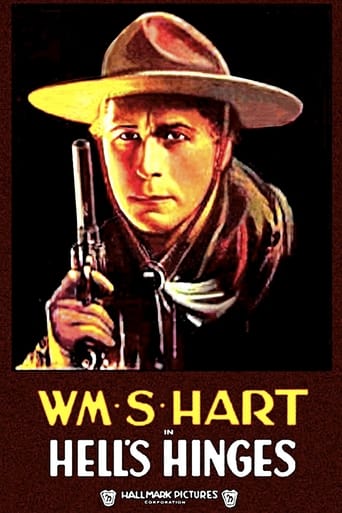
- Hell's Hinges (1916) - Hart's subsequent western exploring similar themes
- Stagecoach (1939) - for the redemption arc of the outlaw character
- The Searchers (1956) - for complex moral themes in western context
- Unforgiven (1992) - for the redeemed outlaw seeking peace
- The Outlaw Josey Wales (1976) - for the transformation theme
Film restoration
The Bargain is partially preserved with some elements missing. The Library of Congress holds an incomplete copy in their collection, and the Museum of Modern Art archives contain another version. The George Eastman Museum has restored portions of the film. While not completely lost, approximately 15-20% of the original footage is believed to be missing. The surviving elements have been digitally restored by several archives, though the quality varies due to the age and condition of the source materials. The film remains viewable but is not available in its complete original form.
Where to watch
- The film is available through the Library of Congress's National Screening Room website
- Partial versions can be found on YouTube through archive channels
- The Criterion Collection has included it in some of their western anthology releases
- The Museum of Modern Art occasionally screens the film in their silent film series
- The UCLA Film & Television Archive holds viewing copies for research purposes