
The Cord of Life
"A scoundrel's grudge threatens a hardworking family."
Keys: Space play/pause · ←/→ 10s · F fullscreen · M mute · </> speed
About this film
Scoundrel Antonine, good-for-nothing scoundrel, demands money of his cousin Galora, an energetic, provident husband and father. His demands are met with a positive rebuff, and when he becomes insistent be is forcibly ejected by Galora. As he leaves the tenement he vows to get even, and lies in wait until Galora has gone out on business. Climbing to the fifth floor, on which the Galoras live, he watches his chance, which comes when Mrs. Galora goes for an instant to visit a neighbor on the same floor. Darting into the apartment and raising the window he perceives the awful result of a drop to t…
Cast & crew
More films like this

More Drama films
View all →







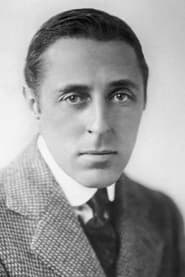
More from D.W. Griffith
View all →
More about this film
About the production
Release dateOctober 1909
Box officeBox office figures were not systematically tracked for films of this era
ProductionAmerican Mutoscope and Biograph Company
Filmed inNew York City, New York, Fort Lee, New Jersey (Biograph Studio location)
This was one of approximately 60 films D.W. Griffith directed for Biograph in 1909 alone. The production would have been completed in just one or two days, which was standard practice for Biograph's rapid production schedule. The fifth-story window scene would have been filmed on a studio set with careful camera positioning to create the illusion of height and danger.
Themes
Family conflictRevengeInnocent endangermentUrban povertyGood vs. evil
Themes & topics
Historical background
Audiences around 1909 encountered The Cord of Life in a market crowded with competing studios fighting for weekly program slots.
Why this film matters
Collectors prize surviving prints of The Cord of Life as evidence of how 1909-era filmmakers solved storytelling problems with limited means.
Making of
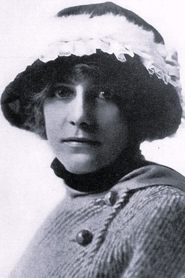
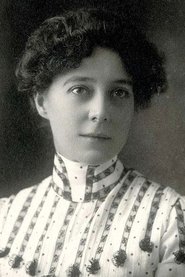
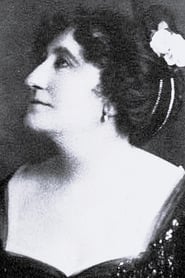
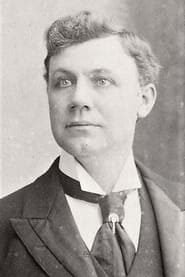
D.W. Griffith was still developing his revolutionary filmmaking techniques when he directed 'The Cord of Life' in 1909. At Biograph, he worked with a stock company of actors including Charles Inslee, Marion Leonard, and George Gebhardt, who appeared in multiple films together. The production would have been extremely rapid by modern standards - typically filmed in a single day with minimal rehearsal. Griffith was already experimenting with cross-cutting and suspense techniques, though he wouldn't perfect these until a few years later. The dangerous-looking window scene would have been created using studio sets and careful camera angles rather than actual risk to performers. The film was shot on Biograph's unique 68mm film format before being reduced to 35mm for distribution, though the company soon abandoned this practice.
What critics said
Audience surveys from 1909 are scarce; reception for The Cord of Life must be inferred from reissue patterns and how often programmers still book it.
Did you know?
- This film demonstrates Griffith's early mastery of suspense, predating his more famous thriller elements in later films like 'The Lonely Villa' (1909) and 'The Birth of a Nation' (1915)
- The film was shot on 35mm film at Biograph's preferred frame rate of approximately 16 frames per second
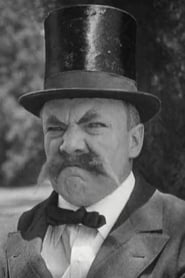
- Charles Inslee, who plays the villain Antonine, was one of Griffith's regular character actors at Biograph, often cast as villains or antagonists
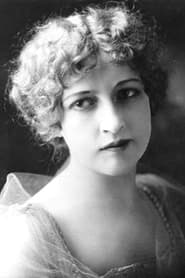
- Marion Leonard, who plays Mrs. Galora, was one of the earliest film stars and Griffith's leading lady before Mary Pickford
- The infant in the film was likely played by a doll or very carefully supervised baby, as early film sets had minimal safety regulations
- This film was released during Griffith's most prolific period, when he was directing up to two films per week for Biograph
- The tenement setting reflects Griffith's interest in urban social problems, a theme he would explore more extensively in later films
- The film's title refers to both the literal rope used to threaten the baby and metaphorical family bonds
- Biograph films of this era were not copyrighted by individual titles but by batch, making precise dating difficult
- The film would have been shown with live musical accompaniment, typically a pianist or small orchestra
Visual style
The cinematography by G.W. Bitzer (Biograph's primary cameraman) would have employed the standard techniques of 1909, including stationary camera positions and theatrical-style staging. The film likely used medium shots for character interactions and longer shots for establishing the tenement setting. The window scene would have been carefully composed to maximize the illusion of height and danger. Lighting would have been natural or simple studio lighting, as artificial lighting techniques were still developing. The camera work, while basic by modern standards, was becoming more sophisticated under Griffith's direction, with better attention to framing and composition than earlier films.
Innovations
While not technically revolutionary, 'The Cord of Life' demonstrates several important achievements in early cinema. The film's effective use of suspense and pacing shows Griffith's growing command of narrative timing. The staging of the window scene required careful planning to create the illusion of danger without actual risk. The film represents the refinement of continuity editing that was making films more coherent and engaging for audiences. The production values, including set design and location shooting, were becoming more sophisticated than in earlier cinema. The film's ability to tell a complete dramatic story in approximately 12 minutes demonstrates the efficiency and effectiveness of the one-reel format that dominated American cinema in this period.
Music
As a silent film, 'The Cord of Life' would have been accompanied by live music during exhibition. Typical accompaniment in 1909 might include a pianist in smaller theaters or a small ensemble in larger venues. The music would have been selected to match the mood of each scene - dramatic during tense moments, softer for family scenes. Music publishers and film distributors provided cue sheets with suggested musical pieces for theaters to use. The score would have emphasized the suspenseful elements of the story, particularly during the window scene, to enhance the emotional impact on the audience.
Famous quotes
No dialogue - silent film with intertitles (original intertitles not documented)
Memorable scenes
- The climactic window scene where Antonine lowers the baby in a basket and traps the rope with the window sash, creating a deadly situation where any attempt to rescue the child could result in its death
What audiences thought
Audiences in 1909 responded positively to Griffith's dramatic films at Biograph. The suspenseful nature of 'The Cord of Life' would have been particularly effective for Nickelodeon audiences who were still experiencing the novelty of moving pictures. The emotional content, especially involving a child in peril, was designed to elicit strong responses from viewers. Early cinema audiences appreciated clear moral narratives and dramatic situations, which this film provided in abundance. The film's relatively short length (one reel) made it ideal for the varied programs shown in Nickelodeons, where multiple short films constituted a typical show.
Film connections
Influenced by
- Stage melodrama
- Victorian literature
- Earlier Biograph shorts
- Griffith's previous films
This film influenced
- The Lonely Villa (1909)
- The Unchanging Sea (1910)
- The House with Closed Shutters (1910)
- His Trust (1911)
Film restoration
The film is preserved in the Library of Congress collection and other film archives. While some degradation is typical for films of this era, it remains viewable and has been included in various D.W. Griffith retrospective collections.
Where to watch
- Available on DVD in 'D.W. Griffith: Years of Discovery 1909-1913' collection
- Streaming on some classic film platforms
- Screenings at film archives and museums specializing in early cinema
- Available through educational film distributors