


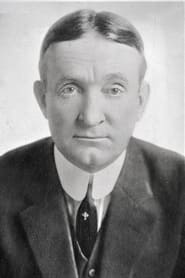
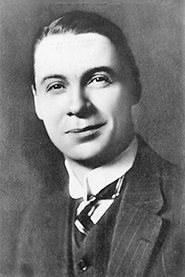

The Devil's Circus
"An ex-con chooses crime over faith until love offers redemption."
Keys: Space play/pause · ←/→ 10s · F fullscreen · M mute · </> speed
About this film
Ex-con Carl from prison, where he served a sentence for stealing. Spurned by his circumstance, Carl rejects God and resumes his fast life of crime. Before long, his fate intersects with that of Mary, a devout orphan, prompting a romance and a reevaluation.
Cast & crew
More films like this
More Drama films
View all →







More from Benjamin Christensen
View all →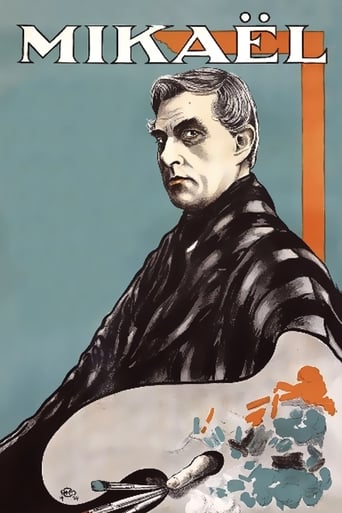
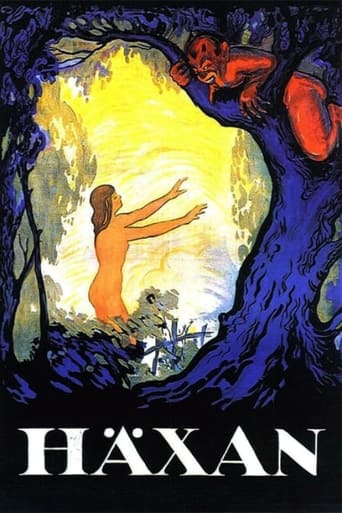
More about this film
About the production
Release dateFebruary 15, 1926
BudgetApproximately $250,000 (estimated high-budget for the period)
Box officeCommercial success; specific figures not publicly archived but noted as a profitable 'Norma Shearer vehicle'
ProductionMetro-Goldwyn-Mayer (MGM)
Filmed inMGM Studios, Culver City, California, USA
This was the American debut of Danish director Benjamin Christensen, who was recruited by Louis B. Mayer after the success of 'Häxan'. The film underwent significant script revisions by over twenty American writers, which Christensen later lamented as having altered his original 'tone and message'. The production utilized elaborate circus sets and real lions for the climactic sequence.
Themes
Themes & topics
Historical background
The 1926 premiere placed The Devil's Circus alongside contemporaneous releases that were collectively teaching viewers how to read cinematic time and space.
Why this film matters
For historians, The Devil's Circus is less a blockbuster than a datapoint—showing what audiences in 1926 could see on a typical program.
Making of
The production of 'The Devil's Circus' was marked by a clash between European artistic sensibilities and the burgeoning Hollywood studio system. Benjamin Christensen arrived at MGM with a reputation for dark, gothic, and experimental imagery, but he found himself assigned to a more conventional melodrama. He struggled with the collaborative nature of the studio, particularly the 'writer's room' approach where his scripts were heavily modified to suit American audience tastes. Despite these frustrations, Christensen brought a distinct visual flair to the film, particularly in the use of lighting and shadows during the circus and war sequences. The casting of Norma Shearer was a strategic move by the studio to pair a rising star with a prestigious European director.
What critics said
Audience surveys from 1926 are scarce; reception for The Devil's Circus must be inferred from reissue patterns and how often programmers still book it.
Did you know?
- The film features Buddy the Dog, a popular canine star of the 1920s who was a stray terrier mix found and trained for the screen.
- Director Benjamin Christensen was so frustrated by the Hollywood studio system's interference that he eventually returned to Denmark.
- The film was considered lost for decades until a print was rediscovered in the 1970s.
- Norma Shearer's performance helped solidify her status as one of MGM's primary stars, leading to her 'Queen of the MGM Lot' title.
- The lion-taming and trapeze sequences were filmed with high tension, using minimal safety equipment compared to modern standards.
- Louis B. Mayer reportedly asked if Christensen was a 'madman or a genius' after seeing his previous work, 'Häxan'.
- The film's original story was titled 'The Light Eternal' before being reworked into a circus melodrama.
- Karl Dane, another Danish import at MGM, appears in a supporting role.
Visual style
The cinematography by Ben F. Reynolds is noted for its high-contrast lighting and dynamic cutting. Christensen utilized 'significant contrasts' and 'imaginatively composed pictures' to transform character psychology into physical action, a hallmark of his directorial style.
Innovations
The film is noted for its sophisticated use of double exposure and its realistic, high-stakes staging of circus stunts. The integration of the war sequence into the melodrama was also considered technically ambitious for a standard studio production.
Music
As a silent film, it originally premiered with live orchestral or organ accompaniment. Recent restorations have featured new scores, including piano accompaniment by modern silent film musicians like Mauro Colombis.
Famous quotes
The Devil pulls the strings and throws the world into a devastating war.
Memorable scenes
- The 'Lion Pit' sequence: Mary falls from the sabotaged trapeze into the lion enclosure, creating a moment of genuine terror and suspense.
- The reunion: Carl and Mary find each other after the war, both physically and spiritually scarred, seeking a new beginning.
- The introduction of Buddy: Mary arriving in the big city with her small dog, highlighting her innocence against the looming dangers of the urban environment.
What audiences thought
The film was a commercial success in 1926, drawing audiences with the star power of Norma Shearer and the spectacle of the circus setting. Contemporary silent film enthusiasts appreciate it as a rare surviving example of Christensen's American work and for the charming performance of Buddy the Dog.
Film connections
Influenced by
- Häxan (1922)
- The Cabinet of Dr. Caligari (1920)
- Variety (1925)
This film influenced
- He Who Gets Slapped (1924) - shared thematic elements
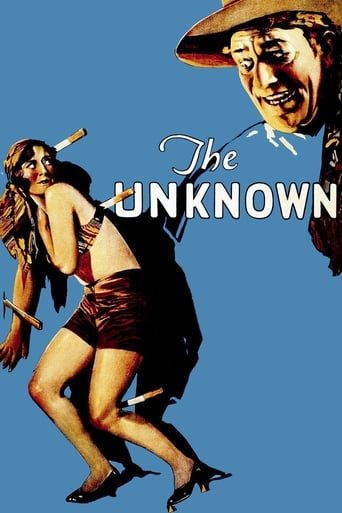
- The Unknown (1927)
Film restoration
Preserved. Once thought lost, a print was rediscovered and restored by the George Eastman Museum with funding from The Film Foundation and the BFI National Archive.
Where to watch
- George Eastman Museum (Archival screenings)
- YouTube (Public domain prints)
- Specialized silent film Blu-ray releases (e.g., Sloppy Second Sales)