The Gold Diggers
“A sparkling comedy of Broadway's 'Gold Diggers'—the girls who hunt for hearts and find diamonds!”
About The Gold Diggers
Stephen Lee, a wealthy and stern businessman, is adamantly opposed to his nephew Wally Sanders marrying a chorus girl named Violet Dayne, convinced that all stage performers are predatory 'gold diggers' seeking only fortune. To protect her friend's happiness, the clever and virtuous Jerry La Mar agrees to play the part of a ruthless, money-hungry vamp to distract Stephen and prove his prejudices wrong. Jerry successfully lures Stephen into her social circle, but as she stages elaborate attempts to 'fleece' him, she finds herself genuinely falling for his hidden charms. The ruse reaches a climax when Stephen realizes Jerry's true selfless nature, leading him to abandon his cynicism, bless his nephew's marriage, and propose to Jerry himself, effectively redefining the 'gold digger' stereotype into a story of true romance.
Cast & crew
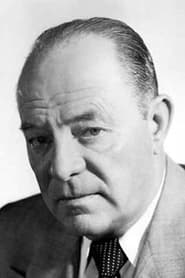

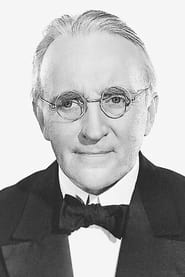
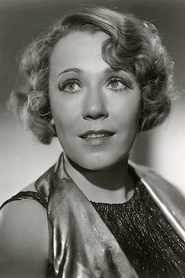
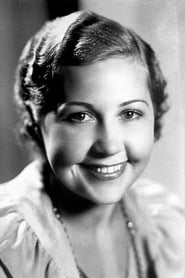
More films like this

More from Harry Beaumont
View all →

More about The Gold Diggers
Production
- Release date
- September 22, 1923
- Country
- United States
- Budget
- Approximately $240,000
- Box office
- $470,000 (Domestic rentals)
- Production
- Warner Bros. Pictures
- Filmed in
- Warner Bros. Studios, Hollywood, Los Angeles, California
The film was based on the highly successful 1919 stage play of the same name by Avery Hopwood, which was produced by David Belasco and ran for 720 performances on Broadway. This 1923 version was one of the first major successes for the fledgling Warner Bros. studio, helping to establish them as a competitive force in the industry. Director Harry Beaumont was specifically chosen for his ability to handle sophisticated light comedy, a genre that was becoming increasingly popular in the early 1920s. The production faced minor scrutiny from local censorship boards due to the suggestive nature of the title and the depiction of chorus girls' lifestyles, though it was ultimately released with minimal cuts.
Themes & topics
Historical background
In 1923, the United States was in the midst of the 'Roaring Twenties,' a period characterized by economic prosperity and a significant shift in social mores. The 'New Woman' or 'Flapper' was emerging, challenging traditional Victorian values regarding courtship, employment, and public behavior. This film reflects the era's fascination with the 'chorus girl'—a figure that represented both the glamour of the city and the perceived moral dangers of independent women. It also captures the tension between the old-money establishment (represented by Stephen Lee) and the new, fast-paced entertainment culture of Broadway.
Why this film matters
This film is culturally significant for codifying the 'Gold Digger' archetype in visual media. While the term had existed in slang, the 1923 film helped define the visual aesthetic and personality traits associated with the character: the clever, fashion-forward woman who uses her wits to navigate a male-dominated economic landscape. It also served as a precursor to the 'backstage musical' genre that would dominate the 1930s. Furthermore, its success helped stabilize Warner Bros. during a period when the studio was struggling to compete with giants like Paramount and MGM.
Making of
The production of 'The Gold Diggers' was a calculated move by Jack and Harry Warner to move away from low-budget shorts and into feature-length prestige films. Harry Beaumont worked closely with the cast to ensure the comedic timing of the stage play translated to the silent screen, which required more physical nuance since the witty dialogue of Hopwood's play could only be conveyed through intertitles. Hope Hampton's casting was somewhat controversial among critics of the time, as many felt she lacked the comedic range of the original stage star, Ina Claire, but her glamorous screen presence was considered a major box-office draw. The sets were designed to look like opulent New York apartments and backstage theater areas, utilizing high-key lighting to emphasize the 'sparkle' associated with the Broadway lifestyle.
What critics said
At the time of its release, 'The Gold Diggers' received generally positive reviews, with critics praising its lighthearted tone and the performance of Louise Fazenda. The New York Times noted that while it didn't quite capture the full wit of the stage play, it was a 'bright and amusing' photoplay. Modern critics and film historians view it as a fascinating artifact of early 1920s social attitudes, though it is often overshadowed by the more spectacular 1933 musical remake. Some contemporary reviews criticized Hope Hampton's performance as being somewhat stiff compared to her co-stars.
What audiences thought
The film was a significant commercial success, resonating particularly well with urban audiences who were enamored with Broadway culture. It was one of the higher-grossing films for Warner Bros. that year, proving that there was a massive market for stories about the inner workings of the theater world and the romantic escapades of the working class 'showgirl.'
Visual style
The cinematography by David Abel is characteristic of the early 1920s 'soft style,' which used diffusion to create a glamorous, ethereal look for the female leads. The film utilizes standard three-point lighting for its interior scenes but features some creative camera placements during the 'backstage' sequences to give the audience a sense of the scale of a Broadway theater. The use of close-ups was strategically employed to capture the expressive comedic reactions of Louise Fazenda.
Innovations
While not a pioneer of new technology, the film was noted for its high production values and the seamless integration of stage-like sets with cinematic editing. It was a prime example of the 'polished' look that Warner Bros. was striving for to elevate their brand status in the early 1920s.
Music
As a silent film, there was no recorded soundtrack. However, Warner Bros. provided theaters with a suggested musical cue sheet that included popular jazz-age tunes and light orchestral pieces to accompany the comedic and romantic beats of the story.
Film restoration
The film is currently considered a partially lost film. While no complete print is known to exist in public archives, some fragments and stills have survived. It is listed by various film preservation organizations as a high-priority 'missing' film due to its importance in the Warner Bros. canon.
Did you know?
- The film is the first of several cinematic adaptations of Avery Hopwood's play; it was followed by the 1929 'Gold Diggers of Broadway' and the famous 1933 'Gold Diggers of 1933'.
- Hope Hampton, who played Jerry La Mar, was a former beauty pageant winner whose career was heavily financed and promoted by her wealthy husband, Jules Brulatour.
- The term 'gold digger' was popularized by the original 1919 play and this subsequent film, cementing the phrase in the American lexicon.
- Louise Fazenda, who plays Mabel Munroe, was a major silent film comedienne known for her 'rube' characters before transitioning to more sophisticated roles.
- This was one of the 'Main Event' pictures for Warner Bros. in 1923, a marketing strategy used to highlight their high-budget prestige releases.
- The film features a young Gertrude Short, who would go on to have a prolific career in both silent and sound eras.
- Unlike the later 1933 version, this 1923 film is a straight comedy-drama rather than a full-scale musical, as it was produced during the silent era.
- The costumes were designed to be the height of 1920s flapper fashion, intended to draw in female audiences interested in the latest New York trends.
Memorable scenes
- The scene where Jerry La Mar first meets Stephen Lee and puts on an exaggerated 'vamp' act, intentionally acting as vapid and greedy as he expects her to be.
- The backstage sequence showing the chaotic but glamorous life of the chorus girls as they prepare for a performance.
- The final reconciliation where Stephen realizes Jerry has been spending her own money to help her friends, rather than taking his.
Influenced by
- The Gold Diggers (1919 play by Avery Hopwood)
- The Ziegfeld Follies aesthetic
- The 'Cinderella' archetype
This film influenced
- Gold Diggers of Broadway (1929)
- Gold Diggers of 1933
- Gold Diggers of 1935
- Gold Diggers of 1937
- Gold Diggers in Paris (1938)
- How to Marry a Millionaire (1953)
Where else to watch
- Currently unavailable for public viewing due to its lost status. Fragments may occasionally be shown at specialized silent film festivals or archival retrospectives if discovered.
Famous quotes
Jerry La Mar (via intertitle): 'You think every girl who smiles at a man is looking for his checkbook. I'll show you how wrong you are!'
Stephen Lee (via intertitle): 'Chorus girls are like moths—they fly toward the brightest gold and leave nothing but holes in your pockets.'
Mabel Munroe (via intertitle): 'A girl's best friend isn't her mother, it's her ability to keep a secret and a diamond ring!'