

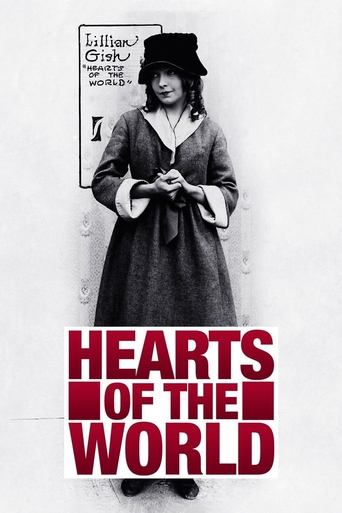
The Little American
"War reaches a French estate"
Keys: Space play/pause · ←/→ 10s · F fullscreen · M mute · </> speed
About this film
A young American has her ship torpedoed by a German U-boat but makes it back to her ancestral home in France, where she witnesses German brutality firsthand. Exhibitors circulated the 1917 print in short programs.
Cast & crew
More films like this
More Drama films
View all →







More from Cecil B. DeMille
View all →
More about this film
About the production
Release dateJune 4, 1917
Budget$100,000
Box office$500,000 (estimated)
ProductionFamous Players-Lasky Corporation, Artcraft Pictures Corporation
Filmed inLos Angeles, California, Hollywood, California
The film was produced quickly to capitalize on American entry into World War I in April 1917. DeMille used actual war footage and newsreel material to enhance the battle sequences. The production faced challenges recreating French village settings in California, with detailed sets built to mimic French architecture. The U-boat attack sequence was particularly ambitious for its time, requiring large water tanks and miniature effects.
Themes
Themes & topics
World War IU-boat attackGerman occupationFrench resistanceAmerican patriotismWar romanceEspionageFamily inheritanceShipwreckBattle sequences
Historical background
The Little American reached screens around 1917, produced in its country of origin. Silent-era houses paired such titles with live music and newsreel bills.
Why this film matters
Researchers cite The Little American when tracing screen culture of its decade. Catalog notes sometimes claim priority in national or technical history.
Making of
The production of 'The Little American' was rushed to capitalize on America's recent entry into World War I. Cecil B. DeMille, known for his meticulous attention to detail, worked closely with Pickford to ensure the film would both entertain and serve as propaganda. The cast and crew worked long hours to complete the film in record time. The U-boat attack scene was particularly challenging to film, requiring the construction of large water tanks and the use of camera techniques that were innovative for the period. Pickford, who was known for her perfectionism, insisted on performing many of her own stunts, including scenes involving water and explosions. The film's message was carefully crafted to encourage enlistment and support for the war effort while showcasing American values of courage and patriotism.
What critics said
Reviewers in 1917 weighed The Little American on clarity, pacing, and audience response rather than prestige status. No single canonical review dominates later reference works for the title.
Did you know?
- Mary Pickford was especially powerful women in Hollywood at the time and had significant creative control over her projects.
- The film was released just two months after the United States entered World War I, making it extremely timely and patriotic.
- Cecil B. DeMille and Mary Pickford had a professional rivalry but respected each other's work immensely.
- The film's success helped establish Pickford as 'America's Sweetheart' and reinforced her patriotic image.
- Real footage from the war was incorporated into the film to add authenticity to the battle scenes.
- The U-boat sequence was considered groundbreaking for its visual effects and underwater cinematography techniques.
- Jack Holt and Mary Pickford would work together again in several other films throughout their careers.
- The film was one of the first major Hollywood productions to directly address World War I themes.
- Pickford's character was designed to represent the ideal American woman - brave, patriotic, and morally upright.
- The film was distributed internationally, but was banned in Germany and Austria-Hungary due to its anti-German content.
Awards & recognition
- Medal of Honor from the French Government (for contributing to the Allied war effort)
Visual style
The cinematography by Alvin Wyckoff was considered innovative for its time, particularly in the U-boat attack sequence which used underwater photography techniques that were groundbreaking for 1917. The film employed dramatic lighting to create contrast between the peaceful American scenes and the dark, ominous German-occupied territories. Wyckoff used moving camera shots during battle sequences to create a sense of immediacy and chaos. The visual style incorporated both studio sets and location footage, with careful attention to period details in costumes and set design. The film's visual narrative effectively used close-ups of Pickford to convey emotion, a technique that was still relatively new in cinema.
Innovations
The film featured several technical innovations for its time, including the complex U-boat attack sequence that combined miniatures, full-scale sets, and special effects photography. The underwater scenes were particularly challenging and required custom-built equipment. The battle sequences used multiple cameras and editing techniques to create dynamic action sequences. The film's production design included some of the most elaborate sets built for a Pickford film up to that point. The special effects team developed new techniques for simulating explosions and naval warfare that would influence future war films.
Music
As a silent film, 'The Little American' was accompanied by live musical performances during its theatrical run. The original score was composed by William Furst, who created patriotic themes and dramatic motifs that enhanced the emotional impact of key scenes. The music included adaptations of popular American songs like 'The Star-Spangled Banner' and 'America the Beautiful' during patriotic moments. The score also used dissonant, militaristic themes for the German characters to create auditory contrast. The musical accompaniment varied by theater, with larger venues employing full orchestras while smaller theaters used piano or organ accompaniment.
Famous quotes
I may be little, but I'm an American, and Americans don't give up!
This is my home, and I'll fight for it as my ancestors did!
In America, we believe in freedom, not conquest.
Memorable scenes
- The dramatic U-boat attack sequence where Angela's ship is torpedoed, featuring groundbreaking underwater photography and special effects for 1917.
- Angela's confrontation with German officers in her ancestral château, where she bravely defends her home and heritage.
- The emotional reunion between Angela and her American fiancé amidst the backdrop of war.
- The resistance sequence where Angela helps French villagers escape German persecution.
What audiences thought
The Little American was a tremendous commercial success, resonating strongly with American audiences during the war. The film played to packed theaters across the country and was particularly popular in cities with large immigrant populations. Audience members reportedly wept during emotional scenes and cheered during patriotic moments. The film's success at the box office helped establish Mary Pickford as the highest-paid actress in Hollywood. Veterans and families of soldiers found particular meaning in the film's portrayal of American heroism. The film's popularity extended beyond America to Allied countries, where it was seen as a powerful statement of American commitment to the war effort.
Film connections
Influenced by
- D.W. Griffith's 'The Birth of a Nation' (for epic storytelling)
- European war films of the early 1910s
- Contemporary newsreel footage of WWI
This film influenced
- Later WWI propaganda films
- Cecil B. DeMille's subsequent war films
- Mary Pickford's later patriotic roles
- Hollywood's approach to wartime filmmaking
Film restoration
The film is preserved in the Library of Congress and has been restored by several film archives. A complete 35mm print exists in the collection of the Museum of Modern Art. The film was selected for preservation in the National Film Registry in 2017 for its cultural, historical, and aesthetic significance. Digital restorations have been made available for modern viewing, though some original color tinting effects may not be fully preserved in all versions.
Where to watch
- The Criterion Collection
- Kino Lorber DVD releases
- Film streaming services specializing in classic cinema
- Library of Congress online archive
- Museum of Modern Art film screenings
- TCM (Turner Classic Movies) broadcasts