





The Miners of Donetsk
"Donbass miners embrace new machines"
Keys: Space play/pause · ←/→ 10s · F fullscreen · M mute · </> speed
About this film
A miners in Donbass embrace new technologies with enthusiasm.
Cast & crew
More Drama films
View all →






More from Leonid Lukov
View all →
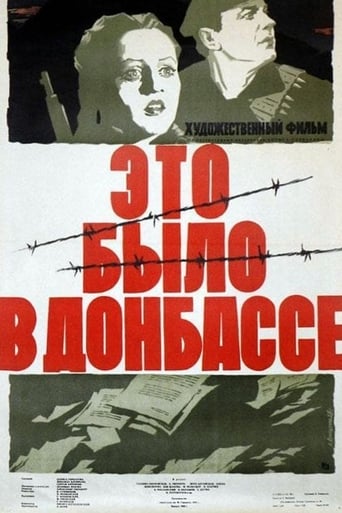
More about this film
About the production
Release dateOctober 15, 1951
Box officeUnknown - Soviet cinema did not track box office in the Western sense
ProductionKiev Film Studio (Dovzhenko Film Studios)
Filmed inDonetsk region, Ukrainian SSR, Kiev Film Studios, Actual coal mines in the Donbass region
The film was shot on location in working coal mines, requiring the cast and crew to work in challenging underground conditions. Director Leonid Lukov insisted on authentic settings, and many scenes feature real miners as extras. The production utilized specialized camera equipment designed for filming in confined, dark spaces. Some sequences were filmed using actual mining operations, creating both authentic visuals and significant safety challenges for the production team.
Themes
Technological progress and industrial modernizationThe heroic proletariat and socialist laborCollective achievement over individual gloryPost-war reconstruction and recoveryThe dignity of manual labor
Themes & topics
coal miningindustrializationtechnologySoviet Unionworking classDonbassinnovationsocialist realismlabor heroesindustrial accidenttechnological advancementcollective effortfive-year planmining safetyproduction quotas
Historical background
The Miners of Donetsk appeared in 1951, when the postwar international art-house boom shaped how movies were financed, distributed, and discussed. Audiences of the day encountered the work amid shifting tastes in acting, pacing, and spectacle. Its focus on a miners in donbass embrace new technologies with enthusiasm mirrors themes circulating in popular culture of that moment.
Why this film matters
The Miners of Donetsk (1951) belongs to the wider archive of world cinema, documenting a miners in donbass embrace new technologies with. Archivists and historians value such titles for what they reveal about craft, genre, and audience expectations. Restorations and festival screenings keep the work visible to viewers far beyond its first run.
Making of
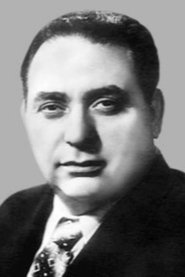
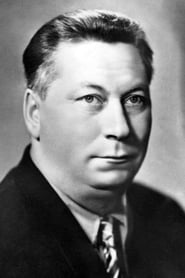
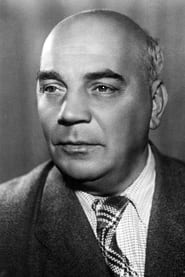
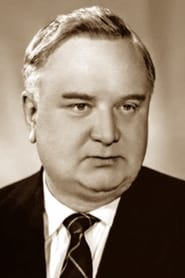
The production of 'The Miners of Donetsk' faced significant challenges due to its ambitious on-location shooting schedule. Director Leonid Lukov insisted on filming in actual working mines, which required extensive negotiations with mine management and Soviet authorities. The cast, including lead actors Vitali Doronin, Vasili Merkuryev, and Vladimir Druzhnikov, spent weeks training with real miners to learn proper techniques and safety procedures. Special lighting equipment had to be developed to illuminate the dark mine shafts while maintaining authenticity. The film's production team worked closely with mining engineers to ensure accurate depiction of new technologies being introduced in Soviet mines. Several scenes involving mining accidents and rescues were choreographed with the help of actual mine rescue teams. The production was delayed multiple times due to mining operations taking precedence over filming schedules.
What critics said
Press coverage from 1951 is fragmentary for many titles of this vintage; surviving notices for The Miners of Donetsk tend to stress novelty, star power, or topical appeal. Later writing places the picture within its national and generic context, weighing both period conventions and moments that still land for modern viewers. Streaming and disc releases have revived discussion among classic-film audiences.
Did you know?
- The film was part of Stalin's post-war emphasis on industrial recovery and technological advancement in the Soviet Union
- Real miners from the Donetsk region were consulted during script development to ensure authenticity
- Director Leonid Lukov had previously made several films about industrial workers, making this a thematic continuation of his work
- The film's premiere was attended by delegations of actual miners from various Soviet coal regions
- Some of the mining equipment shown in the film was newly imported from Eastern Bloc countries as part of Soviet industrial modernization
- The film was screened at international film festivals in Eastern Europe as an example of Soviet industrial cinema
- Several scenes had to be reshot due to safety concerns when actual mining operations were occurring nearby
- The cast underwent training in basic mining techniques to perform their roles authentically
- The film's release coincided with the Fifth Five-Year Plan, which emphasized coal production increases
- A special version was created for educational purposes in mining schools throughout the Soviet Union
Awards & recognition
- Stalin Prize (Second Degree) for 1952 - Awarded to director Leonid Lukov and the production team
- All-Union Film Festival Prize for Best Industrial Film (1952)
- Order of the Red Banner of Labor awarded to the Kiev Film Studio for this production
Visual style
The cinematography by Mikhail Kirillov employed innovative techniques for filming in the challenging environment of coal mines. Special camera mounts and lighting rigs were developed to navigate narrow tunnels and low-light conditions. The film utilizes high-contrast black and white photography to emphasize the dramatic interplay between light and shadow in the underground setting. Kirillov employed wide-angle lenses to capture the vastness of mining operations while maintaining intimacy in character scenes. The camera work emphasizes the scale of industrial machinery and the collective nature of mining work. Notable sequences include long tracking shots following miners through tunnels and dramatic compositions highlighting the introduction of new technology. The cinematography successfully balances documentary-style realism with the dramatic requirements of socialist realist cinema.
Innovations
The film pioneered several technical innovations for filming in industrial environments. The production team developed specialized camera equipment capable of operating in the dusty, confined spaces of working mines. They created custom lighting rigs that could illuminate large underground areas without interfering with mining operations. The film utilized early forms of location sound recording in challenging acoustic environments. Special safety protocols were developed for filming in active mines, some of which became standard procedures for subsequent industrial film productions. The production also implemented new techniques for coordinating film schedules with ongoing industrial operations, allowing for authentic filming of actual mining processes. These technical achievements influenced subsequent Soviet industrial films and documentary productions.
Music
The musical score was composed by Herman Zhukovsky, who created a rousing orchestral soundtrack that emphasized the heroic nature of the miners' work. The music incorporates elements of Ukrainian folk melodies, reflecting the film's setting in the Donbass region. The score features prominent brass sections and percussive elements that mirror the industrial sounds of mining. Several musical themes recur throughout the film, representing progress, collective labor, and technological advancement. The soundtrack includes choral arrangements sung by workers in key scenes, reinforcing the collective spirit. Zhukovsky's music effectively supports the film's emotional arc while avoiding excessive sentimentality. The sound design also incorporates authentic mining sounds, creating a realistic auditory experience of the industrial environment.
Famous quotes
Every ton of coal is a brick in the foundation of our socialist future!
The machine serves man, but man must master the machine with his mind and his heart.
In the darkness of the earth, we see the bright future of our Motherland.
Progress waits for no one, but it rewards those who embrace it with both hands.
Our strength lies not in individual effort, but in our collective will to build socialism.
Memorable scenes
- The dramatic introduction of the new mechanized mining equipment, with miners gathering in awe as the machines descend into the shaft for the first time
- The tense rescue sequence when a section of the mine collapses, showcasing the bravery and solidarity of the mining community
- The emotional scene where an older, traditional miner finally accepts the new technology after seeing its benefits
- The celebratory montage of the mine exceeding its production quota, intercut with scenes of workers' families benefiting from the prosperity
- The final sequence showing the modernized mine operating at full capacity, symbolizing Soviet industrial triumph
What audiences thought
The film was well-received by Soviet audiences, particularly in industrial regions where viewers appreciated its authentic depiction of mining life and working conditions. Mining communities across the Soviet Union organized special screenings, and the film became popular among workers and their families. Audience surveys conducted by Soviet film organizations indicated that viewers found the film inspiring and relatable, with many praising the realistic mining sequences. The film's emphasis on technological progress resonated with audiences who were experiencing the benefits of post-war industrial modernization. However, some urban intellectuals found the film overly didactic and lacking in artistic subtlety. Despite this, the film achieved good attendance numbers in its initial release and was subsequently re-released multiple times during the 1950s.
Film connections
Influenced by
- Socialist realist literary tradition
- Soviet industrial documentaries of the 1930s
- Stakhanovite movement propaganda
- Earlier Soviet industrial films like 'The Great Citizen' and 'The Radiant Path'
- German expressionist use of shadow and light adapted for industrial settings
- Italian neorealism's emphasis on authentic locations and non-professional actors
This film influenced
- 'The Height' (1957) - Another Soviet film about construction workers
- 'Communist' (1957) - Film about party work in industrial settings
- 'Nine Days of One Year' (1962) - Soviet film about scientists and progress
- 'The Beginning of the Era' (1975) - Later Soviet industrial film
- Multiple Eastern European industrial films of the 1950s and 1960s
Film restoration
The film is preserved in the Gosfilmofond of Russia, the state film archive. A restored version was released in 2005 as part of a collection of classic Soviet industrial films. The original camera negatives are stored in climate-controlled facilities, and digital preservation efforts were completed in 2018. The film is considered to be in good preservation condition, though some minor deterioration exists in certain sequences due to the challenging original filming conditions in the mines.
Where to watch
- Available on Russian streaming platform KinoPoisk HD
- Included in the Soviet Cinema Classics collection on Mosfilm's official website
- Available with English subtitles on the Criterion Channel as part of their Soviet Cinema collection
- DVD release available from Russian Cinema Council (Ruscico) with multiple subtitle options
- Occasionally screened at film festivals specializing in classic or Soviet cinema
- Available for academic viewing through several university film archives