The Politician's Love Story
"Cartoonist, politician, and sudden wooing"
Keys: Space play/pause · ←/→ 10s · F fullscreen · M mute · </> speed
About this film
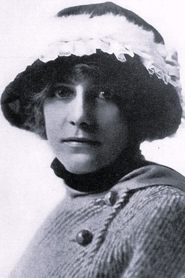
A haughty politician, on seeing a satirical cartoon in a newspaper, rushes to the paper's offices to shoot the cartoonist. On discovering the cartoonist is a pretty woman, he falls instantly in love and wastes no time in trying to woo her.
Cast & crew
More films like this

More Comedy films
View all →







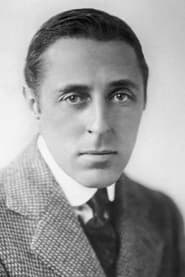
More from D.W. Griffith
View all →

More about this film
About the production
Release dateFebruary 1909
ProductionAmerican Mutoscope and Biograph Company
Filmed inNew York City, Fort Lee, New Jersey
This was one of hundreds of short films D.W. Griffith directed for Biograph during his prolific early career. The film was shot on 35mm film using Biograph's proprietary Mutoscope cameras, which used a unique film format that required perforations only on one side of the film strip. Like most Biograph productions of this era, it was likely filmed in just one or two days with minimal rehearsal, as the studio was churning out multiple films per week to meet demand.
Themes
Political satireLove at first sightMedia influence on politicsTransformation through loveGender roles in early 20th century
Themes & topics
politiciancartoonistnewspaperromancecomedysatiretransformationwooinganger to loveearly cinemasilent film
Historical background
American Mutoscope and Biograph Company positioned The Politician's Love Story for 1909 audiences accustomed to weekly program changes in urban theaters.
Why this film matters
Revival audiences read The Politician's Love Story as evidence of 1909 taste for stories about a haughty politician, on seeing a satirical cartoon in a newspaper, rushes to the paper's .
Making of
The production of this film followed the typical Biograph assembly-line process of 1909. Griffith would arrive at the studio in the morning, receive his assignment for the day, and immediately begin filming with minimal preparation. The actors were Biograph regulars who were accustomed to working quickly and improvising when necessary. Griffith was already developing his reputation as a demanding director who pushed actors to deliver more naturalistic performances than was typical in the era of exaggerated stage acting. The film was likely shot in natural light on either an outdoor set or against a glass wall of the Biograph studio in Manhattan or their newer facility in Fort Lee, New Jersey. The rapid-fire shooting schedule meant that Griffith was often directing multiple films simultaneously, with actors and crew moving between different sets throughout the day.
What critics said
Silent-era reviewers devoted little space to The Politician's Love Story, typical for a release of its scale in 1909.
Did you know?
- This film was released during D.W. Griffith's most prolific period, when he directed over 450 short films for Biograph between 1908 and 1913.
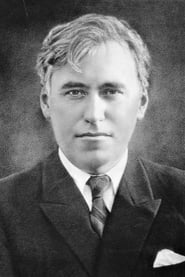
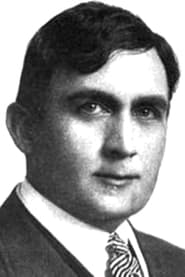
- Mack Sennett, who plays the politician, would later become famous as the 'King of Comedy' and founder of Keystone Studios, pioneering slapstick comedy in American cinema.
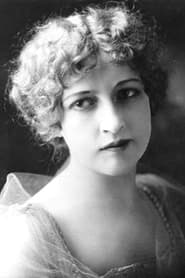
- Marion Leonard was one of Griffith's favorite early actresses, appearing in over 40 of his Biograph films before becoming one of the first film stars to command a higher salary.
- The film's premise of a politician being satirized in cartoons was highly relevant in 1909, when political cartoonists wielded significant influence in American media.
- At just 8 minutes, this was considered a standard length for narrative films in 1909, as feature-length films would not become common for several more years.
- The Biograph Company refused to list their actors' names in credits, hoping to prevent them from becoming famous and demanding higher salaries.
- This film was released just one year before Griffith would revolutionize cinema with his controversial but groundbreaking film 'The Birth of a Nation' in 1915.
- The newspaper office set was likely a simple temporary construction, as Biograph films of this era typically used minimal sets to save time and money.
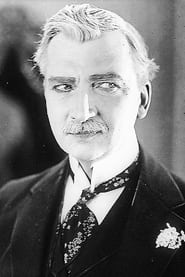
- Herbert Prior, who appears in the film, was a British stage actor who transitioned to films and became one of Biograph's reliable character actors.
- The film demonstrates Griffith's early interest in stories involving dramatic emotional shifts, a theme he would explore throughout his career.
Visual style
The cinematography by G.W. Bitzer, Griffith's regular cameraman at Biograph, would have been straightforward and functional, typical of the period. The camera would have been stationary for most shots, with the action composed within a single frame. Lighting would have been primarily natural, either daylight for outdoor scenes or sunlight through glass for interior shots. The film would have used medium shots and long shots almost exclusively, as close-ups were still relatively rare and often used only for dramatic emphasis. The visual storytelling would have relied heavily on actors' gestures and facial expressions, with the composition designed to clearly convey the narrative without the need for intertitles explaining the action.
Innovations
While not technically innovative for its time, the film represents the standard production quality of Biograph's output in 1909. The film was shot on Biograph's unique 68mm film stock, which provided higher image quality than the standard 35mm film used by other studios. The editing would have been relatively simple, with straight cuts between scenes and no complex transitions. The film demonstrates Griffith's growing confidence in narrative storytelling, using clear visual cues to convey the story without excessive reliance on intertitles. The pacing would have been brisk by modern standards but typical for the era, with the entire story compressed into approximately 8 minutes of screen time.
Music
As a silent film, 'The Politician's Love Story' would have been accompanied by live music during its theatrical run. In 1909, this typically meant either a pianist or small ensemble in the nickelodeon theater. The music would have been selected by the theater's musical director and might have included popular songs of the era, classical pieces, or improvised accompaniment that matched the on-screen action. The political scenes might have been accompanied by martial or patriotic music, while the romantic moments would have featured waltzes or other romantic melodies. No specific musical score was composed for the film, as was standard practice for short films of this period.
Famous quotes
No recorded dialogue exists for this silent film
Memorable scenes
- The dramatic entrance of the politician into the newspaper office, gun in hand, followed by his instantaneous transformation from rage to infatuation upon seeing the female cartoonist - this sudden emotional reversal exemplifies the broad, theatrical acting style of early cinema while demonstrating Griffith's interest in dramatic character transformations.
What audiences thought
Audience reception in 1909 is difficult to document precisely, but Biograph films were generally popular with nickelodeon audiences across America. The film's combination of political satire, romance, and comedy would have appealed to the diverse urban audiences who frequented early movie theaters. The rapid emotional transformation of the politician from rage to infatuation would have provided the kind of clear, exaggerated emotional storytelling that worked well for silent film audiences. The presence of Mack Sennett, even before he became a comedy star, likely added to the film's entertainment value. As part of a program of multiple short films shown continuously, this film would have served as one of many brief entertainments during a typical nickelodeon visit.
Film connections
Influenced by
- Stage melodramas of the 19th century
- Political cartoons of the Progressive Era
- French comedies of the early 1900s
- Biograph's established production methods
This film influenced
- Later romantic comedies featuring enemies-to-lovers tropes
- Political satire films
- Mack Sennett's later comedy work at Keystone
Film restoration
The film is preserved in the Library of Congress collection as part of the Paper Print collection. Early films were submitted to the Library of Congress for copyright protection on paper prints, which has allowed many otherwise lost films from this era to survive. The film has been transferred to modern film stock and digital formats, making it accessible to researchers and film historians. While not widely available to the public, it can be viewed through specialized film archives and some educational institutions.
Where to watch
- Library of Congress (for research purposes)
- Film archives specializing in early cinema
- Some educational institutions with film studies programs
- Occasionally screened at silent film festivals or retrospective screenings