
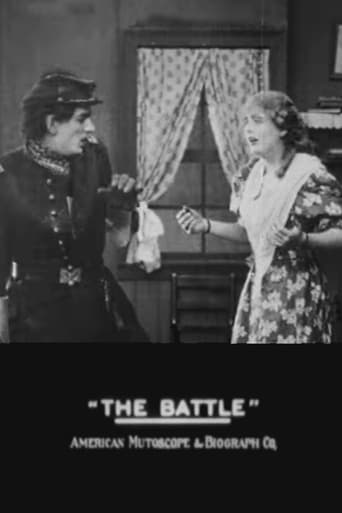
The Salvation Army Lass
"Slums, salvation, and a second chance"
Keys: Space play/pause · ←/→ 10s · F fullscreen · M mute · </> speed
About this film
A United States drama film from 1909 opens as The Salvation Army Lass is a 1909 American silent short drama film directed by D. W. Griffith.
Cast & crew
More films like this
More Drama films
View all →







More from D.W. Griffith
View all →
More about this film
About the production
Release dateMarch 1, 1909
ProductionAmerican Mutoscope and Biograph Company
Filmed inNew York City, Biograph Studio, New York
This film was produced during D.W. Griffith's prolific period at Biograph, where he directed hundreds of short films between 1908-1913. The film was shot on location in New York City, which was unusual for the era, and utilized real urban environments rather than studio sets. The production would have used hand-cranked cameras and natural lighting, typical of the period. Florence Lawrence, the film's star, was known as 'The Biograph Girl' and was one of cinema's first recognizable film stars, though she was not yet credited by name in releases.
Themes
Themes & topics
Salvation ArmyNew York slumsBar fightArrestReligious conversionFormer loverMoral dilemmaUrban crimeRedemption arcFaith test
Historical background
When The Salvation Army Lass debuted in 1909, American Mutoscope and Biograph Company was among the companies feeding nickelodeons and larger houses alike.
Why this film matters
Museum programs pair The Salvation Army Lass with other 1909 works when discussing a girl from the new york slums falls in with crooks.
Making of
The Salvation Army Lass was created during D.W. Griffith's formative period at Biograph, where he was rapidly developing his directorial skills. Griffith had joined Biograph in 1908 and was already demonstrating his preference for dramatic narratives over the simple comedies and trick films that dominated early cinema. The film was likely shot in just a few days, as was typical for Biograph productions of this era. Griffith was known for his meticulous preparation, often creating detailed storyboards and shot lists, which was revolutionary for the time. The casting of Florence Lawrence was significant as she was becoming one of the first film personalities that audiences could recognize from film to film, though she wouldn't be credited by name until later in 1909. The production would have used natural light and location shooting in New York's actual neighborhoods, giving the film an authenticity that studio-bound productions lacked. Griffith's collaboration with cinematographer G.W. Bitzer was already well-established, and together they were pioneering techniques that would become fundamental to cinematic language.
What critics said
Archival catalogs list The Salvation Army Lass without citing major awards, matching its 1909 profile.
Did you know?
- This film was released during the same month that D.W. Griffith directed at least 8 other short films for Biograph, showcasing his incredible productivity during this period.
- Florence Lawrence, the star, was cinema's first major movie star, though audiences didn't know her name yet - she was simply known as 'The Biograph Girl'.
- The film represents one of Griffith's earliest explorations of moral redemption themes that would become central to his later work.
- Harry Solter, who plays the male lead, was actually Florence Lawrence's husband and also worked as a director for Biograph.
- The Salvation Army was relatively new in America at the time (arrived in 1880), making this film a contemporary reflection of a growing social movement.
- Biograph films of this era were typically shot on 35mm film but projected in a unique 68mm format called 'Mutoscope' for their peep-box viewers.
- This film was made before Griffith revolutionized film grammar with techniques like cross-cutting, which he would develop in his later 1909 films.
- The bar scenes were likely filmed in actual New York taverns, as Griffith preferred authentic locations over studio sets.
- Charles Inslee, who appears in the film, was a regular Griffith collaborator who appeared in dozens of Biograph shorts.
- The film's theme of urban redemption reflected Progressive Era concerns about city life and social reform movements.
Visual style
The cinematography by G.W. Bitzer, Griffith's regular collaborator, would have employed the techniques standard for 1909 but with Griffith's emerging artistic sensibility. The film likely used stationary camera positions typical of the era, but Griffith was already beginning to vary shot distances and angles for dramatic effect. Location shooting in New York would have provided authentic urban textures and natural lighting, giving the film a documentary-like realism that contrasted with more theatrical studio productions. The bar scenes would have used practical lighting sources available in the actual locations. Bitzer was known for his technical expertise and ability to achieve good image quality even in challenging lighting conditions. The film would have been shot on 35mm film stock at approximately 16 frames per second, the standard speed of the era. While the camera work was relatively static compared to later films, Griffith was already developing his understanding of visual storytelling through composition and actor positioning within the frame.
Innovations
While The Salvation Army Lass doesn't feature groundbreaking technical innovations, it represents the solid craftsmanship of Biograph productions during this period. The film was shot using the Biograph camera, which used a unique film format that required special handling. The use of actual New York locations rather than studio sets was relatively advanced for the time, providing greater authenticity to the urban setting. Griffith was already developing his understanding of film grammar, including the use of varying shot sizes and camera positions to enhance storytelling. The film's editing, while basic by modern standards, would have employed the continuity techniques that Griffith was helping to establish. The production would have benefited from Biograph's high-quality film stock and processing, which gave their films a reputation for technical excellence. The film's narrative structure, moving from criminal life to redemption, demonstrates the increasing sophistication of storytelling in early cinema. While not technically revolutionary, the film represents the solid professional standards that Biograph maintained and the gradual development of cinematic language that would soon transform the medium.
Music
As a silent film from 1909, The Salvation Army Lass would have been accompanied by live musical performance during exhibition. The specific musical score was not standardized and would have varied by theater and venue. Larger nickelodeons or theaters might have had a pianist or small ensemble to provide accompaniment, while smaller venues might have used a single piano or even just a phonograph. The music would have been selected to match the film's emotional tone - likely including popular songs of the era, classical pieces, and possibly hymns or Salvation Army music for the redemption scenes. The accompanist would have improvised or used cue sheets provided by the film distributor to match the on-screen action and emotional beats. The bar scenes might have been accompanied by lively, popular music of the period, while the Salvation Army sequences would have featured more solemn or religious music. The soundtrack experience would have been unique to each exhibition, reflecting the practices of early cinema exhibition before standardized scoring became common.
Famous quotes
(Intertitle) 'Lost in the city's darkness... until the light of salvation found her.'
(Intertitle) 'The past calls, but faith answers stronger.'
(Intertitle) 'From the gutters of sin to the path of righteousness.'
(Intertitle) 'Old temptations face new convictions.'
(Intertitle) 'The Salvation Army - hope for the hopeless.'
Memorable scenes
- The dramatic bar fight sequence that leads to the lover's arrest, showcasing Griffith's ability to stage action in confined spaces
- The emotional salvation scene where the protagonist is rescued by Salvation Army workers, highlighting the film's moral message
- The climactic confrontation in the bar where the redeemed heroine faces her former lover, demonstrating her transformed character
What audiences thought
Audience reception data from 1909 is scarce, but nickelodeon audiences of the era were hungry for dramatic stories with clear moral messages. Films dealing with redemption and moral reform were popular with working-class audiences, many of whom faced similar urban challenges in their daily lives. The presence of Florence Lawrence, already recognizable to regular filmgoers as 'The Biograph Girl,' would have been a significant draw. The Salvation Army's growing visibility in American cities meant audiences would have been familiar with the organization and its work. Biograph films were generally well-received by exhibitors for their consistent quality and appeal to diverse audiences. The film's dramatic elements and urban setting would have resonated with immigrant and working-class viewers who constituted the primary nickelodeon audience. While individual film reception wasn't systematically tracked in 1909, the continued demand for Griffith's dramatic shorts suggests they were successful with audiences of the period.
Film connections
Influenced by
- Stage melodrama
- Progressive Era social reform literature
- Religious tracts
- Urban newspaper stories
- Salvation Army promotional materials
This film influenced
- The Red Man and the Child (1908)
- A Trap for Santa Claus (1909)
- The Country Doctor (1909)
- The Sealed Room (1909)
- The Lonely Villa (1909)
Film restoration
The preservation status of The Salvation Army Lass is uncertain, as many Biograph films from this period have been lost. However, the Library of Congress and other film archives have extensive collections of Griffith's Biograph works. Some prints may exist in film archives or private collections, potentially in 16mm reduction prints made for educational use in the mid-20th century. The Museum of Modern Art and the George Eastman Museum have significant holdings of early American films. If the film survives, it may have been preserved as part of larger Griffith or Biograph collections. The Paper Print Collection at the Library of Congress contains many Biograph films from this era, though not all titles are represented. Digital restoration efforts for early Griffith films have been ongoing, but this particular title's availability for modern viewing is limited.
Where to watch
- The film is not currently available on major streaming platforms due to its age and preservation status
- Potential viewing through film archive screenings or special early cinema programs
- May be accessible through academic film libraries or cinema studies departments
- Possible inclusion in specialized early cinema collections or DVD box sets of Griffith's complete works
- Contact the Library of Congress Motion Picture, Broadcasting & Recorded Sound Division for access to their holdings
- The Museum of Modern Art's film collection may have viewing access for researchers