
The Sunbeam
"Tenement neighbors find warmth across a lonely hallway."
Keys: Space play/pause · ←/→ 10s · F fullscreen · M mute · </> speed
About this film
Set in a tenement, a lonely confirmed bachelor occupies a room across the hall from a dour spinster. Children run amok in the hallways playing pranks on the two. A little girl from the floor above, now alone in the world, brings the pair together and brightens their lives.
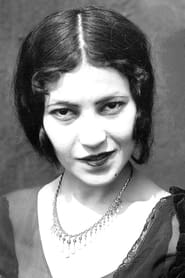
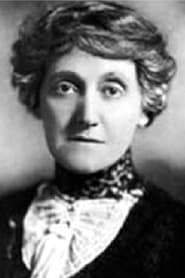
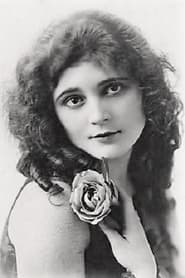
Cast & crew
More films like this
More Drama films
View all →







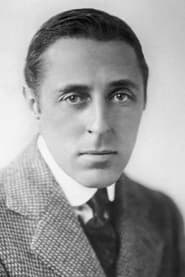
More from D.W. Griffith
View all →
More about this film
About the production
Release dateFebruary 8, 1912
Box officeUnknown - Biograph films were rented rather than sold, so individual box office figures weren't tracked
ProductionBiograph Company
Filmed inBiograph Studio, New York City, New York City tenement district
Filmed as part of Biograph's regular production schedule, likely completed in one or two days as was typical for one-reel films of this era. The tenement set was a frequently used standing set at Biograph's New York studio. Griffith was experimenting with more complex emotional narratives during this period, moving away from simpler chase comedies toward character-driven dramas with social commentary.
Themes
Loneliness and isolationThe redemptive power of innocenceUrban poverty and tenement lifeUnexpected love and connectionThe transformative power of children
Themes & topics
tenementbachelorspinsterorphanchildrenprankstransformationlove storyurban lifeemotional healinginnocenceredemption
Historical background
By 1912, The Sunbeam was shaped by the silent era technology, distribution, and audience expectations.
Why this film matters
The Sunbeam (1912) helps trace genre evolution, performer careers, and exhibition practices of its period.
Making of
The production of 'The Sunbeam' took place during a particularly creative period for Griffith at Biograph, when he was rapidly developing his cinematic language and moving toward more sophisticated narratives. The tenement set was a versatile standing set that Biograph used for multiple films, allowing Griffith to work quickly and efficiently. Child actress Ynez Seabury was already a seasoned performer by 1912, having started in films at age 6, which would have made her relatively easy to direct despite her young age. Griffith was known for his ability to extract natural performances from child actors, often using gentle direction rather than the more forceful methods common at the time. The film's emotional core required subtle acting from Kate Bruce and Claire McDowell, both regular members of Griffith's stock company who understood his evolving style of performance that favored naturalism over theatrical exaggeration. The relatively simple plot allowed Griffith to focus on visual storytelling techniques he was developing, including the use of doorways and hallways to create visual metaphors for emotional barriers and connections.
What critics said
Trade coverage around 1912 discussed The Sunbeam in terms of craft and audience appeal rather than blockbuster scale.
Did you know?
- This film represents one of D.W. Griffith's early experiments with what would become his signature style of intimate, character-driven storytelling within working-class settings.
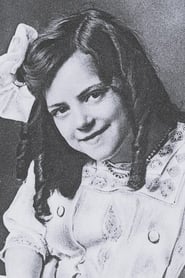
- Ynez Seabury, who plays the little girl, was only 8 years old at the time of filming and was one of Biograph's most popular child actors, appearing in over 30 films between 1910-1913.
- The film was released during the peak of Griffith's productivity at Biograph, where he directed approximately 150 short films between 1908-1913.
- The tenement setting reflects Griffith's growing interest in social realism and the living conditions of urban poor, themes he would later explore more extensively in features like 'The Mothering Heart' (1913) and 'Intolerance' (1916).
- This film survives in the Library of Congress collection and was included in the 2010 DVD collection 'D.W. Griffith: Years of Discovery 1909-1913'.
- The original screenplay was likely written by Griffith himself, as was common for his Biograph films, though some sources suggest possible contributions from Frank E. Woods.
- The film's title 'The Sunbeam' was a popular metaphor in early 20th century literature and film for characters who bring light and joy into dark or sad situations.
- This was one of the first films to use the tenement setting not just for background but as an integral part of the story's emotional landscape.
- The film's emphasis on the transformative power of children's innocence reflects the Progressive Era's romanticized view of childhood as a force for social improvement.
- Unlike many Griffith films of this period, 'The Sunbeam' contains no chase sequences or action set pieces, focusing entirely on character development and emotional transformation.
Visual style
The cinematography, likely handled by Billy Bitzer or another Biograph regular, demonstrates the evolving visual language of early cinema. The film makes effective use of the confined tenement setting, with doorways and hallway spaces used to frame characters and create visual metaphors for emotional distance and connection. The lighting would have been natural or simple artificial lighting, typical of studio productions of the era, but carefully manipulated to create mood and emphasize emotional moments. Camera work was relatively static, as was common in 1912, but the composition shows Griffith's growing understanding of visual storytelling, with careful placement of actors to convey relationships and emotional states. The film likely used medium shots more frequently than earlier films, allowing audiences to see the actors' facial expressions and subtle emotional cues that were crucial to the story's impact.
Innovations
While 'The Sunbeam' doesn't feature groundbreaking technical innovations, it demonstrates Griffith's mastery of the cinematic techniques available in 1912 and his ability to use them effectively for emotional storytelling. The film shows sophisticated use of cross-cutting to establish parallel action and emotional connections between characters. Griffith's blocking and staging within the limited space of the tenement set demonstrates his growing understanding of how to use depth and composition to convey character relationships. The film's pacing and rhythm, achieved through careful editing, creates emotional momentum that builds to its conclusion. The effective use of intertitles to convey necessary information while maintaining emotional flow shows Griffith's understanding of how to integrate text with visual storytelling. These techniques, while not revolutionary individually, combine to create a cohesive and emotionally effective narrative that represents the state of the art in filmmaking for its time.
Music
As a silent film, 'The Sunbeam' would have been accompanied by live music during its original theatrical presentations. The specific musical scores were typically left to the discretion of individual theater musicians or house pianists, though Biograph sometimes provided musical cue sheets suggesting appropriate moods and themes. For a film like 'The Sunbeam,' the accompaniment would likely have included sentimental melodies for emotional scenes, lighter music for the children's mischief, and romantic themes as the relationship between the adults developed. The music would have been crucial in conveying the emotional nuances that couldn't be expressed through intertitles alone. Modern screenings often use period-appropriate piano or organ accompaniment, with musicians selecting music that reflects the film's emotional journey from loneliness to connection.
Famous quotes
Inter-title examples from the film: 'A lonely bachelor... and a lonely spinster... across the hall from each other, yet worlds apart.'
Inter-title: 'The little sunbeam who brightened two dark lives.'
Inter-title: 'In the heart of the great city, where thousands lived within arm's reach, two souls had never met.'
Memorable scenes
- The opening sequence establishing the parallel isolation of the bachelor and spinster in their respective rooms, using visual symmetry to emphasize their emotional separation.
- The scene where the children play pranks on both adults, showing how the building's youth creates chaos but also connection.
- The little girl's first visit to each adult, bringing small gifts and breaking through their defensive shells.
- The moment when the bachelor and spinster first truly notice each other across the hallway, their eyes meeting in recognition of shared loneliness.
- The final scene showing the three characters together, transformed from isolation to family, with the little girl literally standing between the two adults as the bridge that connected them.
What audiences thought
Contemporary audience reception appears to have been positive, as the film was part of Biograph's successful distribution slate during a period when the company was among the leading respected producers of quality motion pictures. The emotional story and relatable characters likely resonated with working-class audiences who recognized the tenement setting, while the themes of loneliness and redemption appealed across class lines. The presence of child actress Ynez Seabury, who was popular with audiences, would have been an additional draw. While specific audience reaction records from 1912 are scarce, the film's survival and inclusion in preservation collections suggests it was considered significant enough to retain. Modern audiences viewing the film through archives and special screenings often express surprise at the sophistication of the emotional storytelling given the film's early date and short length.
Film connections
Influenced by
- Contemporary stage melodramas about urban life
- Progressive Era social reform literature
- Charles Dickens' stories about children transforming adult lives
- Earlier Biograph films focusing on domestic situations
- Griffith's own previous experiments with emotional storytelling
This film influenced
- Griffith's later Biograph dramas with similar themes
- The Mothering Heart (1913)
- Other early films featuring children as catalysts for adult change
- Urban dramas of the 1910s and 1920s
- Films exploring loneliness and connection in urban settings
Film restoration
The film survives and is preserved in the Library of Congress collection. It has been restored and is available through various archival sources and special DVD collections. The preservation quality is generally good for a film of this era, though some deterioration is evident. The film was included in the 2010 DVD collection 'D.W. Griffith: Years of Discovery 1909-1913' released by Kino International, ensuring its accessibility to modern audiences.
Where to watch
- Library of Congress National Film Registry streaming platform
- Kino International DVD 'D.W. Griffith: Years of Discovery 1909-1913'
- Various film archive streaming services
- Special screenings at film museums and cinematheques
- Academic film collections and university libraries
- Some public domain streaming platforms may have versions available