
Through the Breakers
"Society couple neglect their young"
Keys: Space play/pause · ←/→ 10s · F fullscreen · M mute · </> speed
About this film
A society couple, neglect their young daughter in favor of their social life. When the girl becomes seriously ill, the father realizes the errors of his ways and stays home with her, demanding his wife do likewise. She sneaks out to a dance and the child takes a turn for the worse. By the time she returns home the child is dead. After her husband leaves her, the mother realizes her selfishness and begs forgiveness at her daughter's grave.
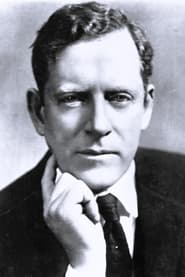
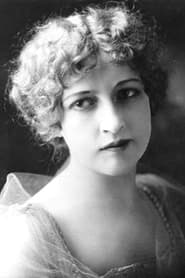
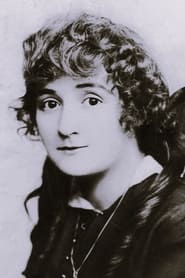
Cast & crew
More films like this

More Drama films
View all →







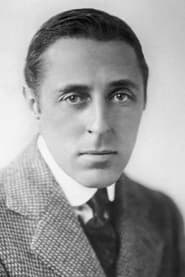
More from D.W. Griffith
View all →
More about this film
About the production
Release dateApril 8, 1909
ProductionAmerican Mutoscope and Biograph Company
Filmed inNew York City, New Jersey
This was one of hundreds of short films D.W. Griffith directed during his tenure at Biograph Studios between 1908-1913. The film was shot on black and white 35mm film and was typical of Griffith's early melodramas that explored moral themes. Like many Biograph productions of this era, it was likely filmed in a single day with minimal sets and natural lighting.
Themes
Parental neglectSocial ambition vs. family responsibilityMoral redemptionThe consequences of selfishnessVictorian morality
Themes & topics
Historical background
Contemporary records classify Through the Breakers (1909) as 1909 film by d. w. griffith, placing it within the earliest years of projected motion pictures.
Why this film matters
Through the Breakers (1909) helps trace genre evolution, performer careers, and the material conditions of silent exhibition.
Making of
The film was produced during D.W. Griffith's prolific period at the Biograph Company, where he was essentially learning the craft of filmmaking while directing multiple shorts each week. Marion Leonard, who played the mother, was one of Griffith's early discoveries and became one of his most reliable leading ladies during the Biograph years. James Kirkwood, playing the father, would later become a director himself. The production would have been typical of Biograph's efficiency - shot in one day with a small crew, using natural light and minimal sets. The emotional scenes, particularly the deathbed sequence, demonstrate Griffith's early mastery of melodramatic storytelling and his ability to elicit performances from his actors.
What critics said
Where contemporary reviews survive, Through the Breakers is discussed in terms of audience appeal at release; later criticism often reframes it through archive restoration and festival programming.
Did you know?
- This was one of the earliest films to explore themes of parental neglect and its consequences in cinema
- D.W. Griffith directed over 450 short films for Biograph between 1908-1913, with this being among his 1909 output
- Marion Leonard was one of Griffith's favorite early actresses, appearing in dozens of his Biograph films
- The film was released during a period when cinema was transitioning from novelty to narrative storytelling
- Like many films of this era, no original negative is known to exist, only paper prints deposited for copyright purposes
- The title 'Through the Breakers' refers metaphorically to the social barriers and moral choices the characters face
- This film predates Griffith's controversial but technically groundbreaking feature 'The Birth of a Nation' by six years
- The child actress Adele DeGarde was only about 8-9 years old when she appeared in this film
- Biograph films of this period were typically shot quickly, often with improvisation and minimal rehearsal
- The film's moralistic approach was characteristic of Griffith's early work before he developed more complex narrative techniques
Visual style
The cinematography by G.W. Bitzer (Griffith's regular cameraman at Biograph) would have been straightforward and functional, typical of 1909 productions. The film likely used static camera positions with basic lighting, as more sophisticated techniques were still being developed. Bitzer was already experimenting with different camera angles and lighting effects during this period, though this particular film probably relied on conventional techniques. The visual style would emphasize clarity of action and emotional expression over artistic experimentation, as was common for Biograph's commercial releases.
Innovations
While not among Griffith's most technically innovative works, 'Through the Breakers' demonstrates the director's early mastery of narrative construction within the constraints of short-form cinema. The film likely employed basic cross-cutting techniques between the parents' social activities and the child's illness, a method Griffith was helping to standardize. The efficient storytelling within approximately 11 minutes shows Griffith's developing skill in conveying complete dramatic arcs within tight time limitations, a crucial achievement in the evolution of narrative cinema.
Music
As a silent film, 'Through the Breakers' would have been accompanied by live music during exhibition. The specific musical selections would have been left to the discretion of individual theater musicians or pianists. For a melodramatic film like this, the accompaniment would likely have included popular songs of the era, classical excerpts, and improvised music that matched the emotional tone of each scene. The deathbed sequence would have been accompanied by somber, mournful music, while the social scenes might have featured lighter, more upbeat selections.
Famous quotes
(Silent film - no dialogue quotes available)
Memorable scenes
- The deathbed scene where the mother returns to find her daughter has died, followed by her emotional breakdown and realization of her selfishness
What audiences thought
Audience reception in 1909 would have been positive for this type of moral melodrama, which was popular with nickelodeon patrons of the time. The emotional storyline and clear moral lesson would have resonated with early film audiences who were still becoming accustomed to narrative cinema. The film's themes of parental responsibility and the dangers of social ambition would have been particularly relevant to urban audiences of the Progressive Era. Like most Biograph shorts of this period, it likely played well in theaters as part of a varied program of short films.
Film connections
Influenced by
- Victorian literature
- Stage melodrama
- Social reform movements of the Progressive Era
This film influenced
- Later Griffith melodramas exploring family themes
- Numerous films about parental neglect and redemption
Film restoration
The film survives through paper prints deposited for copyright purposes at the Library of Congress. These paper prints were converted back to film in the mid-20th century, allowing the film to be viewed today, though the quality may be degraded compared to the original nitrate prints.
Where to watch
- Library of Congress
- Museum of Modern Art film collection
- Various film archives and special collections
- Some public domain film websites