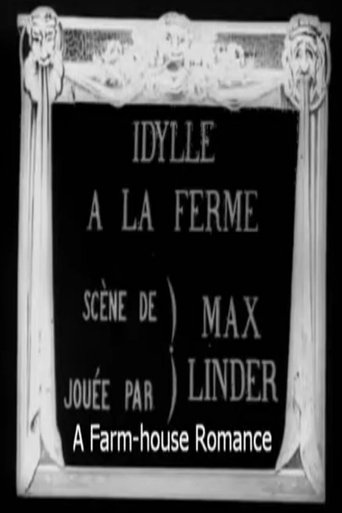
Troubles of a Grass Widower
Plot
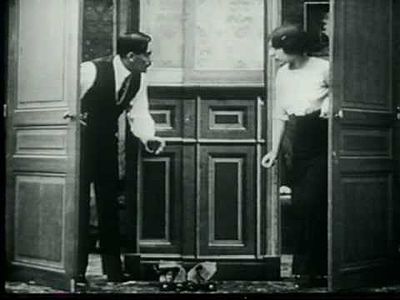
A weary housewife, exasperated by her husband's childish and irksome behavior, leaves home and returns to her mother. At first, the husband is delighted by the sudden freedom and relishes the idea of having the house entirely to himself. His confidence quickly evaporates, however, as he discovers that cooking, cleaning, and even the simplest household routines are far more difficult than he imagined. The comedy builds from his escalating frustration and clumsy attempts to manage domestic life alone, turning the ordinary tasks of the home into a series of physical gags and comic reversals. By the end, the film playfully restores the domestic order while satirizing the husband's helplessness and the myth of masculine self-sufficiency.
Director
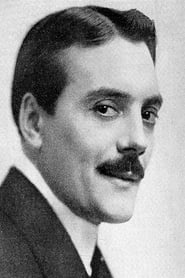
Max LinderCast
About the Production
This is an early French silent comedy associated with Max Linder's celebrated screen persona, the elegant but increasingly hapless bourgeois gentleman. Like many Pathé productions from the period, it was made as a short, fast-moving comic film designed for the international market, with action and visual business carrying the storytelling rather than intertitles. The film survives in the historical record primarily through cataloging, archival references, and modern database listings, but detailed production paperwork such as budget, exact set locations, and crew breakdowns is not generally documented. Its comic premise reflects the kind of polished domestic farce that helped establish Linder as one of the most influential comedians of the pre-World War I era.
Historical Background
In 1908, cinema was still in its early narrative expansion, and France was one of the leading centers of film production in the world. Pathé Frères, the company most closely associated with this film, was a dominant international force whose comedies circulated widely and helped standardize short-form narrative filmmaking. The period was marked by rapid experimentation with genre, character comedy, and increasingly complex staging, all of which can be seen in the domestic farce structure of this title. The film also reflects social attitudes of the late Belle Époque, including humor drawn from marriage, gender roles, and the presumed incompetence of men at domestic labor, while quietly acknowledging the indispensable work of household management. In film history, this kind of comedy matters because it helped move screen humor away from simple gag presentation and toward repeatable character-centered situations that later became a foundation of silent comedy.
Why This Film Matters
Although not one of the most widely cited Max Linder titles today, the film is part of the body of work that established the grammar of screen comedy for the 1910s and beyond. Linder's influence on later comedians was profound: his refined costume, urban manners, and repeated humiliation anticipate elements of Chaplin's Tramp, while his carefully controlled fallibility helped define the modern comic lead. The film is also culturally significant for its domestic satire, presenting the household as a battlefield where masculine confidence is undone by ordinary chores. That premise has remained durable in comedy ever since, and this early example shows how quickly cinema learned to turn everyday life into broadly readable humor. For historians, it is also evidence of the international reach and sophistication of French silent comedy before World War I.
Making Of
Very little detailed behind-the-scenes documentation survives for this title, which is typical for short films from the 1908 French production system. What is known is that Max Linder was already developing the controlled, character-based comic style that made him famous, and films like this likely relied on concise staging, carefully timed physical business, and an immediately legible domestic premise. Pathé productions of this era were made efficiently, often with a strong emphasis on clarity of action for international export, so the comedy had to work across language barriers. The film also fits neatly into Linder's broader career pattern of portraying a dapper man whose social polish collapses under practical reality, suggesting a deliberate continuation of a popular comic formula rather than an isolated experiment.
Visual Style
The film likely uses the straightforward, tableau-like visual style common to 1908 French comedies, with an emphasis on clear staging, full-body performance, and readable spatial relations inside the home. Early Pathé comedies often depended on static or minimally moving camera setups so that the physical action could unfold in a coherent theatrical frame, and this title fits that tradition. The visual humor would have come from the contrast between Linder's controlled appearance and the chaotic domestic situation around him, as well as from the arrangement of props that make household tasks visibly awkward. Even without ornate camera movement, the film's design probably emphasized rhythm, gesture, and the escalation of comic disorder.
Innovations
The film's main achievement is not technological innovation in the modern sense, but rather its contribution to the refinement of narrative comic technique in early cinema. It demonstrates how a simple domestic premise can be developed through visual escalation, precise staging, and the sustained use of a recurring comic character. As part of Linder's work at Pathé, it helped advance the idea that short films could depend on characterization and situation rather than mere isolated gags. Its structure also shows the early mastery of comic timing through prop interaction, spatial arrangement, and cumulative frustration.
Music
As a silent film, it did not have a synchronized soundtrack or original recorded score. In its original exhibition, it would typically have been accompanied by live music chosen by the theater, often piano or small ensemble accompaniment tailored to the mood of the screening. Any music heard today depends on the specific restoration, archive, or platform presenting the film. No original composed score is generally documented for this title.
Memorable Scenes
- The husband's delighted reaction when he realizes the house is suddenly his alone, a setup that immediately turns into comic irony.
- The escalating sequence in which ordinary domestic chores become absurdly difficult for the husband, turning the home into a comic obstacle course.
- The visual contrast between his initial confidence and his growing frustration as household routine defeats him.
Did You Know?
- This film is one of the many short comedies built around Max Linder's enduring screen character, often called the "Max" persona: a stylish, self-assured man whose vanity is undercut by everyday mishaps.
- The title refers to a "grass widower," an old expression for a man temporarily left to manage on his own while his wife is away.
- The film is a domestic farce, a genre that Linder helped refine into a sophisticated form of screen comedy before Chaplin, Keaton, and Lloyd became famous.
- Because it is from 1908, the film predates synchronized sound and was originally exhibited as a silent picture with live musical accompaniment in theaters.
- Early Pathé comedies like this one were often distributed widely across Europe and beyond, which helped spread Linder's fame internationally.
- The film's humor depends heavily on visual misunderstandings and escalating practical difficulties rather than dialogue, a hallmark of early slapstick construction.
- Max Linder's comic style in films like this influenced later screen comedians through his blend of elegance, frustration, and physical humiliation.
- The movie is frequently grouped with other surviving and documented Linder shorts that explore marriage, manners, and masculine pretension.
- As with many films from 1908, complete contemporary reviews are scarce, so modern knowledge of the title relies heavily on archival catalogs and film historiography.
- The film's premise reverses the traditional domestic comedy setup by making the man the incompetent household caretaker once the wife departs.
What Critics Said
Specific contemporary reviews are difficult to trace, and surviving critical commentary from 1908 is limited. In modern film history, the film is generally valued less as a standalone masterpiece than as an important example of Max Linder's early comedic method and of Pathé's polished short-form farce. Critics and historians tend to regard Linder as a major bridge figure between stage-derived comic acting and later, more elaborate silent comedy, and this film participates in that assessment through its timing, character construction, and domestic reversal structure. Because the film is obscure and information is sparse, its reputation is mostly preserved through scholarly appreciation of Linder's body of work rather than through extensive standalone criticism.
What Audiences Thought
No detailed audience-response records are readily available for this specific title, which is common for short films from the silent era. However, Max Linder was a major international star in his day, and films built around his persona were widely popular with audiences who enjoyed his elegant appearance, escalating misfortune, and recognizable comic rhythm. The premise would have been immediately accessible to viewers of the period because it relies on universally understood domestic frustrations and visual slapstick. Its continued mention in archival film databases suggests that it remains of interest to silent-film enthusiasts and historians even if it is not widely seen by general audiences today.
Film Connections
Influenced By
- French stage farce
- Music-hall comedy traditions
- Early Pathé comic shorts
- Domestic skit comedy popular in the 1900s
This Film Influenced
- The later domestic and situational comedies of silent-era filmmakers
- Max Linder's own subsequent persona-driven comedies
- Broad domestic farces that center on husbands struggling with household chores
You Might Also Like
More Comedy Films
View allMore from Max Linder
View allFilm Restoration
The film appears to survive in archival record and is cataloged in film databases, but detailed public information about restoration or the extent of surviving elements is limited. It is not generally described as a lost film, though availability may depend on archive holdings or curated silent-film collections. In practical terms, it is an obscure early silent short with limited circulation today rather than a widely accessible mainstream title.