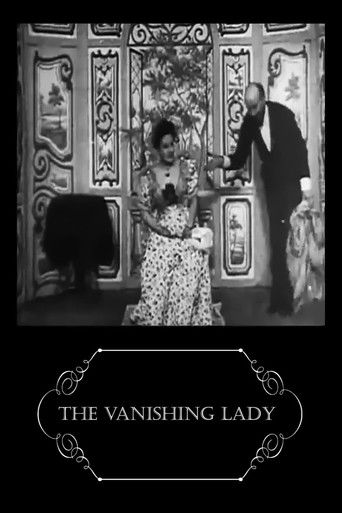
1900 · approximately 1-2 minutes

Also available on: YouTube

Up-to-Date Spiritualism

1900 approximately 1-2 minutes France
Supernatural disruption of everyday lifeComic frustration and reversalTheatrical illusion versus realityPopular fascination with spiritualismLoss of control in a haunted domestic space

Plot

In this Georges Méliès fantasy-comedy, a "comique eccentric" enters a drawing room that seems to be occupied by mischievous spirits. He immediately finds that ordinary actions are thwarted by supernatural interference, beginning with his attempt to remove his coat and hat, which stubbornly return to his body as soon as he takes them off. The room itself behaves like a haunted stage illusion: chairs, an umbrella, a hat, and other objects animate themselves and fly away in different directions, forcing the bewildered visitor into a rapid sequence of comic reversals. The film plays as a brief parade of magical gags rather than a narrative drama, building laughter through escalating visual tricks and the performer’s exaggerated reactions. Its amusement comes from the continual collapse of domestic order under the pressure of invisible, theatrical forces.

About the Production

Release Date 1900
Production Star Film Company
Filmed In Méliès's Studio, Montreuil-sous-Bois, France

This short film was made during Georges Méliès's highly productive Star Film period, when he was turning stage magic into cinematic spectacle. Like many of his early trick films, it likely relied on a fixed camera, painted theatrical scenery, stop-substitution edits, and carefully timed stage business to create the illusion that objects move on their own. The film belongs to Méliès's long-running fascination with spiritualism, phantom apparitions, and comic supernatural chaos, but here the tone is lighter and more overtly humorous than in his more eerie or macabre fantasy subjects. Exact budget and box-office information are not known, as was typical for films of this era, and surviving production documentation is limited.

Historical Background

Up-to-Date Spiritualism was made in 1900, at a moment when cinema was still less than five years old as a mass entertainment medium and had not yet settled into the feature-length narrative form. In France, Georges Méliès was one of the medium's most imaginative early practitioners, transforming short films into elaborate magical tableaux that drew on music hall, stage conjuring, and pantomime. The title also reflects contemporary interest in spiritualism and occult phenomena, which were widely discussed in late nineteenth- and early twentieth-century popular culture. Méliès frequently used such subjects to mix skepticism, satire, and wonder, giving audiences a playful cinematic version of the era's fascination with the unseen world.

Why This Film Matters

Although a very short film, Up-to-Date Spiritualism is significant as part of the body of work that helped define cinematic fantasy and special effects comedy. Méliès's trick films established a visual language for impossible transformations, supernatural comedy, and theatricalized illusion that later filmmakers would adapt in ghost comedies, fantasy shorts, and surreal special-effects spectacles. The film is also valuable as a document of early cinema's relationship to popular beliefs and entertainments, showing how spiritualism could be turned into broad comic material rather than solemn mystery. For modern viewers and historians, it illustrates the seamless blend of stagecraft and filmmaking that made Méliès one of the foundational figures of imaginative cinema.

Making Of

Behind the scenes, Up-to-Date Spiritualism would have been constructed much like Méliès's other stage-bound fantasies at the turn of the century. The production likely depended on a carefully arranged studio set with theatrical flats, hidden stagehands, and timed substitutions that allowed hats, chairs, and umbrellas to vanish or move in ways impossible in real life. Méliès often performed in his own films, and this one seems tailored to his persona as a comic magician confronting unruly effects of the supernatural world. The film reflects his broader practice of combining vaudeville performance, illusionism, and cinematic trickery into compact visual entertainments designed for quick exhibition on the fairground and music-hall circuit.

Visual Style

The cinematography is characteristic of Méliès's early studio work: a static, frontal viewpoint that preserves the look of a stage performance while enabling precise visual control. The set is arranged like a theatrical drawing room, allowing the audience to see the full action continuously and appreciate the timing of each gag. The film likely uses hard cuts hidden as substitutions to make props disappear, reappear, or animate themselves, while the actor's broad gestures help sell the illusion. The visual style emphasizes clarity and composition over camera movement, with the frame functioning as a proscenium through which the magical events unfold.

Innovations

The film is notable for its use of early trick-film techniques that create the illusion of haunted objects and magical reversals. These effects almost certainly relied on stop-substitution, hidden stage mechanics, and precise actor placement, methods Méliès helped popularize in the first years of cinema. While not an innovation on the scale of his more famous larger productions, it demonstrates his mastery of turning modest means into striking cinematic illusion. Its technical importance lies in refining the language of comic supernatural effects within the constraints of a very short runtime.

Music

No original synchronized soundtrack exists, as the film predates recorded sound cinema. Like most silent films of the era, it would originally have been accompanied by live music, often improvised or selected by the exhibitor to match the tone of the performance. Modern screenings may use piano accompaniment or curated silent-film scores, depending on the archive or distributor. No single historically definitive score is known to survive.

Memorable Scenes

  • The comic eccentric repeatedly removes his coat and hat, only for them to spring back onto him as if controlled by invisible hands.
  • The drawing room turns into a chaos engine as chairs, an umbrella, and other objects fly away on their own, creating a cascade of visual gags.
  • The performer’s exaggerated attempts to assert control over the room heighten the absurdity of the supernatural prank.

Did You Know?

  • The film was directed, produced, and performed by Georges Méliès, who appears as the comic eccentric in the principal role.
  • It is known from the Star Film Catalog description, which summarizes the action as a sequence of supernatural comic tricks.
  • The film is a classic example of Méliès's trick-film style, in which camera effects and stage mechanics create impossible visual events.
  • The title reflects the era's popular fascination with spiritualism, séances, and the idea of contact with spirits, which Méliès often treated comically.
  • Like many Méliès shorts, the film likely used substitution splices and carefully choreographed props to make objects appear to move independently.
  • The action is centered in a single interior set, a common Méliès method that allowed him to control every movement for maximum illusion.
  • The film belongs to the early period of cinema when shorts were often cataloged by descriptive titles rather than detailed plot summaries.
  • No surviving contemporary reviews are widely known, so much of the film's modern reputation comes from film historians and archive catalog descriptions.
  • The film demonstrates Méliès's talent for turning everyday bourgeois interior space into a site of magical disruption.
  • Its premise anticipates later haunted-house comedies and supernatural slapstick routines in silent cinema.

What Critics Said

Contemporary critical reception is not extensively documented, which is common for films of this period, especially short trick films distributed as part of exhibition programs rather than reviewed individually in surviving press. In its own time, the film would likely have been appreciated for the same qualities that made Méliès popular more broadly: clever visual effects, theatrical humor, and a succession of surprising stage illusions. Modern critics and historians generally regard it as an engaging minor work within Méliès's catalog, noteworthy less for narrative complexity than for its inventive use of comic supernatural gags. Today it is valued as an early example of cinematic trickery and as part of the evolving history of fantasy film.

What Audiences Thought

Specific audience data has not survived, but Méliès's films were generally popular with audiences who enjoyed novelty, spectacle, and visual magic. Up-to-Date Spiritualism would have played well to viewers familiar with vaudeville routines and haunted-house antics, since its humor depends on instantly legible gags and escalating absurdity rather than dialogue or plot complexity. Early cinema audiences often responded enthusiastically to films that made ordinary objects behave unnaturally, and this short seems designed precisely for that kind of delighted surprise. Its appeal likely lay in the immediate comic recognizability of the situation and the pleasure of seeing a performer battle impossible forces.

Film Connections

Influenced By

  • Stage magic and illusion performance
  • Music-hall comedy
  • Contemporary fascination with spiritualism and séances
  • Earlier pantomime and farce traditions

This Film Influenced

  • The Haunted Curiosity Shop (1901)
  • The House of Ghosts (1908)
  • A Trip to the Moon (1902)
  • later silent supernatural comedies and trick films

Film Restoration

The film is preserved in archival form and is known through surviving copies and catalog documentation; it is not considered lost.

Themes & Topics