
A Beast at Bay
"She calls him a coward—until an escaped convict proves her wrong."
Keys: Space play/pause · ←/→ 10s · F fullscreen · M mute · </> speed
About this film
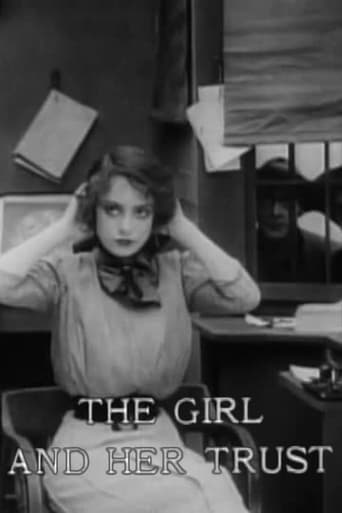
Smitten woman taken with a man she met; in fact, he is her “ideal”. However, after her new suitor refuses to get mixed up in a street brawl, the young woman views him as a coward. Nearby, a violent convict has escaped from prison. While the couple takes a ride in the woman’s automobile, the criminal ambushes a guard, taking the officer’s clothing and gun. The young woman still argues her suitor is a coward, drops him off, and drives off alone. She is then carjacked by the on-the-lam criminal. The young man witnesses the ambush and sets out to rescue his lover.
Cast & crew
More films like this
More Drama films
View all →







More from D.W. Griffith
View all →
More about this film
About the production
Release dateMarch 25, 1912
ProductionBiograph Company
Filmed inCalifornia, New York
This film was produced during D.W. Griffith's prolific period at the Biograph Company, where he directed hundreds of short films. The production utilized the new technology of automobiles, which were still relatively novel in 1912 and added excitement to the chase sequences. The film was shot on location in California as the film industry was beginning its migration from the East Coast to the West Coast due to better weather conditions and diverse landscapes.
Themes
Themes & topics
Historical background
Released around 1912, A Beast at Bay emerged while exhibitors were still defining how longer narratives could hold nickelodeon audiences.
Why this film matters
Later homages and restorations keep A Beast at Bay circulating among silent- and classic-film communities long after its first run.
Making of
The production of 'A Beast at Bay' exemplified the rapid-fire filmmaking methods of the Biograph Company under Griffith's direction. Griffith was known for his ability to complete films quickly, often shooting multiple projects simultaneously. Mary Pickford, who was already becoming a major star, had a complex professional relationship with Griffith - he helped launch her career but was also known for his demanding directing style. The automobile sequences were particularly challenging to film given the primitive state of automotive technology and the limitations of early film equipment. The film was shot during the industry's crucial transition period from the East Coast to California, with Biograph being one of the first companies to establish regular production facilities in the Los Angeles area. Griffith was already experimenting with narrative techniques that would become standard in cinema, including the use of parallel action and building suspense through editing.
What critics said
Press clipping files from 1912 rarely give A Beast at Bay headline space; mentions appear in roundup columns listing what played that week.
Did you know?
- This was one of approximately 450 short films D.W. Griffith directed for the Biograph Company between 1908 and 1913.
- Mary Pickford, who would later become known as 'America's Sweetheart' and co-found United Artists, was one of Griffith's most frequently used actresses during this period.
- The film was released just a few years before Griffith would revolutionize cinema with his controversial epic 'The Birth of a Nation' (1915).
- Automobiles were still a luxury item in 1912, making the car scenes particularly exciting for contemporary audiences.
- The film demonstrates Griffith's early mastery of suspense and cross-cutting techniques that would become hallmarks of his later work.
- Biograph films of this era were typically one-reelers running about 15 minutes, though this one runs slightly longer at 17 minutes.
- The film was shot during the transitional period when the industry was moving from New York to California.
- Edwin August, who plays the male lead, was a popular leading man of the silent era who also directed films.
- The escaped convict theme was a popular trope in early cinema, playing on contemporary fears about law and order.
- This film was released before the Motion Picture Company censorship codes were strictly enforced, allowing for more dramatic violence.
Visual style
The cinematography of 'A Beast at Bay' reflects the transitional state of film techniques in 1912. The film was likely shot by Billy Bitzer or another Biograph cameraman, utilizing the natural lighting techniques that Griffith favored. The mobile camera work during the automobile sequences was particularly innovative for the period, requiring specialized equipment to track moving vehicles. The film employs cross-cutting between parallel actions to build suspense, a technique Griffith was helping to perfect during this period. The visual composition shows Griffith's emerging mastery of framing and spatial relationships within the two-dimensional image. Location shooting in California provided varied backgrounds that enhanced the visual interest of the outdoor scenes. The cinematography balances static compositions for dialogue scenes with more dynamic movement during action sequences, demonstrating an understanding of how visual style can serve narrative needs.
Innovations
While not revolutionary, 'A Beast at Bay' incorporated several technical achievements that were advancing the art of cinema in 1912. The film's use of mobile camera work during the automobile sequences was technically challenging and innovative for the period. Griffith's cross-cutting between parallel actions to build suspense represented an evolving understanding of film editing's narrative potential. The film demonstrates the increasing sophistication of location shooting, taking advantage of California's varied landscapes. The production utilized the latest film stock and camera equipment available to the Biograph Company. The integration of contemporary technology (automobiles) into the narrative shows how filmmakers were adapting to modern life. The film's pacing and rhythm demonstrate an advanced understanding of how editing can control audience emotional response. The work represents the refinement of continuity editing techniques that were becoming standard in American cinema.
Music
As a silent film, 'A Beast at Bay' would have been accompanied by live musical performance during its theatrical run. The typical Biograph presentation would have featured a pianist or small ensemble providing improvised or selected musical accompaniment. The music would have been synchronized with the on-screen action, using popular songs of the era and classical pieces to enhance emotional moments. During suspenseful sequences, particularly the carjacking and rescue scenes, the music would have become more dramatic and rapid-paced. Romantic moments between the leads would have been accompanied by popular love songs of the period. The exact musical selections would have varied by theater and musician, though certain musical conventions for indicating danger, romance, and triumph were well-established by 1912. The lack of a fixed soundtrack meant that each viewing experience could be unique depending on the skill and interpretation of the accompanying musicians.
Famous quotes
You call yourself a man and yet you won't fight!
I thought you were my ideal, but you're nothing but a coward!
I'll save her if it costs me my life!
Memorable scenes
- The dramatic carjacking sequence where the escaped convict ambushes the young woman's automobile, creating immediate tension and danger. The transformation scene where the accused coward proves his courage by pursuing the criminal on foot, demonstrating character development through action rather than dialogue.
What audiences thought
Audiences in 1912 responded positively to 'A Beast at Bay,' particularly enjoying its suspenseful plot and the presence of the increasingly popular Mary Pickford. The film's combination of romance, danger, and action appealed to the diverse audiences attending nickelodeons and small theaters of the era. The automobile scenes were especially popular, as cars were still a novelty for most viewers and added excitement to the narrative. The clear moral framework and satisfying resolution aligned with audience expectations of the period. Pickford's growing star power undoubtedly contributed to the film's commercial success, as she was becoming one of the first true movie stars with a dedicated following. The film's relatively straightforward narrative and emotional clarity made it accessible to the increasingly diverse immigrant audiences that constituted a significant portion of early cinema patrons.
Film connections
Influenced by
- Earlier Biograph shorts by Griffith
- Contemporary stage melodramas
- Dime novel adventure stories
- French crime serials
This film influenced
- Later Griffith Biograph shorts
- Early action serials
- Rescue-themed melodramas of the 1910s
Film restoration
The film is preserved in the Library of Congress collection and has been restored by film preservationists. Prints exist in several film archives including the Museum of Modern Art and the British Film Institute. The restoration has maintained the original tinting that was common in Biograph films of this period.
Where to watch
- Library of Congress National Screening Room
- Kino Lorber DVD collections
- Museum of Modern Art film screenings
- Various streaming platforms specializing in classic cinema
- Film archive websites