A Drunkard's Reformation
"Mirror of the drunkard"
Keys: Space play/pause · ←/→ 10s · F fullscreen · M mute · </> speed
About this film
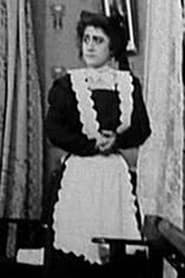
D.W. Griffith's temperance one-reeler sends a drunk father to a play mirroring his household ruin. A man arrives home late and drunk as usual. His wife reminds him that he's supposed to take their daughter out to a play. While watching the play, he's faced with his own drinking evils and how his life would be without them.
Cast & crew
More films like this
More Drama films
View all →







More from D.W. Griffith
View all →
More about this film
About the production
Release dateJune 14, 1909
ProductionAmerican Biograph Company
Filmed inNew York City, Fort Lee, New Jersey
Filmed during D.W. Griffith's formative years at Biograph, this short demonstrates his early mastery of narrative storytelling and emotional depth. The production utilized Biograph's standard practice of filming in natural light whenever possible, a technique that would influence Griffith's later work. The film was shot on 35mm film stock typical of the era, with Griffith already experimenting with camera angles and editing techniques that would become his trademarks. The theater scenes were likely filmed on a constructed set rather than in an actual theater, allowing for better control of lighting and camera positioning.
Themes
Alcoholism and addictionFamily relationshipsRedemption and transformationThe power of art to inspire changeSocial responsibility
Themes & topics
Historical background
1909 placed A Drunkard's Reformation within United States cinema as American Biograph Company navigated wartime markets, immigration audiences, and the shift from intertitles to sound.
Why this film matters
Archivists revisit A Drunkard's Reformation (1909) for D.W. Griffith style, genre norms at American Biograph Company, and the exhibition context of 12 minutes programming.
Making of
The production of 'A Drunkard's Reformation' exemplified the rapid-fire filmmaking methods of the Biograph Company, where Griffith often completed multiple films in a single week. The cast and crew worked with minimal resources, relying on natural lighting and simple sets. Griffith was already developing his reputation for demanding multiple takes and pushing actors to deliver more naturalistic performances than was typical of the era. The theater scenes presented particular challenges, requiring careful choreography to simulate both the stage performance and the audience reactions simultaneously. Griffith's innovative use of close-ups to capture the protagonist's emotional transformation was groundbreaking for 1909, as most directors still favored wide shots and theatrical staging.
What critics said
Retrospective writing on A Drunkard's Reformation stresses craft by D.W. Griffith, print survival, and repertory value rather than opening-week gross alone.
Did you know?
- This was one of over 400 short films D.W. Griffith directed for the Biograph Company between 1908 and 1913
- Linda Arvidson, who plays the wife, was Griffith's first wife in real life, married from 1902 to 1932
- The film was part of Biograph's popular 'morality play' series that addressed social issues of the day
- Arthur V. Johnson was one of Griffith's favorite early actors, appearing in dozens of Biograph shorts
- The film demonstrates Griffith's early use of parallel editing between the stage play and the protagonist's reactions
- Adele DeGarde was only 14 years old when she appeared in this film, already a veteran child actor
- The original film print was 35mm with no color tinting, though some later releases had hand-colored scenes
- This film was distributed by Biograph's standard practice of shipping prints to theaters rather than having centralized releases
- The play within the film was likely a melodrama typical of the temperance movement's theatrical productions
- Griffith would later direct the controversial feature 'The Birth of a Nation' (1915), which would overshadow his early social reform films
Visual style
The cinematography, handled by Biograph's regular camera operators including G.W. Bitzer, utilized the stationary camera typical of the era but with growing sophistication. The film employed strategic lighting to create dramatic shadows, particularly in the drunken scenes, using the limited artificial lighting available at the time. The theater scenes required careful composition to include both the stage action and the audience reactions in the same frame. Griffith was already experimenting with varying shot distances, though the film primarily uses medium shots. The cinematography demonstrates the transitional nature of 1909 filmmaking, bridging the theatrical staging of early cinema with the more dynamic visual language Griffith would soon perfect.
Innovations
While modest by modern standards, the film demonstrated several technical innovations for its time. Griffith's use of continuity editing between the stage play and the protagonist's reactions was groundbreaking, creating a psychological depth rarely seen in 1909. The film's pacing, particularly in the climactic theater scene, showed Griffith's emerging understanding of rhythm and dramatic timing. The production also employed sophisticated lighting techniques for the era, using artificial light to create mood and atmosphere. The film's narrative structure, with its clear cause-and-effect relationships and character development, represented a significant advance in cinematic storytelling beyond the simple chase comedies and trick films that dominated early cinema.
Music
As a silent film, 'A Drunkard's Reformation' was originally accompanied by live musical performance in theaters. The typical score would have been provided by a house pianist or small orchestra, using compiled classical pieces and popular melodies appropriate to each scene's emotional tone. Dramatic moments like the protagonist's realization would have been accompanied by stirring romantic music, while the drunken scenes might have used comic or dissonant melodies. Some larger theaters might have used cue sheets provided by Biograph suggesting specific musical selections. No original score was composed specifically for this film, as was standard practice until the late 1920s.
Famous quotes
(Intertitle) 'A drunkard's home is no place for a child'
(Intertitle) 'The play that changed his life'
(Intertitle) 'He saw himself as others saw him'
Memorable scenes
- The powerful theater scene where the protagonist watches a play mirroring his own destructive behavior, captured through Griffith's innovative use of reaction shots and parallel editing to show both the stage performance and the drunkard's growing emotional distress and eventual transformation
What audiences thought
The film was well-received by audiences of 1909, who appreciated its clear moral message and emotional storytelling. Theater owners reported strong attendance, particularly in areas where the temperance movement had strong support. Viewers responded positively to the relatable family drama and the satisfying redemption arc. The film's success helped establish Griffith as a director capable of delivering both entertainment and moral instruction, a combination that proved commercially valuable in the early film market. Contemporary audience reactions, as recorded in local newspapers, emphasized the film's power to move viewers and its effectiveness as a cautionary tale about the dangers of alcohol abuse.
Film connections
Influenced by
- Stage melodramas of the late 19th century
- Temperance movement literature and theater
- Earlier Biograph social reform shorts
- Victorian moral tales
- Contemporary newspaper stories about alcoholism
This film influenced
- Griffith's later Biograph shorts dealing with social issues
- Other temperance-themed films of the 1910s
- Early Hollywood films addressing alcoholism
- Social problem films of the silent era
Film restoration
The film is preserved in the Library of Congress collection and has been restored by various film archives. A 35mm nitrate print exists in the Museum of Modern Art's collection, and digital copies are available through several film preservation organizations. The restoration has maintained the original aspect ratio and intertitles, though some slight deterioration is visible in certain scenes due to the age of the original materials.
Where to watch
- Available on the Internet Archive
- Included in some D.W. Griffith DVD collections
- Accessible through various film archive streaming services
- Available on YouTube through public domain uploads
- Screened occasionally at film museums and silent film festivals