Brutality
“A powerful lesson in the school of life.”
About Brutality
The story follows a young man, portrayed by Walter Miller, who is a victim of his own volatile temper and alcoholism, leading him to treat his wife and child with extreme cruelty and neglect. One evening, after a particularly violent outburst at home, he wanders into a local theater to watch a stage production of Bill Sykes from 'Oliver Twist.' As he watches the villainous Sykes abuse Nancy on stage, he is struck by a terrifying realization that the monster on the stage is a mirror image of his own behavior toward his family. Overcome with remorse and a sudden clarity of his own moral decay, he rushes home to beg for forgiveness and vows to reform his life. The film concludes with a poignant reconciliation, suggesting that art has the power to serve as a moral compass and a catalyst for personal redemption.
Cast & crew
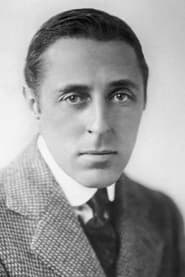
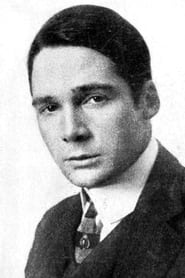
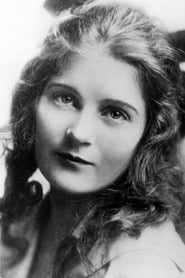
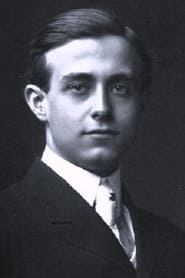

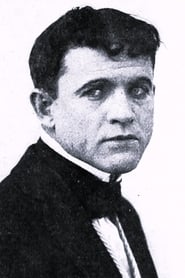
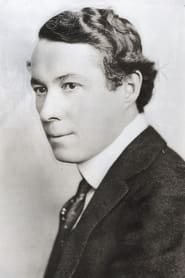
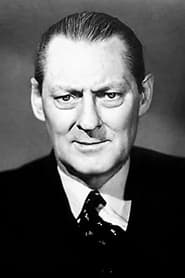
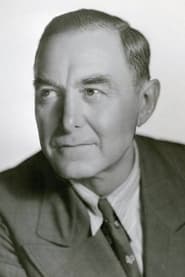
More films like this
More from D.W. Griffith
View all →
More about Brutality
Production
- Release date
- December 2, 1912
- Country
- USA
- Production
- Biograph Company
- Filmed in
- Biograph Studio, 11 East 14th Street, New York City, New York, USA
The film was produced during D.W. Griffith's final year at Biograph before his move to more ambitious feature-length projects. It was shot on 35mm film and utilized the standard one-reel format common for the era. The production is notable for its 'film-within-a-film' structure, which required the construction of a theater stage set within the Biograph studio. Griffith utilized his stock company of actors, many of whom would go on to become the first true stars of the silent screen.
Themes & topics
Historical background
In 1912, the American film industry was transitioning from short 'flickers' to more sophisticated narratives. This was a period when social reformers were often critical of the 'nickelodeons,' fearing they corrupted the youth. Films like 'Brutality' were intentionally designed to prove that cinema could be a tool for social good and moral education. This was also the year the Titanic sank and New Mexico and Arizona were admitted as states, a time of rapid modernization and social change in the United States.
Why this film matters
The film is culturally significant for its early exploration of domestic violence, a topic that was rarely addressed so directly in 1912. It also highlights the early 20th-century belief in the 'civilizing' power of the arts. By showing a man reformed by a play, Griffith was making a case for the legitimacy of his own medium, film, as an art form capable of the same moral weight as theater or literature.
Making of
During the production of 'Brutality,' D.W. Griffith was increasingly experimenting with the psychological depth of his characters. He pushed Walter Miller to deliver a performance that moved beyond the broad gestures of stage acting into a more nuanced, internalised style of 'screen acting.' The set for the theater was designed to look as authentic as possible to create a stark contrast between the 'real life' of the characters and the 'staged life' of the play. Billy Bitzer used low-key lighting during the theater sequences to focus the audience's attention on the protagonist's emotional reaction rather than the stage play itself.
What critics said
At the time of its release, The Moving Picture World praised the film for its 'strong moral lesson' and the 'naturalness' of the acting. Modern film historians view it as a key example of Griffith's developing narrative complexity. While some modern viewers find the 'instant reformation' trope simplistic, critics generally admire the film's technical proficiency and its use of cross-cutting to build emotional tension.
What audiences thought
Audiences in 1912 reacted strongly to the relatable domestic drama. The Biograph films were the most popular shorts of the day, and the 'Biograph Girl' (though Mae Marsh was now being identified) was a major draw. The film was successful enough to be distributed internationally, appearing in British and European trade journals shortly after its American debut.
Visual style
Billy Bitzer used a relatively static camera, which was standard for the time, but he employed masterful framing to capture the protagonist's isolation. The lighting in the theater scenes is particularly effective, using shadows to emphasize the man's internal conflict. The film also utilizes the 'Griffith Close-up' to highlight the emotional transformation on Walter Miller's face as he watches the play.
Innovations
The primary technical achievement is the sophisticated use of the 'play-within-a-movie' structure. It demonstrates an early understanding of how to use a secondary narrative to drive the primary character's arc. The editing also shows Griffith's growing mastery of pacing, cutting between the stage action and the protagonist's face to create a psychological link between the two.
Music
As a silent film, there was no recorded soundtrack. It would have been accompanied by a live pianist or organist. In 1912, Biograph did not provide specific cue sheets, so the music would have been improvised or selected by the local theater musician, likely drawing from dramatic classical pieces or popular melancholic ballads of the era.
Film restoration
The film is preserved and exists in the archives of the Library of Congress and the Museum of Modern Art (MoMA). It has been digitized and is available in various Griffith short film collections.
Did you know?
- The film features a performance of a scene from Charles Dickens' 'Oliver Twist,' specifically the character of Bill Sykes.
- Mae Marsh, who plays the wife, was only 17 years old at the time of filming and was becoming one of Griffith's favorite ingenues.
- The film is an early example of the 'moralizing' genre that Griffith favored to elevate the social standing of motion pictures.
- Lionel Barrymore appears in an uncredited role as an attendee at the theater.
- The cinematography was handled by G.W. 'Billy' Bitzer, Griffith's long-time collaborator who pioneered many lighting techniques.
- The film was released on a split-reel in some markets, though it is generally considered a full one-reeler.
- The theater audience in the film consists of many Biograph extras who were frequently used in Griffith's crowd scenes.
- This was one of several films Griffith made in 1912 that explored the domestic struggles of the working class.
- The use of the theater as a plot device was a meta-commentary on the power of performance to influence human behavior.
Memorable scenes
- The scene where the husband watches the stage version of Bill Sykes murdering Nancy, and his face slowly transforms from curiosity to absolute horror as he recognizes himself.
- The final scene of the husband returning home, falling to his knees, and the hesitant but eventually warm embrace of his wife.
Influenced by
- Charles Dickens' 'Oliver Twist'
- Victorian Melodrama
- The Temperance Movement
This film influenced
- The Drunkard (1935)
- A Double Life (1947)
- Various 'social problem' films of the 1920s
Where else to watch
- YouTube (Public Domain)
- Library of Congress Digital Collections
- Kino Lorber's 'D.W. Griffith Years of Discovery' DVD/Blu-ray sets
- Internet Archive
Famous quotes
The play's the thing wherein I'll catch the conscience of the King. (Thematic reference used in promotional materials)
A lesson learned through the mirror of the stage.