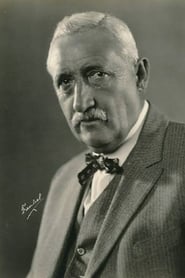
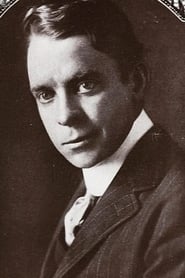
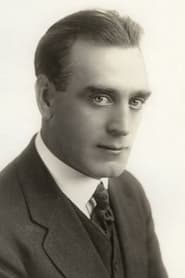
Enoch Arden
"Enoch returns too late"
Keys: Space play/pause · ←/→ 10s · F fullscreen · M mute · </> speed
About this film
Moving Picture World described the film: "There is a small need to describe this subject as the poem of Lord Tennyson is so well known, so suffice it to say that this Biograph subject is an unusually faithful portrayal of that beautiful romance of Enoch Arden, Annie Lee and Phili. Exhibitors circulated the 1911 print in short programs.
Cast & crew
More films like this
More Drama films
View all →







More from D.W. Griffith
View all →
More about this film
About the production
Release dateJuly 6, 1911
Box officeNot documented (box office tracking was not standard practice in 1911)
ProductionBiograph Company
Filmed inCalifornia (likely Los Angeles area where Biograph had established operations)
This was one of D.W. Griffith's many literary adaptations during his prolific Biograph period. The film utilized natural outdoor locations, a Griffith signature, to create authentic maritime settings. As a one-reel production, it required efficient storytelling to condense Tennyson's lengthy narrative into approximately 10-15 minutes of screen time.
Themes
Sacrifice and selflessnessThe power of enduring loveMoral duty and honorThe passage of time and its effectsRedemption through suffering
Themes & topics
shipwrecksailorunrequited lovesacrificepresumed deadreturn homemoral dilemmabroken heartchildhood friendpoem adaptationtragedymarriageseparationdeserted islandnoble sacrifice
Historical background
Enoch Arden reached screens around 1911, produced in its country of origin. Silent-era houses paired such titles with live music and newsreel bills.
Why this film matters
Researchers cite Enoch Arden when tracing screen culture of its decade.
Making of
The production of 'Enoch Arden' exemplifies D.W. Griffith's approach to literary adaptation during his Biograph years. Griffith was known for his meticulous preparation and his ability to extract emotional core stories from lengthy source material. The film was shot on location in California, taking advantage of the state's diverse landscapes to create convincing maritime settings without the expense of studio construction. Linda Arvidson's casting as Annie Lee was typical of Griffith's practice of using his inner circle, including his wife, in key roles. The production would have been completed quickly, as Biograph maintained a rigorous release schedule of approximately two films per week. Griffith was already experimenting with techniques that would become his trademarks, including close-ups for emotional emphasis and cross-cutting to build suspense, though these techniques were still evolving in 1911.
What critics said
Reviewers in 1911 weighed Enoch Arden on clarity, pacing, and audience response rather than prestige status. No single canonical review dominates later reference works for the title.
Did you know?
- This was one of at least three film adaptations of Tennyson's poem made in the early 1910s, predating the famous 1915 version starring Charlie Chaplin
- Linda Arvidson, who plays Annie Lee, was D.W. Griffith's first wife in real life, married to him from 1902-1915
- The film was part of Biograph's strategy to adapt well-known literary works to attract middle-class audiences to cinema
- Wilfred Lucas, who played Enoch Arden, was a Canadian actor who became one of Griffith's regular performers during this period
- Francis J. Grandon, who played Philip Ray, later became a director himself, helming numerous westerns in the 1910s and 1920s
- The Moving Picture World review specifically praised the film's 'scenes of rare beauty,' indicating Griffith's growing mastery of visual composition
- This film was released during Griffith's most creative period at Biograph, when he was making dozens of innovative shorts that would revolutionize cinema
- The poem 'Enoch Arden' was one of Tennyson's most popular works during his lifetime, making it familiar to contemporary audiences
- Biograph films of this era were typically shot on 35mm film at approximately 16 frames per second
- The film's survival status makes it particularly valuable for studying early cinematic adaptation techniques
Visual style
The cinematography in 'Enoch Arden' reflects D.W. Griffith's evolving visual style during his Biograph period. The film likely utilized natural lighting for exterior scenes, a technique Griffith favored for its authenticity. The cinematographer (probably Billy Bitzer or another Biograph regular) would have employed medium shots for narrative clarity and occasional close-ups to emphasize emotional moments, techniques that were still innovative in 1911. The maritime settings would have been carefully composed to create visual interest and reinforce the story's themes. The film's visual approach demonstrates the transition from the static, theatrical compositions of early cinema to more dynamic, film-specific visual language.
Innovations
While 'Enoch Arden' does not represent a major technical breakthrough, it demonstrates several important technical practices of the early 1910s. The film was shot on 35mm stock using hand-cranked cameras, requiring careful coordination to maintain consistent exposure and frame rate. The production likely utilized location shooting techniques that were still relatively new, requiring portable equipment and careful planning for outdoor scenes. The film's editing would have involved mechanical splicing of the film negative, a process that required precision to maintain narrative continuity. The use of intertitles to convey essential story points represents an important technical and narrative development of the period, helping bridge gaps in the visual storytelling.
Music
As a silent film, 'Enoch Arden' would have been accompanied by live music during theatrical exhibitions. The score would typically have been provided by a house pianist or small orchestra, selecting appropriate classical pieces or popular melodies to match the film's emotional tone. For a serious literary adaptation like this, the musical accompaniment would likely have been more sophisticated than for simple comedies, possibly including selections from Romantic composers who could match the film's tragic and romantic elements. The music would have been crucial in conveying emotion and guiding audience responses, particularly during key dramatic moments such as Enoch's shipwreck, his return, and his final decision.
Famous quotes
There is a small need to describe this subject as the poem of Lord Tennyson is so well known" - Moving Picture World review
An unusually faithful portrayal of that beautiful romance" - Moving Picture World review
Taken in scenes of rare beauty" - Moving Picture World review
Memorable scenes
- Enoch's emotional decision to remain hidden after seeing Annie's happiness with Philip
- The shipwreck sequence that strands Enoch on the deserted island
- The reunion scene where Enoch observes his family from a distance
- Annie's period of mourning while Philip provides comfort and support
- The final death scene where Enoch dies content knowing his family is cared for
What audiences thought
Audiences in 1911 responded positively to 'Enoch Arden,' particularly those familiar with Tennyson's poem. The story's themes of love, sacrifice, and moral duty resonated with contemporary viewers, and the film's emotional power was enhanced by the silent medium's ability to focus on visual storytelling. The film likely performed well commercially due to Biograph's established reputation and the popularity of literary adaptations. Contemporary audience members would have appreciated the film's moral clarity and its respectful treatment of a well-known literary work. The experience of watching 'Enoch Arden' in 1911 would have included live musical accompaniment, which would have enhanced the emotional impact of key scenes.
Film connections
Influenced by
- Alfred, Lord Tennyson's 1864 poem 'Enoch Arden'
- Victorian literary traditions
- Earlier Biograph literary adaptations
- Stage melodrama conventions
- 19th-century moral literature
This film influenced
- The 1915 'Enoch Arden' adaptation starring Charlie Chaplin
- Later literary adaptations in silent cinema
- Griffith's subsequent epic melodramas including 'Way Down East'
Film restoration
The preservation status of the 1911 'Enoch Arden' is unclear, as many Biograph films from this period have been lost or exist only in fragmentary form. Some Biograph films survive in archives like the Library of Congress and the Museum of Modern Art, but comprehensive records for individual titles are incomplete. The film's historical significance and connection to D.W. Griffith make it a priority for preservation efforts, though its current availability for viewing is uncertain.
Where to watch
- Currently, there are no widely available commercial releases or streaming options for the 1911 'Enoch Arden'. The film may be accessible through specialized film archives, museum collections, or academic institutions that hold Biograph films. Researchers interested in viewing this specific version should contact major film preservation institutions such as the Library of Congress, the Museum of Modern Art's Department of Film, or the George Eastman Museum. Occasionally, rare screenings of early Griffith films occur at film festivals or special cinema events.