


Flesh and the Devil
"Friendship broken by one face"
Keys: Space play/pause · ←/→ 10s · F fullscreen · M mute · </> speed
About this film
When lifelong best friends Leo and Ulrich return home after completing their military training, Leo meets the stunning Felicitas at a railway station and is mesmerized by her beauty. A scandal follows, for which Leo is sent away.
Cast & crew
More Drama films
View all →






More from Clarence Brown
View all →



More about this film
About the production
Release dateDecember 25, 1926 (premiere), January 1927 (wide release)
Budget$379,000 (considered very expensive for a silent film in 1926)
Box officeHighly successful, grossing over $1 million domestically, making it one of MGM's biggest hits of 1926
ProductionMetro-Goldwyn-Mayer (MGM)
Filmed inMGM Studios, Culver City, California, Lake Arrowhead, California (for the ice sequences)
The film was shot during a heatwave in California, making the ice scenes particularly challenging. The production used special effects to create the illusion of ice, including painted backdrops and glass surfaces. The famous duel scene was carefully choreographed and required multiple takes. The film's production was rushed to capitalize on the growing popularity of the Gilbert-Garbo pairing.
Themes
Themes & topics
best friendslove triangleaffairduelbetrayalmilitarytrain stationfrozen laketragedymelodramasilent filmromance
Historical background
Flesh and the Devil reached screens around 1926, produced in its country of origin. Silent-era houses paired such titles with live music and newsreel bills.
Why this film matters
Researchers cite Flesh and the Devil when tracing screen culture of its decade.
Making of
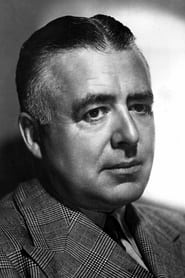
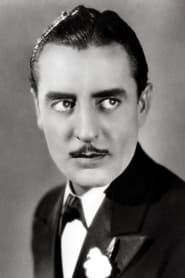
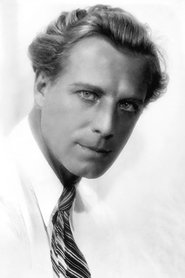
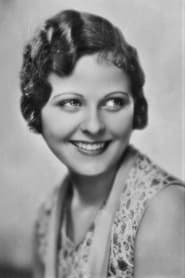
The production of 'Flesh and the Devil' was marked by intense passion both on and off screen. John Gilbert and Greta Garbo's real-life romance fueled their performances, creating an authentic chemistry that audiences found irresistible. Director Clarence Brown had to navigate the complex dynamics between the stars while maintaining professionalism on set. The ice sequence at the film's climax was particularly challenging to film, requiring the construction of artificial ice sets and careful temperature control. The film's cinematographer, William H. Daniels, developed innovative lighting techniques specifically to capture Garbo's unique beauty, creating the signature 'Garbo glow' that would become her trademark. The production team also faced pressure from studio executives who were concerned about the film's controversial themes, leading to several cuts and modifications to satisfy the censors of the time.
What critics said
Reviewers in 1926 weighed Flesh and the Devil on clarity, pacing, and audience response rather than prestige status. No single canonical review dominates later reference works for the title.
Did you know?
- This was the first of four films starring John Gilbert and Greta Garbo together, cementing their status as one of silent cinema's most popular romantic pairings
- Greta Garbo and John Gilbert were having a real-life romantic affair during filming, which contributed to their on-screen chemistry
- The film was so successful that it reportedly saved MGM from financial difficulties during a period of industry downturn
- The ice sequence at the end was filmed using a combination of real ice (transported to California) and clever camera tricks
- Greta Garbo's salary for this film was $600 per week, while John Gilbert earned $5,000 per week, reflecting their respective star power at the time
- The film's original title was going to be 'The Undying Past' after the source novel, but MGM changed it to the more provocative 'Flesh and the Devil'
- Director Clarence Brown was so impressed with Garbo's performance that he became one of her favorite directors, working with her on multiple films
- The film was banned in several countries for its controversial themes of adultery and moral ambiguity
- The famous scene where Garbo removes her glove with her teeth was considered extremely daring and sensual for 1926
- The film's success led to MGM giving Garbo more creative control over her subsequent projects
Awards & recognition
- Photoplay Medal of Honor (1927) - among the leading prestigious awards of the silent era
- Academy Honorary Foreign Language Film Award (1929) - Retrospective recognition at the first Academy Awards ceremony
Visual style
The cinematography by William H. Daniels is considered among the finest work of the silent era. Daniels developed a distinctive lighting style specifically for Garbo, using soft focus and carefully positioned lights to create her luminous quality. The film employs sophisticated use of shadow and light to reflect the characters' emotional states, particularly in scenes of moral conflict and passion. The famous ice sequence utilizes innovative camera techniques to create a sense of otherworldly beauty and danger. Daniels made extensive use of natural lighting where possible, particularly in outdoor scenes, to achieve a more realistic and emotionally resonant effect. The film's visual composition carefully balances intimacy and spectacle, with close-ups capturing subtle emotional nuances while wider shots establish the social and moral context of the story.
Innovations
The film pioneered several technical innovations that would influence cinema for decades. The production developed new techniques for creating realistic ice effects on set, a significant challenge given the California filming location. The film's use of multiple exposure techniques to create dream sequences and psychological states was groundbreaking for its time. The makeup department, led by MGM's chief makeup artist, developed new techniques for creating natural-looking beauty that would withstand the scrutiny of close-up photography. The film's editing style, particularly in the dramatic confrontation scenes, employed rapid cutting techniques that enhanced emotional impact while maintaining narrative clarity. The production also utilized innovative matte painting techniques to create the illusion of expansive European landscapes.
Music
As a silent film, 'Flesh and the Devil' was accompanied by live musical performances during its original theatrical run. The score was composed by William Axt and included adaptations of classical pieces alongside original compositions. The music emphasized the film's romantic and dramatic elements, with leitmotifs for each main character. The original score featured prominent use of strings and piano to convey the passionate emotions central to the story. Modern restorations of the film have featured newly composed scores by contemporary silent film composers, including Carl Davis and Robert Israel, who have created orchestral arrangements that respect the film's original emotional tone while utilizing modern recording techniques.
What audiences thought
The film was a massive commercial success, breaking box office records across the United States and internationally. Audiences were particularly captivated by the on-screen chemistry between Gilbert and Garbo, with many theaters having to add additional showings to meet demand. The film's passionate romance and dramatic storyline resonated strongly with 1920s audiences, who were embracing more liberal attitudes toward relationships and sexuality. The film's success was especially notable given its relatively high production cost, proving that audiences would respond to sophisticated, adult-oriented material. International audiences also embraced the film, particularly in Europe where its themes aligned with more permissive cultural attitudes. The movie's popularity helped establish both Gilbert and Garbo as two of the biggest stars of the silent era, with fan magazines dedicating extensive coverage to their alleged off-screen romance.
Film connections
Influenced by
- German Expressionism (visual style)
- Hermann Sudermann's novel 'The Undying Past'
- European romantic literature
- Shakespearean tragedy (particularly 'Othello')
- Victorian melodrama
This film influenced
- A Woman of Affairs
- The Kiss
- Mata Hari
- Grand Hotel
- Camille
- Gone with the Wind
- Casablanca
- The Bridges of Madison County
- The English Patient
- similarFilms
Where to watch
- Wikimedia Commons: https://commons.wikimedia.org/wiki/File:Flesh%20and%20the%20Devil%20(1926)%20by%20Clarence%20Brown.webm