Friends
"The orphan Dora is courted by two different gold miners."
Keys: Space play/pause · ←/→ 10s · F fullscreen · M mute · </> speed
About this film
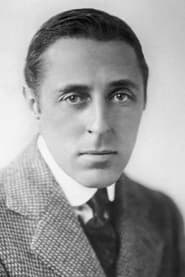
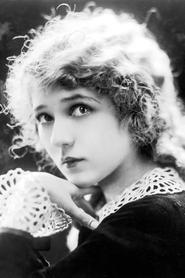
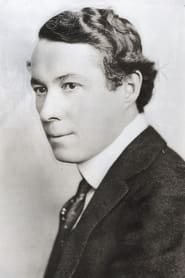
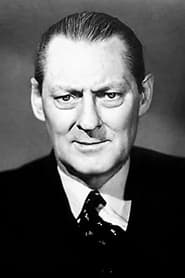
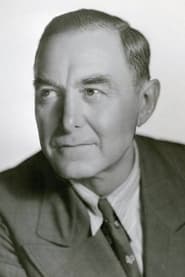
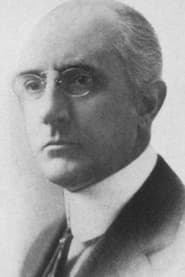
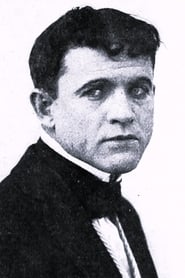
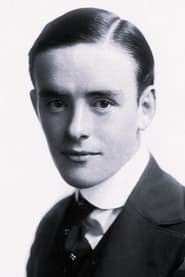
Griffith and starring Mary Pickford, Henry B. Walthall, Lionel Barrymore, and Harry Carey. Walthall and Barrymore portray two old friends who each wind up involved with a beautiful girl (Pickford) who lives above a mining camp saloon. The orphan Dora is courted by two different gold miners.
Cast & crew
More Western films
View all →

More from D.W. Griffith
View all →

More about this film
About the production
Release dateMarch 25, 1912
ProductionBiograph Company
Filmed inCalifornia, Biograph Studio, New York
Like many of Griffith's Biograph films from this period, 'Friends' was shot quickly on a modest budget as part of the company's high-output production schedule. The film utilized location shooting in California to capture the authentic Gold Rush setting, which was becoming a signature approach for Griffith's westerns. The production was part of Griffith's prolific 1912 output, during which he directed dozens of short films for Biograph, each typically completed in just a few days. The cast and crew worked with primitive equipment by modern standards, but Griffith was already developing techniques that would revolutionize cinema.
Themes
Themes & topics
OrphanGold MinersLove TriangleCalifornia Gold RushCompetitionFriendship TestedWesternSilent FilmFrontier RomanceMoral Dilemma
Historical background
Made in 1912, in United States, under D. W. Griffith, Friends belongs to silent filmmaking amid the silent era's rapid stylistic experiments. Friends is a 1912 silent short film written and directed by D.
Why this film matters
Within silent history, D. W. Griffith's name attaches to the work; surviving prints help researchers study silent-era craft; 1912 film by D. W. Griffith.
Making of
The production of 'Friends' took place during a transitional period in American cinema, as filmmakers were moving from simple stage-like presentations to more sophisticated cinematic storytelling. D.W. Griffith was at the forefront of this evolution, experimenting with camera techniques, editing, and narrative structure that would become standard in the industry. The cast, particularly Mary Pickford, was already becoming recognizable to film audiences, helping to establish the star system that would dominate Hollywood. The filming likely involved challenging conditions on location in California, where the cast and crew had to work with primitive equipment in often harsh environments. Griffith was known for his demanding directing style and his ability to extract powerful performances from his actors, even in the short format of Biograph productions. The film was completed in just a few days, typical of the rapid production schedule at Biograph during this period.
What critics said
Contemporary reviews of Friends are sparse in open sources; later catalog entries chiefly summarize plot and credits.
Did you know?
- This was one of many collaborations between D.W. Griffith and Mary Pickford during their Biograph period, before Pickford became especially powerful figures in Hollywood and co-founded United Artists.
- The film was released during a particularly productive year for Griffith, who directed over 60 short films in 1912 alone, averaging more than one per week.
- Henry B. Walthall would later star as 'The Little Colonel' in Griffith's controversial masterpiece 'The Birth of a Nation' (1915).
- Lionel Barrymore came from the famous Barrymore acting family and would continue working in films for another four decades, winning an Academy Award for 'A Free Soul' (1931).
- Like many films of this era, 'Friends' was shot on 35mm film at approximately 16 frames per second, which would appear faster when projected at modern speeds.
- The film is sometimes confused with other similarly titled works from the silent era, but this specific version is definitively the 1912 Griffith production.
- Biograph films from this period were typically distributed on a 'state's rights' basis, meaning different distributors handled different regions of the country.
- The film's running time of 17 minutes was relatively standard for dramatic shorts of the period, before feature-length films became the norm in the mid-1910s.
- This film was produced before the establishment of Hollywood as the center of American film production, when New York and New Jersey were still major filmmaking hubs.
- The Gold Rush setting would have resonated with 1912 audiences, many of whom had parents or grandparents who participated in westward expansion.
Visual style
The cinematography in 'Friends' would have been typical of Griffith's Biograph period, utilizing natural lighting when possible on location and basic studio lighting for interior scenes. The camera work was relatively static by modern standards, but Griffith was already beginning to experiment with different camera angles and movements to enhance storytelling. The California locations would have provided scenic backgrounds that added production value and authenticity to the Gold Rush setting. The film was shot in black and white, as was standard for the period, with no color tinting mentioned in available records. The cinematographer, likely G.W. Bitzer or another Biograph regular, would have worked with hand-cranked cameras requiring considerable skill to maintain consistent exposure and framing.
Innovations
While 'Friends' doesn't represent major technical innovations, it was part of Griffith's ongoing experimentation with film language. The film likely employed cross-cutting between different storylines, a technique Griffith was helping to pioneer and would perfect in later works. The use of location shooting in California was still relatively innovative for 1912, as many productions were still primarily studio-bound. The film would have demonstrated Griffith's growing mastery of continuity editing and his ability to tell a coherent story within the constraints of a short runtime. These techniques, while not revolutionary on their own, contributed to the development of cinematic language that would become standard in the industry. The film also represents the refinement of the close-up technique, which Griffith was helping to establish as an emotional storytelling device.
Music
As a silent film, 'Friends' had no recorded soundtrack. During exhibition, it would have been accompanied by live music, typically a piano or organ in smaller theaters and a small orchestra in larger venues. The musical accompaniment would have been selected from stock music libraries or possibly specially composed to match the mood of different scenes. The emotional moments would have been underscored with appropriate musical themes, while action sequences would have been accompanied by more dynamic music. No specific information about the original musical accompaniment for 'Friends' has survived, but it would have followed the common practices of the period, with music playing continuously throughout the screening to enhance the emotional impact of the visual storytelling.
What audiences thought
Audience reception data for 1912 films is limited, but Biograph productions featuring popular stars like Mary Pickford generally performed well at the box office. The familiar themes of the Gold Rush and frontier life would have resonated with contemporary audiences, many of whom had personal or family connections to the westward expansion period. The rivalry between two friends over a woman was a proven formula that audiences of the time found engaging and emotionally satisfying. As with most films of this era, it would have been accompanied by live musical performance and possibly a lecturer who would explain the action to the audience. The film's short length made it ideal for the varied programming of nickelodeons and early movie theaters, where it might have been shown alongside other short films, newsreels, and comedy acts.
Film connections
Influenced by
- Stage melodramas
- Contemporary literature about the West
- Earlier Biograph westerns
- Griffith's own previous work
- Popular dime novels about
Where to watch
- Wikimedia Commons: https://commons.wikimedia.org/wiki/File:Friends%20(1912)%20-%20D.%20W.%20Griffith%20film.webm