Hustling for Health
Plot
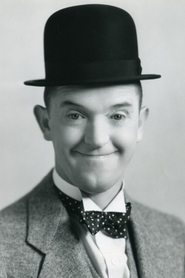
Stan Laurel plays a mischievous young man who is taken from the train depot back to a suburban home by the husband of the household. Once there, he discovers that the wife is in the middle of a suffragette meeting, and his presence immediately turns an already tense domestic scene into comic chaos. As the husband and wife clash over politics and social propriety, Stan’s antics escalate the disorder, drawing the attention of the neighbors. The situation reaches a farcical peak when Stan attempts to “help” by cleaning up the backyard, only to dump the household’s rubbish into a neighboring garden that has won prizes for its immaculate appearance. The film builds from social satire into broad slapstick, using misunderstanding, disruption, and retaliatory neighborhood mayhem as its comic engine.
About the Production
Hustling for Health was made during Stan Laurel’s early screen years, before he became internationally famous as one half of Laurel and Hardy. As with many short comedies of the period, it appears to have been designed as a compact farce built around a familiar domestic setting, social satire, and escalating slapstick business rather than elaborate production design. The film’s suffragette premise reflects a topical issue of the late 1910s, using the women’s rights movement as a comic backdrop in a way that was common in contemporary popular entertainment. Surviving documentation is limited, so many day-to-day production details such as exact shooting dates, crew assignments beyond the director, and costs are not reliably documented in available sources.
Historical Background
The film was made in 1919, at a moment of major social and political transition in the United States. The suffrage movement was reaching its decisive phase, with the Nineteenth Amendment soon to be ratified in 1920, so a comedy built around a suffragette meeting would have resonated with contemporary audiences familiar with the debate. Silent comedy in this period often transformed current issues into broadly accessible farce, allowing studios to capitalize on public conversation while keeping the material light and commercially appealing. The film also comes from the final years of the First World War era and its aftermath, when American film production was expanding rapidly and comedy shorts were a vital part of theatrical programs. As an early Stan Laurel vehicle, it matters historically because it shows him working in the ecosystem of short-form slapstick that helped shape his later screen identity.
Why This Film Matters
Although not widely known today, Hustling for Health is significant as part of the early body of work that documents Stan Laurel’s evolution from solo comedian to international star. It also provides an example of how silent comedies engaged with social issues like suffrage, often reducing them to comic household conflict while still reflecting their presence in everyday conversation. The film’s suburban-garden mayhem and neighborhood escalation anticipate later comedy patterns that depend on one person’s well-meaning meddling causing a chain reaction of damage. For scholars of silent cinema, it is valuable as a small but telling artifact of Universal-era short comedy production and of how topical humor was packaged for mass audiences.
Making Of
Hustling for Health belongs to the phase of Stan Laurel’s career when he was developing the screen persona that would later mature into his famous gentle, befuddled comic style. Productions of this kind were usually assembled quickly and economically, with a small cast, limited locations, and gag-driven staging built for efficient silent-comedy storytelling. The film’s social premise suggests that the filmmakers were aiming to exploit a recognizable contemporary topic, namely women’s suffrage, as a springboard for domestic mayhem and satirical conflict. While detailed surviving records are scarce, the film fits the pattern of late-1910s short comedies that relied on broad physical business, neighborhood disruption, and visual payoffs rather than elaborate narrative complexity.
Visual Style
The cinematography is typical of a late-1910s silent short: static or minimally moving cameras, straightforward framing, and an emphasis on keeping the actors’ full bodies visible so the physical comedy can play clearly. The visual style would have favored medium and long shots that allow slapstick business to unfold in a readable theatrical space, especially for ensemble action in domestic interiors and backyard scenes. Like many shorts of the era, the film likely relied on clean staging and crisp timing over elaborate camera movement. Its comedic effectiveness would have come from the arrangement of performers in space and the careful buildup of visual chaos rather than from stylized lighting or editing flourishes.
Innovations
There are no widely cited technical innovations associated specifically with this film. Its craftsmanship lies in the efficient silent-comedy staging of multiple comic beats within a short running time, particularly the escalation from a social gathering to neighborhood havoc. The film demonstrates the early studio-era ability to produce clear, highly legible physical comedy with limited resources. Its value is historical and performance-based rather than technological, representing standard but effective late-silent short-subject technique.
Music
As a silent film, Hustling for Health originally had no synchronized recorded soundtrack. It would have been exhibited with live musical accompaniment, typically by a theater pianist or small ensemble, using improvised or compiled cues appropriate to comedy and farce. No original score is known to survive in documented form. Modern presentations of the film, where available, may use newly prepared accompaniment or archival-style musical reconstruction.
Memorable Scenes
- Stan being brought back from the train depot to a home already in upheaval over a suffragette meeting, setting up immediate social friction.
- The comic unraveling of the household as the husband, wife, and Stan all become entangled in the same domestic disruption.
- Stan’s attempt to clean up the backyard by throwing rubbish into the neighbor’s prize-winning garden, turning a simple chore into a neighborhood catastrophe.
Did You Know?
- This is one of Stan Laurel’s earlier solo comedy shorts, made years before his partnership with Oliver Hardy began.
- The film is associated with a topical suffragette joke structure, reflecting how current social debates were often mined for comedy in silent-era shorts.
- The plot’s centerpiece involving the destruction of a neighbor’s prize garden is a classic example of silent-comedy escalation from mild inconvenience to total neighborhood disorder.
- Frank Terry is credited as director, but like many small silent comedies of the period, the film’s surviving production history is fragmentary.
- The title suggests a health-and-hygiene comedy, but the actual humor comes more from social friction, domestic chaos, and slapstick than from literal medical themes.
- Dorothy Coburn appears in the cast, and Mrs. Fleming is also credited, but detailed character identifications are not consistently preserved in surviving references.
- The film is part of the broad ecosystem of short subjects released through Universal in the late 1910s, when comedy shorts were a major component of studio programming.
- Because it is an obscure silent short, it is not widely screened, and many viewers know it only through catalog references or archival listings.
- Its humor depends heavily on visual gags and reaction shots, a reminder of how silent comedies communicated through physical action rather than dialogue.
- The film’s satirical edge lies in staging a domestic argument around suffrage, a subject that was then highly visible in public discourse.
What Critics Said
Contemporary reviews are not well documented in surviving sources, so a precise account of its 1919 critical reception is difficult to establish. As with many short comedies of the period, it likely received attention primarily as part of a program rather than as a standalone prestige release. Modern critical assessment tends to treat it as an early, minor Stan Laurel short of interest mainly to historians, archivists, and completists rather than as one of the better-known surviving silent comedies. Its historical value lies more in what it reveals about Laurel’s early career and the period’s comedy conventions than in any established reputation for masterful direction or innovation.
What Audiences Thought
Audience-response data from the period is not readily available in surviving documentation. Given the film’s structure, it was probably intended to deliver quick, broad laughs through recognizable domestic misunderstandings and exaggerated slapstick rather than character-driven sophistication. Modern audiences encountering it usually do so as part of retrospective screenings or archival collections, where appreciation tends to be strongest among silent-film enthusiasts and Stan Laurel collectors. For general viewers, the film’s appeal is primarily historical, though the neighbor-conflict and garden-destruction gags remain easy to understand across time.
Film Connections
Influenced By
- Stage farce traditions
- Vaudeville physical comedy
- Contemporary newspaper humor about suffrage
- Early silent slapstick shorts
This Film Influenced
- Later Laurel and Hardy comedies
- Domestic chaos farces of the 1920s and 1930s
- Suburban slapstick comedies centered on escalating neighbor disputes
You Might Also Like
More Comedy Films
View allMore from Frank Terry
View allFilm Restoration
The film appears to survive in at least archival or cataloged form, since it is listed in modern databases and film references, but detailed restoration information is not widely documented. No widely publicized new restoration is commonly associated with it. Its preservation status is best described as surviving but obscure, with accessibility limited compared with major Laurel titles. It is not among the best-known or most frequently screened silent shorts, so availability may depend on archives, specialty collections, or research materials.