In the Border States
"A Union Army corporal"
Keys: Space play/pause · ←/→ 10s · F fullscreen · M mute · </> speed
About this film
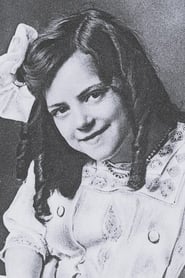
A Union Army corporal, a "young father", bids farewell to his wife and daughters to march off to war. Nearby, three Confederate soldiers, foraging for food, are surprised and shot at by Union soldiers. One throws away his weapon and stumbles upon the youngest daughter of the corporal.
Cast & crew
More films like this
More Drama films
View all →







More from D.W. Griffith
View all →
More about this film
About the production
Release dateJune 13, 1910
ProductionBiograph Company
Filmed inFort Lee, New Jersey, California (possible location shots)
This was one of hundreds of short films D.W. Griffith directed for Biograph during their most productive period. The film was shot on 35mm black and white film stock typical of the era. Griffith was known for his rapid production schedule, often completing films in just a few days. The border state setting allowed Griffith to explore divided loyalties, a theme he would return to throughout his career.
Themes
Divided loyaltiesFamily bonds during wartimeCompassion across enemy linesCourage and sacrificeThe human cost of war
Themes & topics
Civil Warborder stateUnion ArmyConfederate soldiersfamily dramachase sequencewounded soldierforagingmilitary missiondivided loyalties
Historical background
In the Border States (1910) emerged during the silent-film era. A Union Army corporal, a "young father", bids farewell to his wife and daughters to march off to war. Archival records and catalog entries help place the work within film-history surveys of the period.
Why this film matters
Preserved under Wikidata ID Q3797416, In the Border States is valued as a screen drama within catalog and archive collections. Wikipedia's "In the Border States" entry connect it to broader histories of cinema exhibition and restoration.
Making of
The production of 'In the Border States' exemplified the factory-like efficiency of the Biograph studio under Griffith's direction. The film was likely shot in just 2-3 days with minimal rehearsal, as was standard practice. Griffith was already developing his signature cross-cutting technique, which would become more sophisticated in later works. The cast were Biograph regulars who Griffith could rely upon to deliver competent performances with little direction. The film's outdoor scenes were shot on location near Fort Lee, New Jersey, which served as Biograph's primary production base before the industry's migration to Hollywood. The modest budget meant that costumes were likely repurposed from other Civil War-themed productions in Biograph's inventory.
What critics said
Trade and archival sources offer limited day-one review coverage for In the Border States. Modern reception rests on its availability in collections, repertory screenings, and reference works that document 1910 cinema.
Did you know?
- This film was released just 45 years after the end of the Civil War, when many veterans and their families were still alive
- D.W. Griffith directed over 450 short films for Biograph between 1908-1913, averaging about one per week
- The film was part of Griffith's series of Civil War shorts that would eventually lead to his controversial masterpiece 'The Birth of a Nation' (1915)
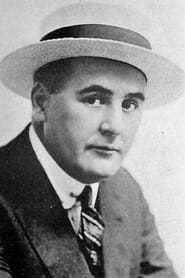
- Charles West, who plays the father, was a regular in Griffith's Biograph films, appearing in over 50 of the director's works
- The film's depiction of Confederate soldiers was relatively sympathetic for the time, showing their humanity rather than portraying them as pure villains
- Biograph films of this era were often shot outdoors in natural light, giving them a distinctive visual quality compared to studio-bound productions
- The original film was likely tinted in certain scenes (blue for night, amber for day) as was common practice for Biograph releases
- This film survives today in the Library of Congress collection, unlike many Biograph shorts that have been lost
- The border state setting was significant as these states (like Kentucky, Missouri, Maryland) experienced particularly brutal divided loyalties during the Civil War
- Griffith's own father had served as a Confederate officer, giving the director personal connection to Civil War themes
Visual style
The cinematography, credited to Biograph's regular cameraman G.W. Bitzer, utilizes the natural lighting techniques that were becoming standard for outdoor filming. The camera work is static as was typical of the period, but Griffith was already experimenting with camera placement to create more dynamic compositions. The film likely employed medium shots for character interactions and longer shots for the chase sequences. Bitzer's experience with Griffith was helping to develop a more sophisticated visual language, with attention to framing and composition that elevated the film beyond mere documentation of staged events.
Innovations
While not technically groundbreaking, 'In the Border States' demonstrates Griffith's growing mastery of film editing techniques, particularly his use of cross-cutting to build suspense during the chase sequences. The film also shows Griffith's developing understanding of screen space and how to use it effectively to tell a story visually. The production values were typical of Biograph's output - competent but not lavish, with attention to period details in costumes and props that helped create authenticity within the constraints of a modest budget.
Music
As a silent film, 'In the Border States' would have been accompanied by live musical performance during exhibition. The typical accompaniment would have been a pianist or small ensemble playing appropriate music for each scene - patriotic tunes for the military scenes, sentimental melodies for the family moments, and dramatic music for the chase sequences. Biograph often provided musical cue sheets with their films to guide theater musicians. The score would have drawn heavily on popular songs of the Civil War era, creating an immediate emotional connection with audiences familiar with this music.
Famous quotes
As a silent film, dialogue was conveyed through intertitles. Key intertitles likely included: 'A Border State - 1863', 'Father leaves to join the Union Army', 'Confederate troops forage on the property', 'A wounded enemy soldier', 'A desperate flight for life'
Memorable scenes
- The daughter's compassionate encounter with the wounded Confederate soldier, showing humanity transcending wartime divisions; The father's desperate flight through the countryside while wounded, pursued by enemy soldiers, demonstrating Griffith's emerging skill in creating suspense through cross-cutting; The emotional reunion scene where the wounded father returns to his family, emphasizing the personal costs of war
What audiences thought
Audiences in 1910 would have viewed this film as part of a program of several short subjects, typically accompanied by live music and possibly a lecturer. The Civil War theme would have resonated strongly with viewers, many of whom had personal family connections to the conflict. The film's dramatic moments and chase sequences would have provided the excitement that early cinema audiences craved. The relatively sympathetic treatment of Confederate characters might have been appreciated by Southern audiences while not alienating Northern viewers, reflecting the broader national mood of reconciliation.
Film connections
Influenced by
- Stage melodramas of the late 19th century
- Contemporary literature about the Civil War
- Earlier Biograph Civil War shorts
- Griffith's own Southern heritage and family stories
This film influenced
- Later Griffith Civil War films including 'The Birth of a Nation'
- The wave of Civil War films in the 1910s and 1920s
- John Ford's early Civil War-themed shorts
- Later films about divided families during wartime
Film restoration
The film is preserved in the Library of Congress collection and has been made available through various archival and educational channels. While not as widely circulated as Griffith's more famous works, prints exist in several film archives. The film has likely undergone restoration work to preserve its historical value, though some degradation typical of films from this period may be present.
Where to watch
- Library of Congress National Screening Room
- Various educational film archives
- Some public domain film collections
- Specialized silent film streaming services
- Museum of Modern Art film collection screenings
- Academic film libraries