
Ladies of Leisure
"Gold digger meets struggling artist in Manhattan"
Keys: Space play/pause · ←/→ 10s · F fullscreen · M mute · </> speed
About this film
Kay Arnold is a gold digger who wanders from party to party with the intention of catching a rich suitor. Jerry Strong is a young man from a wealthy family who strives to succeed as an artist. What begins as a relationship of mutual convenience soon turns into something else.
Cast & crew
More films like this
More Drama films
View all →







More from Frank Capra
View all →


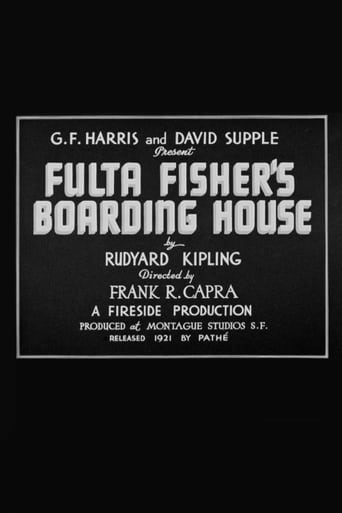
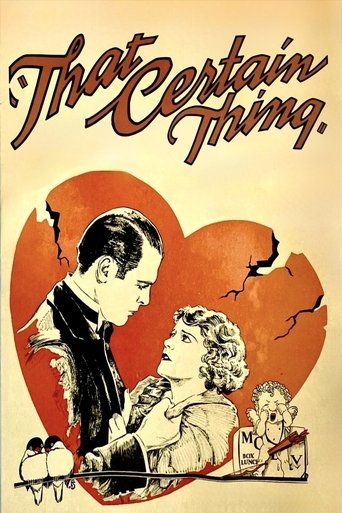

More about this film
About the production
Release dateApril 5, 1930
BudgetApproximately $150,000
Box officeColumbia's greatest box office success to date upon release
ProductionColumbia Pictures
Filmed inColumbia Studios, Hollywood, California, Malibu Lake, California
The film was Frank Capra's fifth sound production and the first project where Harry Cohn gave him complete creative control. Originally titled 'Ladies of the Evening' after the stage play, the title was changed to sound more sophisticated. Production took place between December 1929 and January 1930. Capra famously struggled with the initial casting of Barbara Stanwyck, who was sullen during her interview, but was convinced by her husband Frank Fay to watch a screen test that ultimately moved him to tears.
Themes
Themes & topics
artistmodelparty girlgold diggerwealthy familypaintingredemptionsuicide attemptpre-codeclass struggle
Historical background
Ladies of Leisure reached theaters around 1930, balancing wartime logistics with demand for escapist programming.
Why this film matters
Ladies of Leisure reflects the range of mid-century production beyond a single national mainstream.
Making of
The production was a turning point for Columbia Pictures, moving it from 'Poverty Row' toward major studio status. Capra and cinematographer Joseph Walker experimented with lighting techniques, specifically backlighting Stanwyck to create a 'halo' effect that softened her features. A significant challenge was Stanwyck's acting style; she was a 'one-take' actress who found it difficult to replicate the raw emotion of her first performance. Capra adapted his directing style to accommodate this, often filming her first takes while other actors were still getting their bearings. The chemistry between Stanwyck and Ralph Graves was noted as being particularly natural, despite Graves's more traditional silent-era acting roots.
What critics said
Press notices for Ladies of Leisure (1930) are sparse in digitized sources; interest today rests on preserved prints and comparison with related titles.
Did you know?
- is widely credited with making Barbara Stanwyck a major Hollywood star.
- Frank Capra admitted in his autobiography that he was so infatuated with Stanwyck during filming that he might have married her if she were free.
- The film was released in both sound and silent versions for theaters not yet equipped for audio technology.
- Director Frank Capra and cinematographer Joseph Walker began a 20-film partnership with this production.
- Barbara Stanwyck's character, Kay Arnold, was a euphemism for a prostitute, a common trope in Pre-Code Hollywood dramas.
- The screenplay was written by Jo Swerling, who initially called Capra's first draft a 'putrid piece of gorgonzola.'
- Marie Prevost, who plays the roommate Dot, was a former silent film star whose career was declining due to weight gain, which the film's script cruelly mocks.
- The 'Hope' painting featured in the film was meant to represent the spiritual awakening of a 'fallen woman.'
- Capra discovered that Stanwyck gave her best performance on the first take and would lose emotional honesty in rehearsals.
- To preserve Stanwyck's spontaneity, Capra began rehearsing the other actors without her present.
Awards & recognition
- National Board of Review: Top Ten Films (1930)
Visual style
Joseph Walker utilized innovative backlighting and soft-focus lenses to give the film a dreamlike quality. He ground his own lenses to suit specific actresses, a technique he perfected while working with Capra. The film features notable 'erotic' rain scenes and delicate night photography that were ahead of their time for 1930.
Innovations
The film is noted for its fluid camera movement at a time when sound equipment usually forced cameras to remain stationary in soundproof 'iceboxes.' Capra and Walker used multiple camera setups to capture Stanwyck's first-take performances from different angles simultaneously.
Music
The score was composed by Mischa Bakaleinikoff. As an early talkie, the music is used sparingly, primarily to underscore the more dramatic romantic sequences. The film features the song 'The Old Blue Number' during a party scene.
Famous quotes
Kay Arnold: 'You know the old bromide: when in Greece, open a restaurant.'
Kay Arnold: 'When a dress costs over a hundred bucks, it's a frock.'
Jerry Strong: 'I can't paint you unless I can see you. And I can't see you with all this camouflage.'
Dot Lamar: 'Do I look like a small cup of coffee?'
Kay Arnold: 'Brother, that's my racket—I'm a party girl.'
Memorable scenes
- The opening scene featuring drunken revelers throwing bottles off a penthouse roof, establishing the decadence of the rich.
- The scene where Jerry wipes the makeup off Kay's face to see her 'true' self for the first time.
- The 'rain scene' on the balcony where the two characters first acknowledge their feelings for one another.
- Kay's emotional confrontation with Jerry's mother, where she realizes she must give him up.
- The climactic scene on the ship where Kay, in despair, attempts to jump overboard.
What audiences thought
Audiences in 1930 responded enthusiastically, making it a major hit for the struggling Columbia Pictures. The film's blend of melodrama and snappy, cynical dialogue (typical of Jo Swerling) appealed to urban audiences. It was particularly popular with female viewers who identified with Stanwyck's tough but vulnerable persona.
Film connections
Influenced by
- Ladies of the Evening (1924 play by Milton Herbert Gropper)
- The Noose (stage play starring Stanwyck)
This film influenced
- Women of Glamour (1937 remake)
- It Happened One Night (1934)
- The Miracle Woman (1931)
Film restoration
The film is well-preserved. Both the original sound version and the silent version are held in the Library of Congress. It has been restored and released as part of 'Frank Capra: The Early Collection' on DVD.
Where to watch
- Amazon Prime Video (Rent/Buy)
- TCM (Turner Classic Movies) periodic broadcasts
- Frank Capra: The Early Collection DVD/Blu-ray
- Apple TV