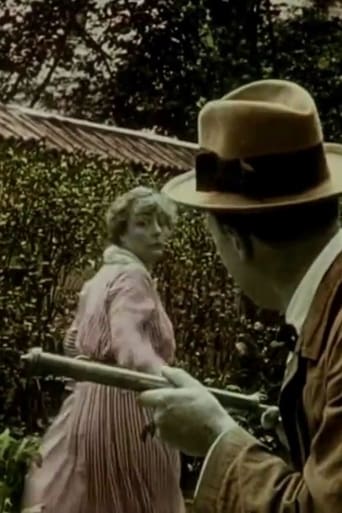
1910 · Approximately 10 minutes

Also available on: Archive.org

Les timidités de Rigadin

1910 Approximately 10 minutes France
Shyness and social anxietyClass reversal and parodyRole-playing and disguiseEmbarrassment and misunderstandingDomestic farce

Plot

Shy Rigadin decides to pay a visit to friends of the family, hoping for a socially proper call that will let him keep his usual timid distance from anything too lively. His plans are thrown off when the household he is visiting is suddenly emptied, as the adults are called away and the servants are left behind in charge. Freed from supervision, the servants decide to stage a comic imitation of upper-class life, dressing up, socializing, and turning the house into an improvised high-society party. Rigadin arrives just as the masquerade is in full swing, placing the painfully reserved visitor in the middle of a rapidly escalating social farce. The humor builds from mistaken expectations, class-role reversal, and Rigadin’s discomfort as he is drawn into a world of pretension, confusion, and flirtatious chaos.

About the Production

Release Date 1910
Production Pathé Frères
Filmed In France

This is a short French silent comedy from the Rigadin series, built around Charles Prince’s recurring screen persona, a timid and socially awkward comic figure who was already well established with French audiences by 1910. Like many Pathé comedies of the period, it was produced quickly and economically as part of a highly efficient studio system that specialized in short-form entertainment for domestic and international distribution. Surviving documentation on exact shooting circumstances is limited, but the film belongs to the early-wave French studio comedy tradition in which domestic interiors, costume play, and class satire were common comic devices. The film’s humor depends on visual performance, timing, and escalating embarrassment rather than elaborate sets or special effects.

Historical Background

The film was produced in 1910, at a moment when cinema was still formally young but rapidly expanding into a mass entertainment medium. In France, Pathé Frères and other companies were standardizing production, distribution, and exhibition practices, while audiences were becoming accustomed to serial comic characters and short, self-contained narratives. Social comedy based on class behavior was especially resonant in the Belle Époque, a period fascinated by manners, appearances, and the performance of social identity. Les timidités de Rigadin fits neatly into this context by turning the household and its servant class into a stage for humorous social reversal, a theme that remained durable throughout silent-era comedy.

Why This Film Matters

Although not a landmark feature in the modern sense, the film is culturally important as an example of early French screen comedy and of the recurring-character model that helped stabilize star identity in silent cinema. The Rigadin series contributed to the idea that audiences could return to the same comic figure across multiple films, anticipating later franchise and series-based entertainment. The film also reflects early twentieth-century French fascination with manners, class performance, and domestic farce, using servants and social mimicry to expose the artificiality of respectability. For historians, it is valuable as a small but telling artifact of Pathé’s output and of the performance style associated with Charles Prince and the silent-stage crossover world that fed early cinema.

Making Of

Les timidités de Rigadin was made during a period when French cinema was industrializing rapidly, and Pathé Frères was producing a large number of shorts designed for quick turnaround and broad audience appeal. The Rigadin character functioned as a recurring star vehicle, allowing Charles Prince to return to a recognizable comic type that audiences could immediately understand without title cards or elaborate narrative setup. Georges Monca, a veteran director of short comedies, worked within a streamlined production environment where simple domestic settings, costume gags, and expressive acting carried the narrative. The participation of Mistinguett is notable because it places a major variety and music-hall personality into a film format still closely tied to theatrical performance traditions.

Visual Style

As a 1910 silent short, the film would have relied on a fixed or minimally mobile camera, carefully staged tableau compositions, and strong blocking to ensure that the comic action remained readable. Pathé comedies of this period often used frontal framing and deep enough staging to accommodate entrances, exits, and simultaneous comic business within a single shot or a small number of shots. The visual style would have emphasized expressive gesture, costume contrast, and physical proximity, especially when Rigadin enters the false high-society environment. The cinematography is notable less for elaborate camera movement than for disciplined staging that allows the comedy to unfold clearly in real time.

Innovations

The film does not appear to be associated with a major technical innovation, but it reflects the mature efficiency of early Pathé production methods. Its notable achievement lies in comic timing, visual clarity, and the economical use of a simple premise to generate sustained amusement. The production demonstrates how early cinema could create an entire comic situation through costume, performance, and social contrast without elaborate sets or postproduction effects. It is also representative of the recurring-character strategy that helped early film studios build audience loyalty.

Music

As a silent film, Les timidités de Rigadin had no synchronized soundtrack. In original exhibition, it would typically have been accompanied by live music from a pianist, small ensemble, or theater musician depending on the venue. Specific cue sheets or commissioned score information for this title are not currently documented in widely available sources. Any modern screenings would likely use an archival or newly compiled accompaniment tailored to silent-comedy pacing.

Memorable Scenes

  • The servants transform the empty household into a mock aristocratic salon, turning everyday domestic space into a comic theater of manners.
  • Rigadin’s awkward arrival in the middle of the improvised high-society performance creates the film’s central embarrassment gag.
  • The contrast between the servants’ playful imitation of elite behavior and Rigadin’s timid, socially anxious demeanor drives the film’s most memorable comic beats.

Did You Know?

  • The film is part of the long-running Rigadin comedy cycle built around Charles Prince, one of French cinema’s most recognizable comic performers of the 1910s.
  • Mistinguett appears in the cast, linking the film to one of the most famous stage and screen entertainers in French popular culture.
  • The story uses a classic silent-comedy device: servants temporarily taking over a respectable household and parodying elite manners.
  • Its title, Les timidités de Rigadin, emphasizes the character’s defining trait: exaggerated shyness, which was central to the appeal of the Rigadin persona.
  • Georges Monca was a prolific director of short comedies for Pathé, and this film reflects the studio’s formulaic but highly popular approach to comic entertainment.
  • Because it is an early silent film, surviving plot information is limited and often reconstructed from catalog references and brief archival descriptions rather than a complete screenplay.
  • The film exemplifies pre-World War I French comedy’s interest in social embarrassment, disguise, and role reversal rather than the more physical slapstick style that became dominant later.
  • Charles Prince’s Rigadin films were widely distributed, helping establish recurring comic characters as a commercial strategy in early cinema.
  • The film likely played as part of a single-reel program, a common exhibition format in 1910.
  • As with many Pathé shorts from this era, the film demonstrates the studio’s export-oriented production model and emphasis on easily readable visual comedy.

What Critics Said

Contemporary critical reception is not well documented in surviving sources, which is common for early short comedies that were reviewed less extensively than prestige dramas or serialized spectacles. The film would likely have been evaluated in trade and exhibition contexts more for its ability to amuse audiences and perform well in distribution than for artistic distinction. Modern historical assessment tends to view it as a representative example of Pathé’s early comic production and of the Rigadin character’s popularity rather than as a singularly innovative work. Its value today lies in film-historical context, performance studies, and the study of early screen comedy mechanics.

What Audiences Thought

Direct audience records are scarce, but the continued production of Rigadin films suggests that the character was popular enough to justify repeated use. Early audiences generally responded well to clear visual comedy, recognizable comic personas, and social farce, all of which this film provides. The premise of servants impersonating high society would have been immediately legible and amusing to contemporary viewers familiar with class rituals and domestic comedy. Its enduring interest today is primarily among silent-film scholars and classic cinema enthusiasts rather than a broad mainstream audience.

Film Connections

Influenced By

  • French stage farce
  • Belle Époque social comedy
  • Music-hall performance traditions
  • Pathé comic short formulas

This Film Influenced

  • Later French and European domestic farces featuring servant-master role reversals
  • Silent-era recurring-character comedies

Film Restoration

Preservation status is not clearly documented in widely available sources. It is not commonly cited as a lost film in standard references, but surviving access appears limited and may depend on archival holdings or specialized silent-film collections. If extant, it is likely preserved in a French archive or private archival source rather than widely circulated in commercial home-video form.

Themes & Topics

shy protagonistservants impersonating aristocratssocial farcehousehold confusionsilent comedy