The Chow Hound
Plot
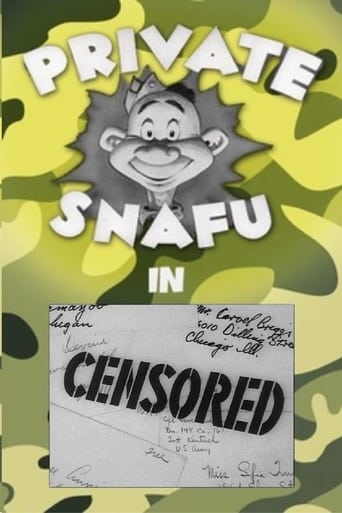
Private Snafu learns a hard military lesson about food discipline when he becomes obsessed with hoarding and wasting army rations. As he fixates on squirreling away supplies for himself, he ignores the basic wartime principle that food is carefully planned and must be used responsibly to support the whole unit. His selfish habits lead directly to waste, shortages, and comic chaos, with the film turning each mistake into a cautionary gag. By the end, the cartoon makes clear that greed and carelessness with military food are not merely bad manners but a threat to morale, efficiency, and the war effort itself.
Director
Frank TashlinCast
About the Production
The Chow Hound was produced as part of the Private Snafu series of military training cartoons made for the U.S. Army during World War II. Like the other films in the series, it was designed less as entertainment for the public than as an instructional morale-and-training film shown to service personnel, in this case to discourage hoarding, waste, and careless handling of food in military settings. Frank Tashlin, who was deeply associated with Warner Bros. cartoon filmmaking, directed the short in the studio’s fast, gag-driven style, and the film features the familiar Private Snafu format that uses comic exaggeration to deliver an official lesson. Precise budget figures and box-office figures are not generally published for this wartime training short, and it was not a commercial theatrical release in the ordinary sense.
Historical Background
The Chow Hound was produced in 1944, near the height of the Second World War, when the United States military was managing enormous logistical demands across multiple theaters of war. Food conservation, proper ration use, and discipline around supplies were practical issues with direct consequences for troop effectiveness and morale. The Private Snafu series emerged from a broader wartime effort in which the government used animation to educate soldiers in a format that would hold their attention better than standard lectures or pamphlets. This short also belongs to the wider history of wartime propaganda, in which humor was used not merely to entertain but to improve behavior by making mistakes look foolish and socially unacceptable. As a cultural artifact, it shows how mainstream animation talent was mobilized for war work and how popular cartoon language could be adapted to military instruction.
Why This Film Matters
The Chow Hound is significant as part of the Private Snafu series, one of the most famous examples of American military training animation. The short demonstrates how animation was used not only for theatrical amusement but also as a practical communication tool during wartime, helping normalize the idea that cartoons could shape behavior and deliver official messaging. It is also important in the careers of Frank Tashlin and the Warner Bros. animation team, who brought a sophisticated comic sensibility to government-sponsored work. Today the film is studied by historians for its blend of slapstick, propaganda, and wartime instruction, and it remains a vivid example of how popular culture was enlisted in support of the war effort.
Making Of
The Chow Hound was made during a period when Hollywood animation studios collaborated closely with the U.S. government to produce training and propaganda films. Warner Bros. supplied personnel, style, and comic timing, while the Army Signal Corps helped define the instructional purpose and audience. Frank Tashlin’s direction reflects the studio’s characteristic tempo: rapid visual gags, broad caricature, and clear comic escalation that keeps the lesson memorable without becoming dry or preachy. The Private Snafu series was intentionally crafted to speak to enlisted men in a more irreverent, insider tone than conventional wartime instruction films, and this short follows that model by turning a mundane logistical issue into a string of comic disasters. Because the film was meant for military circulation, surviving documentation tends to emphasize its educational function rather than production publicity, and detailed on-set or budget records are limited compared with theatrical features.
Visual Style
As an animated short, The Chow Hound relies on storyboarding, layout, timing, and expressive character animation rather than live-action cinematography. The visual style is typical of Warner Bros. cartoons of the era: bold linework, exaggerated facial expressions, quick-cut gags, and dynamic staging that keeps the comic action legible and energetic. The short likely uses simple military interiors, mess-hall environments, and food-related visual cues to keep the lesson immediately readable. The animation emphasizes physical comedy and visual metaphor, making the consequences of Snafu’s behavior easy to grasp at a glance.
Innovations
The film’s main achievement is its effective fusion of military instruction with high-quality studio animation. It demonstrates the Private Snafu series’ ability to present official guidance through the polished comic timing associated with Warner Bros. cartoons. The short’s technical strength lies in its clear visual storytelling, strong gag construction, and precise synchronization of music, sound effects, and animation motion. While it is not notable for a major technical innovation in the way a feature film might be, it represents an accomplished example of wartime educational animation at a professional studio standard.
Music
The film uses a wartime cartoon score in the Warner Bros. style, supporting the action with brisk, comic musical punctuation and rapid transitions. Like many shorts of this era, the music is designed to emphasize gags, reaction beats, and the timing of Snafu’s mistakes rather than to function as a standalone score. Specific composer credit is not reliably established from the information available here, but the soundtrack would have been produced within the studio’s usual orchestral cartoon framework. Sound effects and musical stings work together to sharpen the lesson and heighten the slapstick.
Famous Quotes
My! My! My!
No good can come of hoarding military food supplies
Memorable Scenes
- Private Snafu’s escalating mishandling of food supplies, which turns a simple lesson about conservation into a chain of comic disasters.
- The mess-hall style chaos in which selfish appetite and poor discipline create visible waste and confusion for everyone around him.
Did You Know?
- The film is one of the wartime Private Snafu cartoons, a series created specifically for the U.S. military to teach service members through humor.
- Mel Blanc provided the voice of Private Snafu, continuing his role as the character’s signature performer.
- Frank Graham is credited in the cast, reflecting the series’ use of top radio and voice talent of the era.
- Frank Tashlin, who later became known for live-action comedy films as well as animation, directed the short during his Warner Bros. years.
- The cartoon uses food as a wartime discipline issue, reflecting real military concerns about rationing, supply, and morale.
- As with many Private Snafu shorts, the film was intended to be funny but also bluntly instructional, relying on slapstick to reinforce the lesson.
- The title is a pun on greed and appetite, fitting the character’s name as a comic embodiment of bad soldierly habits.
- Because it was an internal military training film, it did not follow the same release pattern as a standard theatrical cartoon short.
- The film is part of a larger body of propaganda and instruction films now studied for their animation quality as well as their historical value.
- Private Snafu cartoons often included sharp writing by major animation talents of the period, and The Chow Hound belongs to that highly regarded wartime production cycle.
What Critics Said
At the time of release, The Chow Hound would have been evaluated primarily as a military training film rather than as a commercial entertainment short, so contemporary critical coverage is limited. Within the context of the Private Snafu series, the film likely would have been regarded as effective if it successfully delivered its message through humor and clear visual storytelling. In later decades, critics and historians have tended to view the short more favorably as a polished example of Warner Bros. wartime animation and as an artifact of military propaganda culture. Its reputation today rests less on conventional film criticism and more on its historical value, animation craftsmanship, and the insight it provides into wartime attitudes about discipline and waste.
What Audiences Thought
The primary audience was military personnel, especially enlisted servicemen who were meant to absorb the lesson without feeling lectured. The Private Snafu format was designed to appeal to that audience’s sense of humor by making the title character a hapless stand-in for bad behavior, and The Chow Hound fit that approach by turning food hoarding and waste into a comic cautionary tale. No broad box-office audience reception applies in the normal theatrical sense, since the film was created for restricted wartime exhibition. Within its intended audience, the series was popular enough to justify multiple entries and is remembered for successfully combining entertainment with instruction.
Film Connections
Influenced By
- U.S. Army wartime training needs
- Warner Bros. Looney Tunes short-form comedy
- Earlier instructional and propaganda films used by the military during World War II
This Film Influenced
- Later military training films that used animation and humor
- Postwar educational cartoons that borrowed the Private Snafu format
- Later historical documentaries about wartime propaganda and animation
You Might Also Like
More Animation Films
View allMore from Frank Tashlin
View allFilm Restoration
The film is preserved; it survives as part of the Private Snafu wartime cartoon corpus and is available through archival and home-video/educational circulation in various forms.