The Faded Lilies
"Flowers meant thanks — not love"
Keys: Space play/pause · ←/→ 10s · F fullscreen · M mute · </> speed
About this film
A disfigured violinist mistakes a bouquet meant as thanks for a love token and descends into madness when corrected. Griffith stages musicianly pathos in a Biograph moral anecdote.
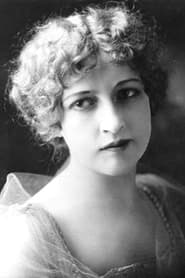
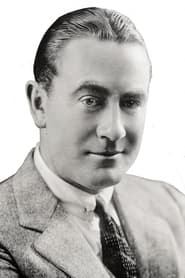
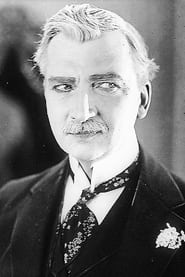
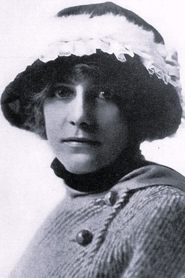
Cast & crew
More films like this


More Drama films
View all →







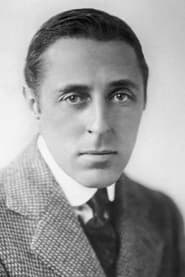
More from D.W. Griffith
View all →
More about this film
About the production
Release dateApril 22, 1909
ProductionAmerican Mutoscope and Biograph Company
Filmed inNew York City, New York, Biograph Studio, Bronx, New York
This film was produced during D.W. Griffith's early period at Biograph, where he made hundreds of short films between 1908-1913. The production utilized natural lighting and simple sets typical of the era. The film was shot on 35mm black and white film stock, with intertitles used to convey dialogue and narrative progression. As with many Biograph productions of this period, the film was likely completed in one or two days of shooting.
Themes
Physical appearance and social acceptanceMiscommunication and misunderstandingIsolation and lonelinessUnrequited love and obsessionMental health and psychological breakdown
Themes & topics
violinistdisfigurementmistaken identitybouquetmadnessunrequited loveobsessionmisunderstandingtragedyisolationmusicflowerspsychological drama
Historical background
The Faded Lilies (1909) belongs to Griffith's tearjerker cycle for Biograph's weekly release schedule.
Why this film matters
Such musician tragedies fed Victorian stage traditions adapted to one-reel screen time.
Making of
The production of 'The Faded Lilies' took place during a highly productive period in D.W. Griffith's career at Biograph. Griffith was rapidly developing his cinematic techniques, including the use of close-ups, cross-cutting, and more sophisticated acting styles that moved away from the exaggerated gestures typical of earlier films. Mary Pickford, though still a teenager, was already showing the naturalistic acting style that would make her famous. The film was shot in the Bronx at Biograph's indoor studio, with exterior scenes likely filmed on location in New York City. The production team worked with extremely limited resources by modern standards, with basic sets, natural lighting, and hand-cranked cameras. The script would have been minimal, with most narrative information conveyed through visual storytelling and intertitles. Griffith was known for his hands-on approach to directing, often working closely with actors to achieve more subtle performances than were common in films of this era.
What critics said
Moving Picture World noted emotional effect; modern viewers see standard Griffith melodrama structure.
Did you know?
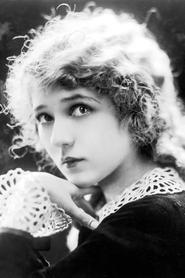
- This was one of the earliest films to feature Mary Pickford, who would later become known as 'America's Sweetheart' and especially powerful figures in Hollywood.
- The film was released when Mary Pickford was only 16 years old, though she often played characters younger than her actual age.
- D.W. Griffith made over 450 short films for the Biograph Company between 1908 and 1913, averaging about one film every three days.
- The title 'The Faded Lilies' refers to the symbolic bouquet that drives the plot, representing withered hopes and misunderstood affection.
- the production was part of Griffith's early exploration of psychological themes, which would later culminate in more complex works like 'The Birth of a Nation' and 'Intolerance'.
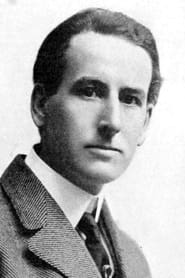
- James Kirkwood, who appears in the production, would later become a prominent director himself during the silent era.
- The film was distributed by the Biograph Company, which was one of the leading film production companies in America before the rise of Hollywood.
- Like many films of this era, it was likely shown in vaudeville theaters as part of a mixed program of short films and live performances.
- The disfigured violinist character represents one of Griffith's early attempts at creating sympathy for physically or socially marginalized characters.
- The film's running time of approximately 11 minutes was typical for dramatic shorts of this period.
Visual style
The cinematography of 'The Faded Lilies' was typical of Biograph productions in 1909, utilizing stationary camera positions for most scenes with occasional movement for dramatic effect. The film was shot in black and white on 35mm film, likely using natural lighting from studio windows supplemented by artificial light when needed. The visual style emphasized clear composition and staging to ensure the narrative remained comprehensible to audiences. Close-ups, still a relatively new technique, may have been used selectively to highlight emotional moments, particularly the reactions of the disfigured violinist. The cinematography would have been functional rather than artistic by modern standards, but represented the developing visual language of narrative cinema.
Innovations
While 'The Faded Lilies' was not a groundbreaking technical achievement by 1909 standards, it benefited from the technical innovations being developed at Biograph under Griffith's direction. The film likely employed cross-cutting to build dramatic tension and parallel action, a technique Griffith was pioneering during this period. The use of intertitles for narrative exposition was becoming more sophisticated, allowing for more complex storytelling than earlier films. The film's relatively long running time for a dramatic short (11 minutes) demonstrated the growing confidence in audiences' attention spans and ability to follow more elaborate narratives. The production may have utilized some location shooting alongside studio work, reflecting the increasing mobility of film equipment and crews.
Music
As a silent film, 'The Faded Lilies' would have been accompanied by live musical performance during its theatrical exhibition. The typical accompaniment would have consisted of a pianist or small ensemble playing popular songs, classical pieces, and improvised music appropriate to the on-screen action. Given the film's dramatic nature and the violinist protagonist, classical music, particularly violin compositions, would have been prominently featured in the accompaniment. The music would have been cued to match the emotional tone of each scene, with romantic themes during the protagonist's hopeful moments and dramatic, dissonant music during his descent into madness. The specific musical selections would have varied by theater and musician, as no standardized score was provided with the film.
Famous quotes
The faded lilies speak of withered hopes and misunderstood hearts." (Intertitle)
Music was his only friend until misunderstanding became his greatest enemy." (Intertitle)
In his mind, kindness became love, and truth became unbearable." (Intertitle)
Memorable scenes
- The moment the disfigured violinist first receives the bouquet of faded lilies, his face showing a mixture of surprise and dawning hope as he misinterprets the gesture.
- The violinist playing passionately with the bouquet nearby, believing he has found love and acceptance despite his appearance.
- The devastating realization scene where the protagonist discovers the true nature of the bouquet, his expression changing from joy to horror and despair.
- The final descent into madness, with the violinist clutching the wilted flowers while his mind unravels completely.
- The contrast between the beautiful music he creates and his tormented psychological state.
What audiences thought
Audience reception in 1909 would have been shaped by the novelty of cinema itself and the growing popularity of dramatic narratives. The emotional story of 'The Faded Lilies' likely appealed to audiences of the Nickelodeon era who were increasingly drawn to films with relatable human dramas. The film's themes of misunderstood affection and social isolation would have resonated with urban audiences experiencing the anonymity and social changes of early 20th century American life. As a Biograph production, it would have benefited from the company's reputation for quality entertainment. The presence of Mary Pickford, even before she became a major star, would have added to the film's appeal for regular filmgoers who were beginning to recognize and follow favorite actors.
Film connections
Influenced by
- Literary melodramas of the 19th century
- Stage plays dealing with tragic romance
- Earlier Biograph shorts directed by Griffith
- Victorian literature themes of beauty and the beast
- Contemporary social attitudes toward disability
This film influenced
- Later D.W. Griffith psychological dramas
- Silent films featuring misunderstood protagonists
- Early Hollywood melodramas
- Films dealing with artists and mental illness
- Mary Pickford's subsequent dramatic roles
Film restoration
The preservation status of 'The Faded Lilies' is uncertain, which is common for films from this era. Many Biograph films from 1909 have survived, but a significant number have been lost due to the unstable nature of early film stock and lack of systematic preservation efforts. If the film exists, it would likely be held in film archives such as the Library of Congress, the Museum of Modern Art's film collection, or the George Eastman Museum. The paper prints submitted to the Library of Congress for copyright purposes may provide the only surviving copies of some Biograph films from this period. Restoration efforts for surviving films from this era typically involve transferring from paper prints or deteriorating film stock to modern digital formats.
Where to watch
- If preserved, the film may be available through specialized film archives and museums
- Potential inclusion in collections of early D.W. Griffith works released by home video distributors
- Possible availability through academic film libraries and cinema studies programs
- May be included in streaming services specializing in classic and silent cinema
- Could be accessed through the Library of Congress's digital collections if digitized