The Redemption of Red Rube
Plot
The Redemption of Red Rube is a short Western melodrama in which a bandit known as Red Rube unexpectedly becomes the protector of a sheriff's daughter. When the young woman is placed in danger, Red Rube's rough exterior gives way to a more honorable nature, and he intervenes to save her from the threat that has emerged around her. The film develops the familiar early Western contrast between outlaw life and frontier respectability, using the rescue to recast the bandit as a man capable of self-sacrifice and moral change. By the end, the story frames the title character's actions as a form of redemption, emphasizing the era's recurring silent-film theme that even a criminal can be morally reborn through a single noble act.
Director
Rollin S. SturgeonAbout the Production
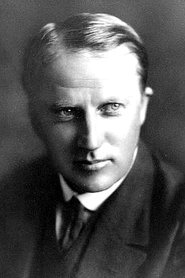
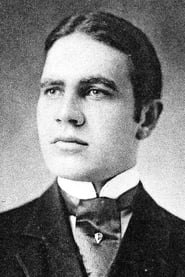
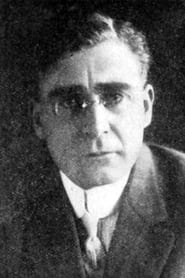
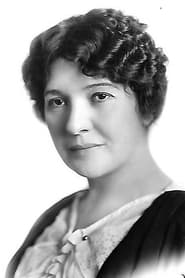
This 1911 one-reel Western was produced during the rapid expansion of short-form genre filmmaking in the early silent era, when companies like American Film Manufacturing Company were turning out numerous compact melodramas for the nickelodeon market. Like many productions from this period, it was likely staged efficiently on outdoor sets or natural California locations rather than on elaborate constructed interiors, though detailed surviving production records are scarce. The film is associated with director Rollin S. Sturgeon, a prolific early filmmaker who worked across multiple genres and was known for directing quickly paced shorts built around clear dramatic situations and strong visual storytelling. Cast credits associated with the film include Robert Thornby, George Stanley, and Anne Schaefer, but the surviving documentation does not always preserve full role assignments or production specifics.
Historical Background
The film was produced in 1911, during the formative years of American narrative cinema, when the industry was shifting from short actuality subjects toward increasingly sophisticated fiction films. Westerns were especially important in this period because they offered vivid, easily readable moral conflicts and could be filmed inexpensively in outdoor environments that stood in for the frontier. The story reflects early twentieth-century ideas about masculinity, law, and redemption, presenting the outlaw not simply as a criminal but as a figure whose worth can be proven through loyalty and courage. In a broader cultural sense, the film belongs to the era when motion pictures were becoming a mass entertainment medium and when studios were experimenting with formulas that would later become central to the classical Western.
Why This Film Matters
While not among the most famous early Westerns, The Redemption of Red Rube is significant as an example of how quickly the redemption narrative became embedded in American genre cinema. The film demonstrates the early silent era's fascination with moral transformation, especially in stories where a socially marginal figure earns respect through selfless action. It also reflects the role of short Westerns in popularizing frontier mythology long before the genre achieved its later prestige through feature-length productions. For historians, the film is valuable as a snapshot of 1911 filmmaking practice, performer crediting, and genre development at a company such as American Film Manufacturing Company.
Making Of
The Redemption of Red Rube was made at a time when film production was highly standardized and fast-moving, especially at companies specializing in short subjects. Rollin S. Sturgeon worked in an industrial environment in which directors often had to mount, shoot, and finish a film very quickly, with limited takes and minimal recorded documentation. Because the film survives in written records more than in widely circulated prints, much of its behind-the-scenes history is necessarily inferred from the practices of the studio system and from the career patterns of its director and performers. The production likely relied on straightforward staging, economical location shooting, and expressive pantomime, all essential tools for silent Western storytelling before feature-length complexity became the norm.
Visual Style
The cinematography would have been characteristic of early 1911 Western production: static or lightly staged camera placement, readable full-figure blocking, and compositions designed to keep action legible in a single shot or a small number of shots. Early Westerns often favored outdoor natural light, allowing for crisp visibility and a sense of rugged authenticity without elaborate set construction. The visual style likely emphasized physical action, landscape, and clear spatial relationships between the outlaw, the sheriff's household, and the rescue situation. Because surviving technical notes are limited, the film is best understood through the conventions of its period rather than through documented shot-by-shot analysis.
Innovations
There are no documented technical innovations uniquely associated with this film, but it participates in the important early development of the Western as a visual storytelling form. Its likely reliance on concise narrative economy, outdoor location work, and expressive silent performance reflects the technical norms that helped establish genre grammar for later filmmakers. The film's significance lies less in special effects or camera experimentation and more in the way it helped refine a durable dramatic formula for short silent cinema. In that sense, it is representative of the technical professionalism of early American short-subject production.
Music
As a silent film, The Redemption of Red Rube did not have an original synchronized recorded soundtrack. In its original exhibition, it would have been accompanied by live music, often a pianist or small theater ensemble improvising or using cue sheets to match the action. Specific surviving score information is not known, and no standardized soundtrack has been documented in the available sources. Modern presentations, if any, would typically use a curated silent-film accompaniment or archival music reconstruction.
Memorable Scenes
- The central rescue in which Red Rube intervenes to protect the sheriff's daughter, turning the film's outlaw protagonist into a figure of unexpected honor.
- The final moral turn, where the bandit's actions are framed as redemption rather than mere lawlessness, giving the short its emotional resolution.
Did You Know?
- The film is a silent-era Western short from 1911, a period when many American films ran only one reel and told complete stories in a matter of minutes.
- It was directed by Rollin S. Sturgeon, who was one of the busy craftsmen of early Hollywood-era production and made many shorts for the American Film Manufacturing Company.
- The title character's arc follows a classic early Western redemption formula: a feared outlaw proves his honor through a rescue or act of sacrifice.
- The film's known cast includes Robert Thornby, George Stanley, and Anne Schaefer, names that appear frequently in early silent film credits but are not always accompanied by complete character identifications in surviving records.
- As with many films of 1911, surviving documentation is fragmentary, so detailed information about exact scenes, running time, and original exhibition can be difficult to verify.
- The film belongs to a wave of early Westerns that helped establish frontier morality tales as one of the most commercially reliable American screen genres.
- Its narrative resembles many later Westerns in which the outlaw becomes a sympathetic figure, but this version predates the feature-length Western era by several years.
- The movie is indexed in film reference databases under its exact 1911 title and should not be confused with later productions that may use similar redemption-based Western themes.
What Critics Said
Contemporary reviews are not widely preserved in accessible sources, so there is no robust surviving critical record comparable to later feature films. Like many one-reel Westerns of the period, it was likely received as a competent and entertaining melodrama rather than as a work subjected to extensive review discourse. Modern assessment tends to focus on its historical interest, its place within Rollin S. Sturgeon's career, and its function as an example of early redemption-themed Western storytelling. Because the film is obscure and documentation is limited, its reputation today is primarily archival and scholarly rather than popularly critical.
What Audiences Thought
Specific audience-response records are not readily available for this film, which is common for short silent-era releases from 1911. At the time of release, such films were generally consumed as part of frequent nickelodeon programming, where audiences valued action, clarity of story, and dramatic emotion. A Western with a clear rescue plot and a morally transformed outlaw would have fit well with popular tastes for immediate suspense and satisfying resolution. Its audience impact today is mainly indirect, in that it contributes to the larger historical record of what early moviegoers were watching in the formative years of American cinema.
Film Connections
Influenced By
- Early American frontier melodramas
- One-reel Western shorts of the 1908-1912 period
- Popular dime-novel and pulp Western traditions
- Stage melodrama conventions about the reformed outlaw
This Film Influenced
- Later silent Westerns built around outlaw redemption arcs
- Feature-era Westerns that centered on a criminal finding honor through sacrifice
- The broader moral redemption template used in classical Hollywood Westerns
You Might Also Like
More from Rollin S. Sturgeon
View allFilm Restoration
The film appears to be rare and not widely available; no widely circulated complete preservation source is commonly cited in general film-reference materials. Its exact survival status is uncertain in accessible public records, so it should be treated as a historically obscure early silent film with limited known availability rather than a routinely screened title.