1912 · Approximately 1 reel; exact runtime unavailable

Also available on: Archive.org
The Better Man

The Better Man

1912 Approximately 1 reel; exact runtime unavailable United States
RedemptionGambling and moral failureDomestic vulnerabilityResponsibility and fatherhoodLawlessness versus family duty

Plot

Jim Saunders is a habitual gambler whose time at the saloon leaves his wife and child neglected and vulnerable at home. While Jim is away one night, the dangerous outlaw Miguel Gomez, who has a bounty on his head, comes to the Saunders house and demands food from Mrs. Saunders. The encounter forces Mrs. Saunders into a tense and fearful confrontation inside her own home, with the threat of violence hanging over the family. The incident becomes a moral turning point for Jim, whose recklessness and selfishness are brought into stark relief by the danger his absence has created. The film appears to center on the contrast between vice and responsibility, using the domestic crisis to push Jim toward becoming, as the title suggests, a better man.

About the Production

Release Date 1912
Production Universal Film Manufacturing Company

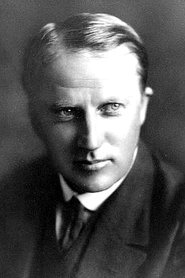
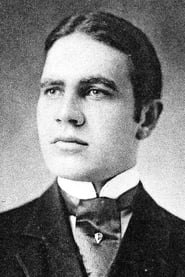
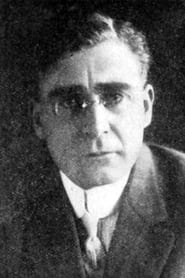
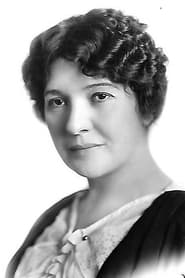
This is a short silent Western from the early Universal era, and like many films of 1912 it was produced quickly for the rental market rather than as a prestige feature. The surviving documentation tied to the film is sparse, but the credited director, Rollin S. Sturgeon, was one of Universal's active early directors and typically worked in a fast-moving studio system that emphasized economical production and efficient storytelling. The known cast includes Robert Thornby, George Stanley, and Anne Schaefer, though contemporary source material on role assignments is limited. No reliable evidence has survived regarding specific filming locations, production costs, or exhibition records, which is typical for many one-reel films of the period.

Historical Background

The Better Man was made in 1912, during the rapid expansion of the American film industry from short novelty subjects into a more organized commercial system. Universal Film Manufacturing Company was forming in an era when studios were consolidating production, distribution, and branding, and short Westerns were an important part of the weekly release schedule. The film also belongs to a period when American culture was preoccupied with moral reform narratives, domestic virtue, and the dangers of vice, and silent melodramas often translated those concerns into compact visual stories. Westerns of this period frequently mixed frontier conflict with domestic crisis, reflecting both the genre's fascination with lawlessness and its reliance on clear moral resolution. As an artifact of early 1910s filmmaking, the movie matters less for large-scale innovation than for illustrating how studios like Universal used genre, stock types, and concise narratives to build a mass audience before feature-length dominance became universal.

Why This Film Matters

While not a major surviving landmark, the film is culturally significant as part of the early development of the American Western and domestic melodrama hybrid. It shows how silent-era Westerns were not yet defined solely by open-range adventure; they often used the family home as a site of moral testing and threatened respectability. The film also offers evidence of how early cinema represented ethnic difference and criminality through shorthand characterization, a reminder of the period's limited and often stereotyped portrayals. For archivists and historians, even a little-documented title like this is valuable because it helps reconstruct the production patterns of early Universal and the careers of directors such as Rollin S. Sturgeon. Its importance lies in the broader history of film form and studio practice rather than in a widely recognized popular legacy.

Making Of

Little detailed behind-the-scenes information has survived for this film, which is not unusual for a 1912 one-reel silent release. Rollin S. Sturgeon was part of Universal's early production apparatus, and directors in that system often worked with a stable group of players and crew under extremely tight schedules. The film likely relied on economical staging, simple interiors for the home scenes, and straightforward action-driven blocking to tell its story clearly without intertitles becoming overloaded with explanation. Since the plot centers on a wife confronted in her home by an outlaw while her husband is absent, the film probably depended more on suspenseful performance and visual contrast than on elaborate set construction or stunt work. No authoritative surviving accounts have been found regarding casting choices, on-set incidents, or production anecdotes specific to this title.

Visual Style

No detailed shot-by-shot or camerawork analysis survives for this title, but as an early 1912 silent Western it would most likely have used static or minimally moving camera setups typical of the period. The visual style probably depended on clear staging, high-contrast tableaux, and readable gestures, especially in the domestic scenes between Mrs. Saunders and the outlaw. Universal shorts of this era often prioritized legibility over elaborate camera movement, so the cinematography would have been functional, direct, and designed to keep the action intelligible to audiences in nickelodeons and vaudeville theaters. If exterior scenes were included, they likely served as broad establishing material rather than as highly composed landscape imagery in the later Western tradition.

Innovations

No specific technical innovations are known for this film. Its significance is instead representative: it reflects the efficient one-reel production methods of early 1910s Universal, with concise storytelling, direct visual narration, and practical staging suited to silent exhibition. The film likely used the standard technical vocabulary of the time rather than introducing new effects or camera techniques. Its value to historians lies in documenting how early studios organized genre filmmaking and narrative economy before the feature era matured.

Music

As a silent film, The Better Man had no synchronized recorded soundtrack. Like most releases of its era, it would have been accompanied at exhibition by live music selected by the theater musician or pianist, often using stock cues, popular songs, or improvised accompaniment to match the mood of the scenes. No original cue sheet or commissioned score is known to have survived publicly for this film. Any modern presentation would depend on archival music reconstruction or whatever accompaniment the screening venue chooses.

Memorable Scenes

  • Miguel Gomez entering the Saunders home and demanding food from Mrs. Saunders while Jim is away at the saloon, turning the family house into a site of immediate danger.
  • The contrast between Jim's irresponsible gambling life and the vulnerability of his wife and child at home, which serves as the film's central moral contrast.
  • The moment when the outlaw's bounty and threat force the domestic situation into a tense confrontation, creating suspense within a modestly scaled silent Western framework.

Did You Know?

  • The film is a 1912 silent Western, placing it in the formative years of American genre filmmaking before feature-length Westerns became standard.
  • It was directed by Rollin S. Sturgeon, a prolific early Universal filmmaker whose work is now largely forgotten because so many of his films are lost or only fragmentarily documented.
  • The title suggests a moral-reform narrative, a common dramatic pattern in early silent cinema where vice is punished or corrected through domestic crisis.
  • The surviving plot summary indicates that gambling is presented as a destructive habit that endangers both marriage and child welfare.
  • Miguel Gomez is described as a Mexican outlaw with a bounty on his head, reflecting the often simplified ethnic characterization common in silent-era Westerns.
  • The film is associated with Universal Film Manufacturing Company, which was then one of the rapidly expanding studios helping standardize commercial film production in the United States.
  • Like many 1912 releases, it was likely photographed and exhibited as a short subject rather than as a feature, and it may have played in a program with other shorts.
  • Because the film's documentation is limited, cast role assignments and exact release circumstances are difficult to verify, making it a typical example of archival gaps in early cinema history.
  • The film's emphasis on domestic danger inside the home distinguishes it from purely frontier-oriented Westerns and places it closer to melodramatic Western morality plays.
  • Its preservation status is not clearly documented in readily available public sources, which is common for very early silent films.

What Critics Said

Contemporary reviews for this specific title are not readily documented in surviving accessible sources, so its initial critical reception cannot be stated with confidence. As a 1912 short Western, it would have been evaluated mainly by exhibitors and trade publications on the basis of clear storytelling, audience appeal, and novelty rather than by later standards of artistic criticism. In modern scholarship, the film is of interest primarily to historians of early Universal, silent Westerns, and early melodrama, but it is not commonly discussed in general critical surveys because of the scarcity of surviving prints and detailed reviews. Its current reputation is therefore that of a minor but historically useful early studio title rather than a canonical work.

What Audiences Thought

Specific audience-response records for this film have not been located in accessible historical sources. In 1912, a short Western such as this would likely have been consumed as part of a mixed program and judged by general crowd appeal, action, and moral clarity rather than by individual star power alone. Films built around family danger, outlaw tension, and eventual moral reckoning were generally reliable audience pleasers in this era because they delivered suspense and emotional resolution efficiently. Today, the film is not widely seen by general audiences, largely because its availability is uncertain and it is overshadowed by better-known surviving Westerns of the period.

Film Connections

Influenced By

  • Stage melodrama and reform narratives
  • Early American short Westerns of the 1900s and early 1910s
  • Domestic moral tales common in silent cinema

This Film Influenced

  • Later silent Westerns that combined home-front melodrama with frontier conflict
  • Domestic-reform Westerns in the 1910s and 1920s

Film Restoration

Preservation status is uncertain based on readily available public documentation. No widely circulated restoration or complete preservation record is clearly confirmed in accessible sources, so the film may survive only in archives, private holdings, or not at all. Because it is an early 1912 short, it is also possible that no known complete print survives, which would be consistent with the high loss rate of silent-era films. A definitive status would require direct archival verification.

Themes & Topics