A Little Jules Verne
Plot
A small boy is sent to bed by his mother and, once she leaves the room, he secretly takes up a book, apparently one of Jules Verne’s adventure tales. As he falls asleep, the ordinary bedroom dissolves into a fantastical dream space: the wall behind him seems to become a screen or magical backdrop, and an image of Jules Verne appears as a kind of guiding presence over the boy’s imagination. The night sky fills with comets and celestial spectacle, and the dream expands outward into a voyage of wonder rather than a literal narrative journey. A balloon gondola drifts to the window, the boy boards it, and he rises above a city and harbor, beginning an airborne adventure that embodies the romantic escapism associated with Verne’s fiction. The film functions less as a conventional plot-driven story than as a visualized child’s dream of discovery, adventure, and cinematic transformation.
Director
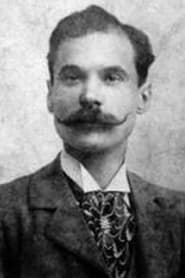
Gaston VelleAbout the Production
This is a very early French fantasy short associated with Pathé’s production output in the first decade of cinema, and it reflects the period’s fascination with trick effects, miniature spectacle, and imaginative tableau staging. Like many films of 1907, it was likely photographed in studio conditions using painted backdrops, theatrical blocking, and in-camera effects rather than location realism. The film’s title and imagery clearly position it as an homage to Jules Verne, whose novels were a major cultural reference point for cinematic fantasies of scientific travel and wonder. Surviving documentation for exact budget, release logistics, and detailed crew breakdown is limited, which is typical for films from this era.
Historical Background
The film was made in 1907, during the silent era’s rapid expansion from short actualities and comic skits into more elaborate fictional and fantastical storytelling. French cinema, especially through Pathé, was a world leader in production scale, distribution, and the development of trick films, fantasy films, and staged narratives. Jules Verne’s work remained enormously influential in the public imagination at the time, representing scientific optimism, imperial-era exploration, and technological marvels that cinema could visualize in fresh ways. This period also saw filmmakers discovering that the screen could represent dreams, imagination, and impossible travel, making films like this important stepping stones in the evolution of fantasy cinema.
Why This Film Matters
A Little Jules Verne is significant as an early example of cinema explicitly celebrating literature, imagination, and the child’s perspective. It belongs to a tradition of films that treat the screen as a dream machine, capable of visualizing wonder rather than merely recording reality. The film also illustrates how quickly early cinema absorbed literary prestige figures like Jules Verne into its own visual culture, helping bridge popular reading culture and moving images. In broader film history, it contributes to the lineage of fantasy filmmaking that would later flourish in both European and American cinema, especially in films centered on transformation, dream states, and spectacular travel.
Making Of
Gaston Velle worked in an era when French studios were experimenting heavily with optical illusion, painted scenery, and staged fantasy, and this film is representative of that approach. Rather than relying on location realism, the production appears to have used studio sets and theatrical composition to turn a child’s bedroom into an entry point for dream imagery. The film’s conception likely drew on the popularity of Jules Verne in popular culture, using his name as shorthand for wonder, exploration, and technological fantasy. As with many productions from 1907, detailed production records are scarce, so much of what is known comes from the film itself, trade listings, and later archival cataloging.
Visual Style
The film’s visual style is rooted in early studio tableau composition, with carefully arranged foreground action and theatrical backdrops. Its central cinematic appeal lies in transformation: a bedroom becomes a dream stage, the wall becomes an image-bearing surface, and the sky becomes a field for celestial spectacle. Early special effects, likely achieved through substitution, superimposition, painted scenery, or other in-camera trick methods, help create the transition from reality to fantasy. The film’s imagery is notable for its clean visual storytelling, using simple but effective visual cues to move from domestic space to imaginative flight.
Innovations
The film’s main technical achievement lies in its use of cinematic illusion to represent dream transformation and impossible movement. It demonstrates early mastery of fantasy staging, where a static interior can shift into a cosmic and airborne realm without modern effects technology. The apparent transition of the wall into a screen-like image and the sequence of fantastical sky imagery show the period’s inventive use of in-camera tricks and theatrical visual composition. While not a technical breakthrough in the grandest sense, it is an excellent example of how early filmmakers used simple means to create vivid metamorphosis on screen.
Music
As a 1907 silent film, it originally had no synchronized recorded soundtrack. It would have been accompanied live in exhibition by a pianist, organist, small ensemble, or theater musician depending on the venue and local practice. No original composed score is known to survive for the film. Modern screenings may use compiled silent-film accompaniments or newly created scores.
Memorable Scenes
- The moment the boy secretly opens his book after being put to bed, establishing the private world of imagination that drives the film.
- The transformation of the wall behind the boy into a dreamlike screen bearing the image of Jules Verne, turning the room into a gateway to fantasy.
- The starry sky filled with comets, which visually announces the transition from ordinary sleep to cosmic wonder.
- The balloon gondola arriving outside the window as a surreal invitation to adventure.
- The boy boarding the balloon and ascending over the city and harbor, a concise but memorable image of cinematic flight.
Did You Know?
- The film is often discussed as a miniature homage to Jules Verne rather than a direct adaptation of a specific Verne novel.
- Its dream structure is characteristic of early cinema’s fascination with visualizing mental states, fantasy, and transformation.
- The appearance of Jules Verne’s portrait within the film functions as a meta-cinematic tribute to one of the era’s most famous adventure authors.
- The balloon ride motif connects the film to a recurring early-cinema fascination with aerial travel and spectacular movement through space.
- Because it is so short, the film compresses a full imaginative arc into a handful of tableaux and visual effects.
- The title is sometimes rendered in English as 'A Little Jules Verne,' emphasizing its playful, child-centered nature.
- Gaston Velle was known for fantasy and trick films, and this short fits squarely within his reputation for visual magic.
- Early French fantasy films like this one helped define a mode of cinema that was less documentary and more theatrical, magical, and illustrative.
- The exact form of the surviving print and the completeness of the film’s preservation have been matters of archival interest because many early Pathé films survive only in fragmentary or later-derived copies.
- The film reflects the strong influence of illustrated storybooks and stage pantomime on early narrative cinema.
What Critics Said
Contemporary reviews are difficult to recover in detail, and specific surviving criticism for this exact short is limited. In modern film scholarship and archival cataloging, the film is generally valued as a representative example of early French fantasy cinema and of Gaston Velle’s work in trick and dream imagery. Critics and historians tend to regard it not as a major narrative landmark but as a revealing artifact of how early filmmakers translated literary imagination into cinematic spectacle. Its appreciation today is primarily historical and aesthetic, focused on its place within the development of fantasy film language.
What Audiences Thought
There is no robust surviving evidence of audience response specific to this title, which is common for short films from 1907. At the time, films of this kind were generally designed for broad popular appeal, especially for spectators who enjoyed novelty, visual tricks, and familiar cultural references like Jules Verne. Its imagery of a child’s dream and airborne adventure would likely have been accessible and charming to contemporary audiences, even if it was only one item in a larger program of shorts. Modern audiences encountering it through archives or retrospectives usually respond to its whimsical simplicity and historical curiosity.
Film Connections
Influenced By
- The adventure novels of Jules Verne
- Theatrical fantasy staging
- Early cinematic trick films
- French fairground and studio fantasy traditions
This Film Influenced
- Early dream and fantasy films that used visual metamorphosis and imaginative travel
- Later cinematic homages to Jules Verne and literary adventure
You Might Also Like
More Fantasy Films
View allMore from Gaston Velle
View allFilm Restoration
The film is extant and documented in archival and catalog sources, though like many films from 1907 it may survive in a print that reflects later duplication or archival preservation rather than pristine original materials.